

Why Energy Efficient HVAC Systems Are Critical for Modern Buildings
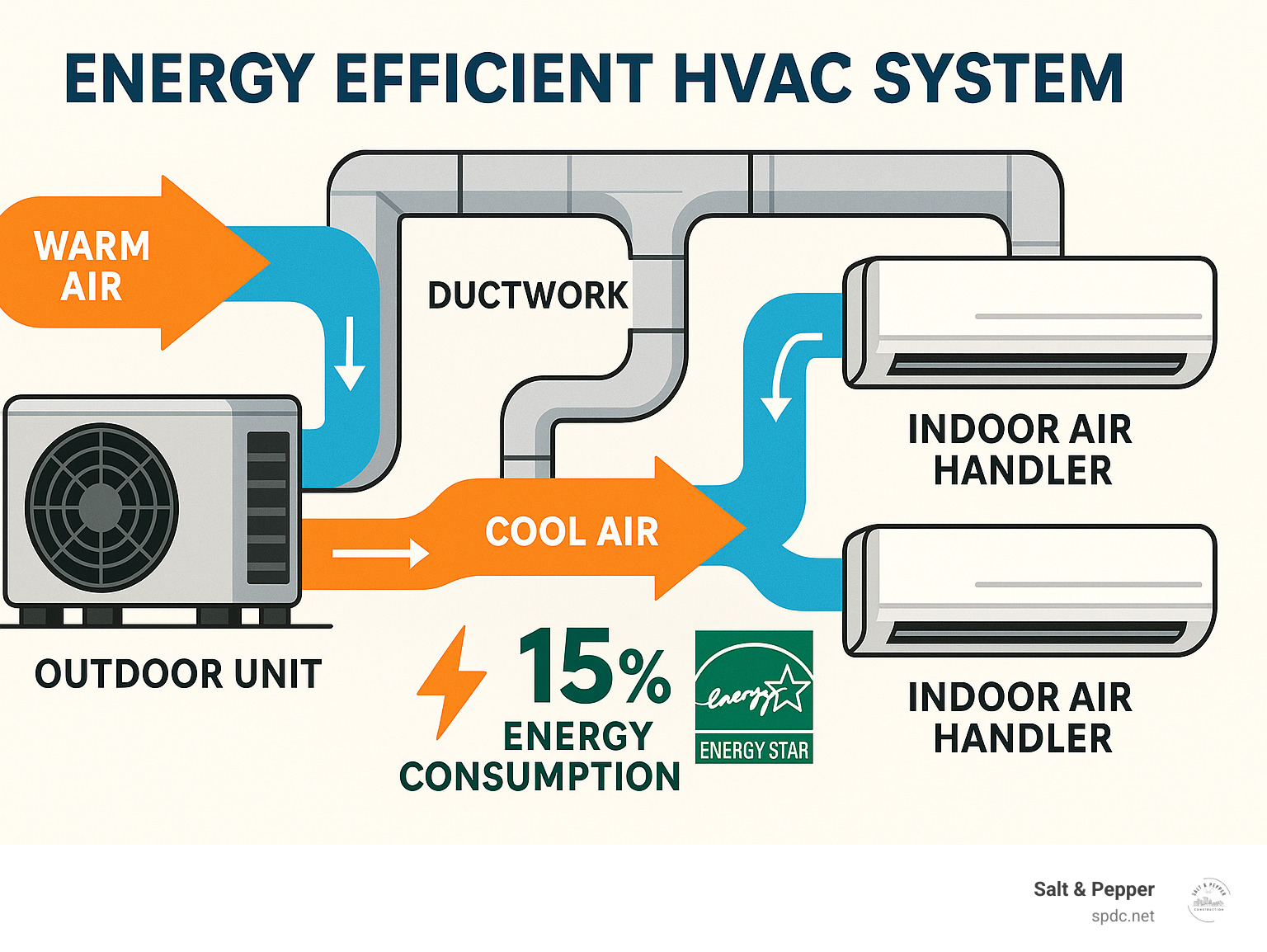
Energy efficient HVAC systems represent the smartest investment a building owner can make today. With heating and cooling accounting for about half of a typical building’s energy usage, upgrading to high-efficiency equipment can reduce energy consumption by up to 50% while delivering superior comfort and reliability.
Key benefits of energy efficient HVAC systems:
- Cost savings: Annual energy bill reductions of 10-30% with ENERGY STAR certified equipment
- Improved comfort: Better temperature control and humidity management
- Environmental impact: Significant reduction in carbon footprint and greenhouse gas emissions
- Financial incentives: Federal tax credits up to $3,200 plus utility rebates available
- Property value: Increased building value and marketability
The urgency for efficient systems has never been greater. Rising energy costs, stricter building codes, and corporate sustainability targets are pushing facility managers to prioritize HVAC upgrades. Modern systems like air-source heat pumps, variable refrigerant flow (VRF) units, and smart controls offer unprecedented efficiency levels.
Poor installation alone can reduce system efficiency by up to 30%, while leaky ductwork wastes 20-30% of conditioned air. This means getting both the right equipment and proper installation is essential for achieving promised energy savings.
I’m John Doron, owner of Salt & Pepper Construction, and I’ve helped numerous Tampa property owners steer the transition to energy efficient HVAC systems during comprehensive renovations. My experience has shown that integrating HVAC upgrades with other building improvements delivers the best return on investment.
Learn more about energy efficient HVAC systems:
– energy efficient home systems
– home insulation upgrade
– improve heating efficiency in your home
Decoding HVAC Efficiency Metrics
HVAC efficiency ratings can feel like alphabet soup, but understanding these numbers gives you the power to choose energy efficient HVAC systems that actually deliver on their promises.
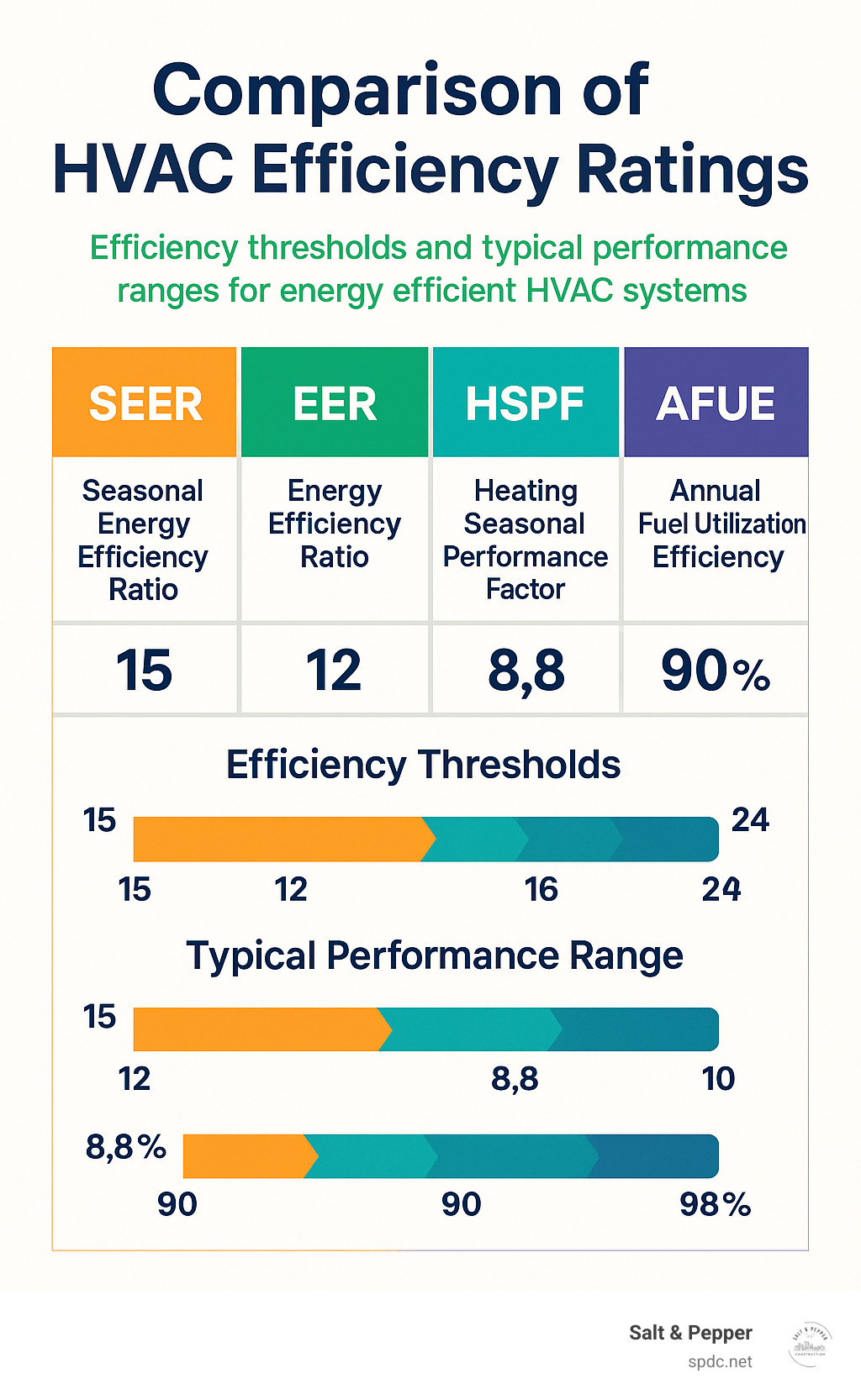
The Seasonal Energy Efficiency Ratio (SEER) is the most important number you’ll encounter. It measures how much cooling your system provides for every dollar of electricity consumed over an entire season. Modern high-efficiency units achieve SEER ratings of 20-28, while older systems typically operate at 8-13 SEER.
Energy Efficiency Ratio (EER) measures performance under specific laboratory conditions. While SEER gives you the seasonal average, EER becomes crucial in Tampa where systems work overtime during sweltering summer months.
For heat pumps, Heating Seasonal Performance Factor (HSPF) tells you how efficiently your system heats your space. The best units achieve HSPF ratings of 10 or higher.
Annual Fuel Utilization Efficiency (AFUE) applies to gas furnaces and boilers. This percentage shows how much fuel becomes useful heat rather than going up the chimney. High-efficiency units boast AFUE ratings of 90% or higher.
ENERGY STAR certification and CEE tiers help you identify equipment that meets strict efficiency standards. When your contractor performs a proper Manual J load calculation, they’re using these ratings to right-size your system for maximum efficiency.
Why These Ratings Matter
These numbers directly impact your utility bills every month. A system with a 26 SEER rating will consume roughly half the electricity of a 13 SEER unit while keeping you just as comfortable. For Tampa commercial buildings that run air conditioning 8-10 months per year, this difference can save thousands of dollars annually.
Performance benchmarking becomes your secret weapon when comparing equipment options. Right-sizing your system based on proper load calculations ensures you’re not throwing money away. An oversized unit will short-cycle, wasting energy and failing to remove humidity properly. An undersized system will run constantly and struggle to keep up.
Setting the Bar: Code vs. High-Performance
DOE minimums represent the legal baseline, requiring 14 SEER for cooling and 8.2 HSPF for heating, but aiming higher pays dividends.
The Most Efficient lists from ENERGY STAR showcase systems with variable-speed compressors, advanced heat exchangers, and smart controls that automatically optimize performance.
Future standards will continue pushing efficiency requirements higher. By selecting equipment that exceeds current minimums today, you’re protecting your investment and ensuring compliance with evolving codes.
Top Commercial Energy Efficient HVAC Systems for 2024-2025
The world of commercial energy efficient HVAC systems has transformed dramatically. What used to be considered “high-efficiency” equipment now looks outdated compared to today’s cutting-edge technology.
Air-source heat pumps have become the MVP of commercial HVAC. These systems don’t create heat or cold – they move heat from one place to another. That’s why they can be up to 40% more efficient than traditional systems. Modern units with inverter-driven compressors are hitting SEER ratings of 20-25.
The Heat pump basics page explains the science, but here’s the simple version: these systems can pull heat from outdoor air even when it feels cold outside, then move that heat indoors. In summer, they reverse the process to keep you cool.
Geothermal heat pumps take efficiency to another level by tapping into the earth’s steady underground temperatures. While you’ll pay more upfront for ground loop installation, operational savings often make sense for larger commercial buildings. The ground temperature stays remarkably consistent year-round.
Variable Refrigerant Flow (VRF) systems are the problem-solvers of the HVAC world. Picture an office building where the sunny south side needs cooling while the shaded north side needs heating – VRF systems can actually move heat from warm areas to cool areas. It’s like having a smart energy recycling system built into your HVAC.

Ductless mini-split systems are efficiency champions for specific situations. With SEER ratings reaching 28, they eliminate all energy losses that happen in ductwork. They’re perfect for retrofit projects where adding ductwork would be difficult, or for buildings needing precise room-by-room control.
Variable-speed chillers and advanced heat exchangers represent the high-tech end of commercial HVAC. The newest serpentine heat exchanger designs have 90% fewer refrigerant joints, meaning fewer potential leak points and better heat transfer.
Choosing Energy Efficient HVAC Systems for Different Building Types
Office towers typically perform best with VRF systems or high-efficiency chillers equipped with variable-speed drives. These buildings create wildly different heating and cooling needs throughout the day.
Retail spaces often get the best results from rooftop packaged units with high SEER ratings and economizer controls. The economizer feature brings in outside air during Tampa’s pleasant winter months, reducing mechanical cooling needs.
Warehouses and industrial facilities usually find air-source heat pumps or hybrid systems most cost-effective. The key is pairing them with destratification fans to manage temperature layering in high-ceiling spaces.
Scalability becomes crucial if you’re planning to grow your business. Modular systems let you add capacity without scrapping your entire investment.
Maintaining Energy Efficient HVAC Systems Year-Round
Even the most energy efficient HVAC systems become energy hogs without proper care. Monthly filter checks during peak-use seasons (April through October in Florida) are non-negotiable. Replace filters every three months minimum.
Predictive maintenance using IoT sensors monitors refrigerant pressure, motor current, and temperature differentials to spot problems before they become expensive failures.
Professional tune-ups at the start and end of each season keep everything running smoothly. Smart controls and building automation systems automatically adjust operation based on occupancy, outdoor conditions, and energy pricing.
Optimization Strategies for Existing Equipment
You don’t need to rip out your entire HVAC system to see dramatic efficiency improvements. Sometimes the smartest approach is working with what you have and making strategic upgrades that deliver big results.
Duct sealing is one of the best investments you can make. If 20-30% of your perfectly conditioned air is escaping through leaky ducts, your system is working overtime for nothing. Professional duct sealing can boost system efficiency by up to 20% almost immediately.
Aeroseal technology seals ductwork from the inside, reaching hidden joints and connections that traditional methods can’t touch. We’ve eliminated up to 90% of duct leakage in existing systems using this approach.
Insulation upgrades around ductwork make a huge difference, especially in spaces like attics and mechanical rooms where temperatures can be extreme.
Smart thermostats are absolute game-changers for efficiency. These devices can reduce energy consumption by 10-23% by learning your schedule, adjusting temperatures when you’re away, and giving you remote control over your system.
Retro-commissioning is a thorough checkup for your existing system. We systematically test and adjust everything to make sure it’s operating as originally designed. Simple adjustments often improve efficiency by 15-20% with minimal investment.
Building automation system integration allows centralized control of multiple HVAC units, so they work together like a well-coordinated team.
Installation & Sizing Essentials
Even the most efficient equipment will disappoint if not installed properly. Poor installation alone can slash system efficiency by up to 30%. That’s why we work with qualified contractors who follow industry standards and participate in programs like ENERGY STAR Verified Installation.
Manual J load calculations are essential for getting sizing right. This detailed analysis considers your building size, insulation levels, windows, occupancy, and Tampa’s specific climate conditions.
Airflow balance ensures every room gets the conditioned air it needs. Static pressure testing verifies that ductwork isn’t creating too much resistance.
Low-Cost Behavioral Tweaks
Adjusting temperature set-points by just 2-3 degrees can cut energy consumption by 10-20% while keeping everyone comfortable.
Night setbacks and weekend scheduling work like automatic energy savers. Modern smart controls learn when people are in the building and start conditioning spaces just before they arrive.
Ceiling fans make people feel about 4°F cooler than the actual temperature, which means you can set your thermostat higher and still stay comfortable.
Strategic window treatments block intense Tampa sun during summer and provide extra insulation during brief winter months.
Occupancy schedules that match HVAC operation to actual building use prevent waste of conditioning empty spaces.
Learn more about comprehensive efficiency improvements through our Best Ways to Improve Home Energy Efficiency guide.
Financial & Environmental Payoffs
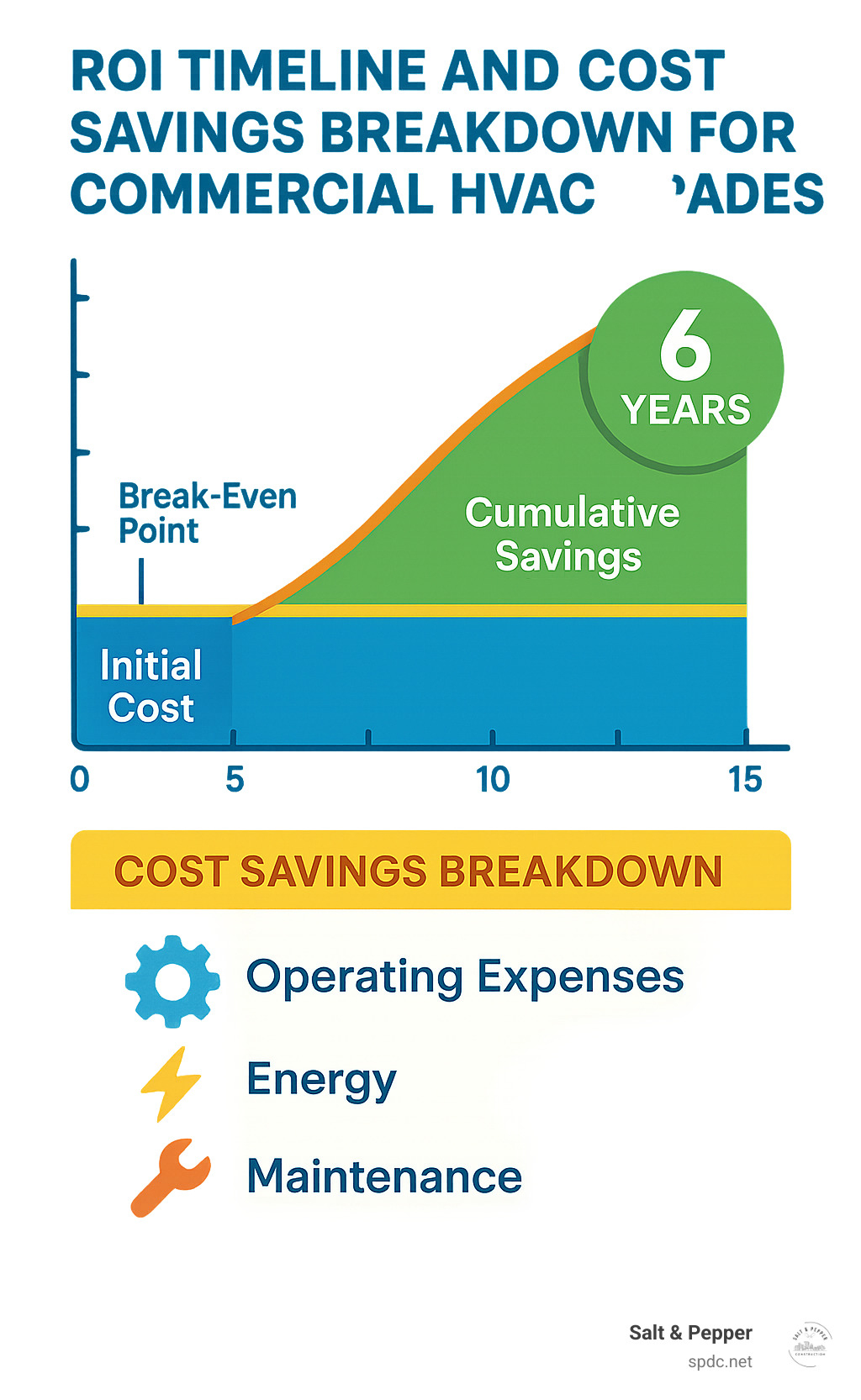
Let’s talk about the real money behind energy efficient HVAC systems. In my years helping Tampa property owners upgrade their systems, I’ve seen comprehensive HVAC improvements slash total building energy costs by 15-30%. These systems typically pay for themselves in just 3-7 years, depending on what you choose and local utility rates.
Those operating savings keep adding up over your system’s 15-20 year lifespan. We’re talking about total savings that often reach 2-3 times your initial investment. When you factor in money saved on maintenance and repairs thanks to improved reliability, the return becomes absolutely compelling.
Carbon footprint reduction has become a major priority for businesses focused on sustainability. High-efficiency HVAC systems can cut your building’s greenhouse gas emissions by 30-50% compared to older equipment.
Better humidity control, improved air filtration, and more consistent temperatures contribute to healthier, more productive work environments. If you’re pursuing LEED certification, efficient HVAC systems earn valuable points toward your rating.
Navigating Rebates & Tax Incentives
The Energy-Efficient Home Improvement Tax Credit offers up to $3,200 total (30% of qualified expenses) for eligible HVAC systems installed after January 1, 2023. Individual HVAC components can qualify for up to $600 in tax credits. Heat pumps need at least 75% thermal efficiency rating to maximize benefits.
Utility rebate programs vary by location but often provide substantial cash back for high-efficiency equipment. The ENERGY STAR rebate finder makes it easy to identify local programs.
Business owners have additional advantages through accelerated depreciation, allowing you to deduct the full cost of qualifying energy-efficient equipment in the year you install it.
Green loans and specialized financing programs offer attractive terms for energy efficiency projects with below-market interest rates and extended repayment periods.
Building the Business Case
Lifecycle cost analysis should include equipment purchase price, installation costs, annual operating expenses, maintenance requirements, and eventual replacement costs. High-efficiency systems typically cost 10-30% more upfront but save 20-50% annually on operating costs.
Here in Tampa, where we run cooling systems year-round, payback periods of 3-5 years are common for premium efficiency systems.
ESG reporting requirements increasingly focus on building energy performance and carbon emissions data. Efficient HVAC systems provide measurable improvements that support corporate sustainability goals.
Property values typically increase 3-5% for buildings with recently upgraded, high-efficiency HVAC systems. This appreciation often exceeds the cost of the upgrade itself.
Learn more about energy efficient home systems to see how these improvements can transform your property.
Frequently Asked Questions about Energy Efficient HVAC Systems
Over my years helping Tampa property owners upgrade their buildings, I’ve heard the same questions come up again and again. Let me share the answers that have helped dozens of clients make smart decisions about their energy efficient HVAC systems.
What signals that it’s time to replace versus retrofit?
The fifteen-year mark is when I start having serious conversations with clients about replacement. Systems that have been faithfully cooling Tampa buildings for a decade and a half are usually ready for retirement, especially when repair bills start climbing.
Here’s what I tell my clients: if your HVAC system needs a major component replacement like a compressor or heat exchanger, you’re looking at 50-70% of new equipment costs anyway. At that point, it makes more sense to invest in a brand-new, high-efficiency system that’ll serve you for the next 15-20 years.
Rising utility bills are another telltale sign, even when your usage patterns haven’t changed. Older systems naturally lose efficiency over time – we’re talking about 20-30% degradation due to normal wear, refrigerant leaks, and aging components. That efficiency loss shows up directly on your monthly bills.
I’ve seen too many property owners throw good money after bad, patching up systems that are fundamentally past their prime. Frequent breakdowns and emergency repair calls are your HVAC system’s way of telling you it’s time to move on.
How do smart thermostats and zoning improve efficiency?
Smart thermostats are like having a really attentive building manager who never takes a day off. They learn your occupancy patterns and automatically dial back the temperature when spaces are empty. I’ve seen these devices reduce energy consumption by 10-23% just through better scheduling.
The remote control capabilities are a game-changer for busy facility managers. You can adjust settings from anywhere using your phone, which prevents energy waste when schedules change unexpectedly. No more cooling an empty building because someone forgot to adjust the thermostat before leaving for a long weekend.
Zoning systems take efficiency to the next level by dividing your building into separate temperature control areas. Instead of treating your entire building like one big room, you can target conditioning based on actual occupancy and use patterns.
Advanced zoning gets even smarter by redirecting heating or cooling from unoccupied areas to spaces that actually need conditioning. It’s like having a traffic controller for your building’s energy, making sure every BTU goes where it’s needed most.
What common mistakes reduce HVAC efficiency and how can we avoid them?
Poor installation is the efficiency killer I see most often, and it can slash your system’s performance by up to 30%. This is why I always stress the importance of working with qualified contractors who follow manufacturer specifications to the letter.
Leaky ductwork is the silent energy thief – it’s stealing 20-30% of your conditioned air before it even reaches the spaces you’re trying to cool. Professional duct sealing pays for itself quickly, and regular inspections catch problems before they become expensive.
I can’t stress enough how much skipped maintenance hurts efficiency. Dirty filters, low refrigerant levels, and worn components gradually rob your system of 15-25% of its efficiency. It’s like letting your car’s engine slowly clog up – eventually, you’ll pay the price.
Incorrect system sizing is another efficiency killer that’s completely preventable with proper planning. Oversized systems cycle on and off constantly and fail to remove humidity properly. Undersized systems run themselves ragged trying to keep up, never achieving the comfort levels you’re paying for.
The good news is that all of these mistakes are avoidable with the right approach and professional guidance. That’s where Salt & Pepper’s experience with comprehensive building upgrades really pays off – we see the big picture and make sure every component works together efficiently.
Conclusion & Next Steps
After working with dozens of Tampa commercial property owners, I can tell you that energy efficient HVAC systems truly represent one of the smartest investments you’ll ever make. When your heating and cooling equipment is consuming half your building’s energy budget, upgrading to high-efficiency systems isn’t just nice to have – it’s essential for staying competitive.
What I’ve learned through years of commercial renovations is that HVAC upgrades shine brightest when they’re part of a bigger picture. At Salt & Pepper Construction, we’ve seen how integrating efficient HVAC systems with proper insulation, air sealing, and smart controls creates synergy that maximizes both performance and your bottom line.
The stars have aligned for building owners right now. Between federal tax credits up to $3,200, generous utility rebates, and immediate operational savings, there’s never been a better time to make this move. Plus, with HVAC technology advancing rapidly and efficiency standards getting tougher, today’s high-performance equipment will keep your building ahead of the curve for the next 15-20 years.
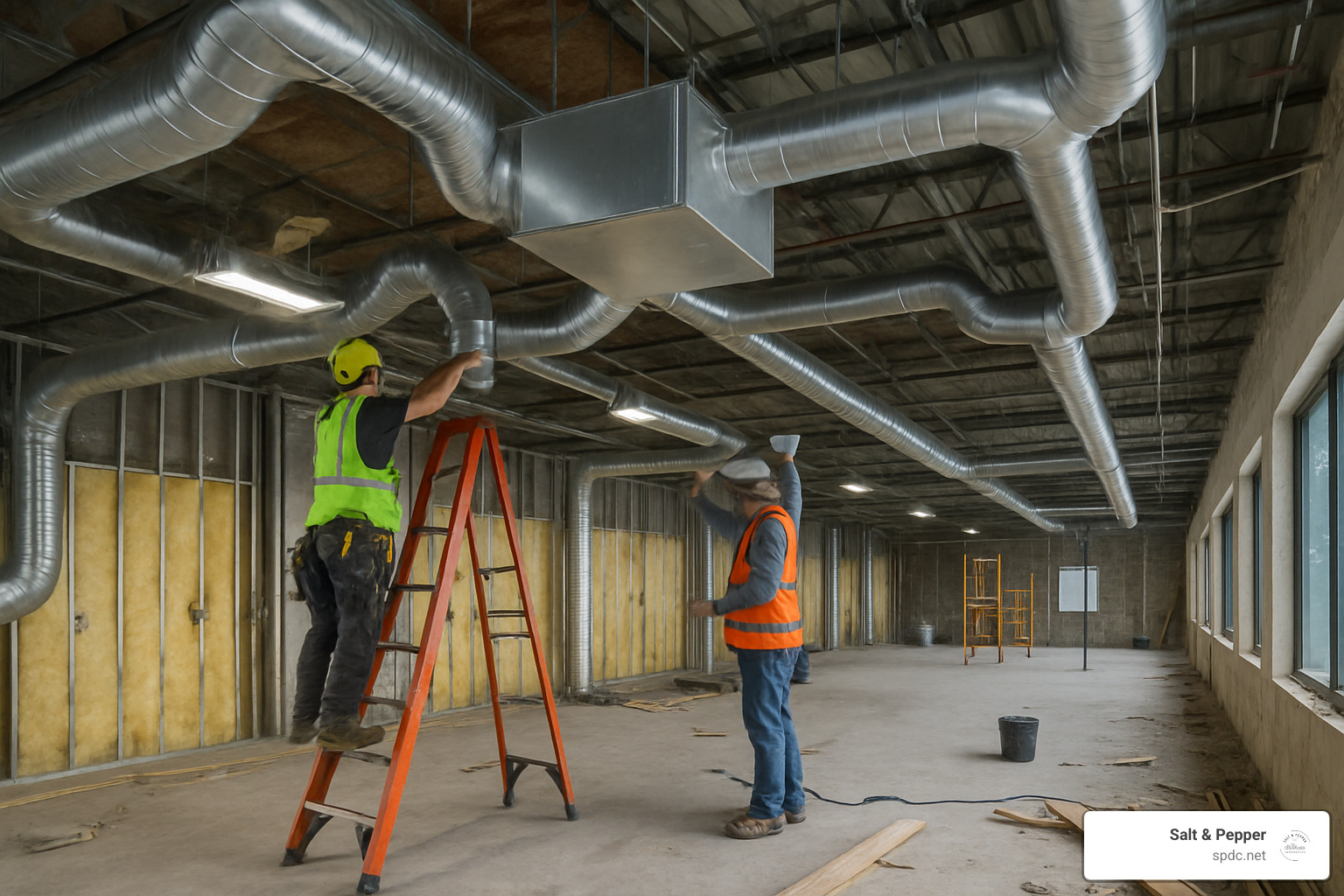
Here’s what sets our approach apart: we handle turnkey HVAC retrofits from start to finish. That means load calculations, equipment selection based on your specific needs, professional installation that achieves promised efficiency gains, thorough commissioning, and ongoing maintenance support.
Our comprehensive approach ensures your new systems deliver real-world performance that integrates seamlessly with your building’s other systems. We’ve seen too many projects where piecemeal upgrades left money on the table because nobody looked at the big picture.
Ready to find how energy efficient HVAC systems can transform both your building’s comfort and operating costs? I’d love to schedule a consultation where we’ll assess your current setup, identify the biggest opportunities for improvement, and develop a customized upgrade plan that makes sense for your budget and timeline.
For more insights about comprehensive building improvements, check out our guide on eco-friendly home renovations to see how integrated upgrades can maximize your investment returns while creating more comfortable, sustainable commercial spaces.


