

Going Green at Home: The Smart Homeowner’s Guide
Eco-friendly home renovations combine sustainable building practices with energy-efficient designs to create homes that minimize environmental impact while maximizing comfort and value.
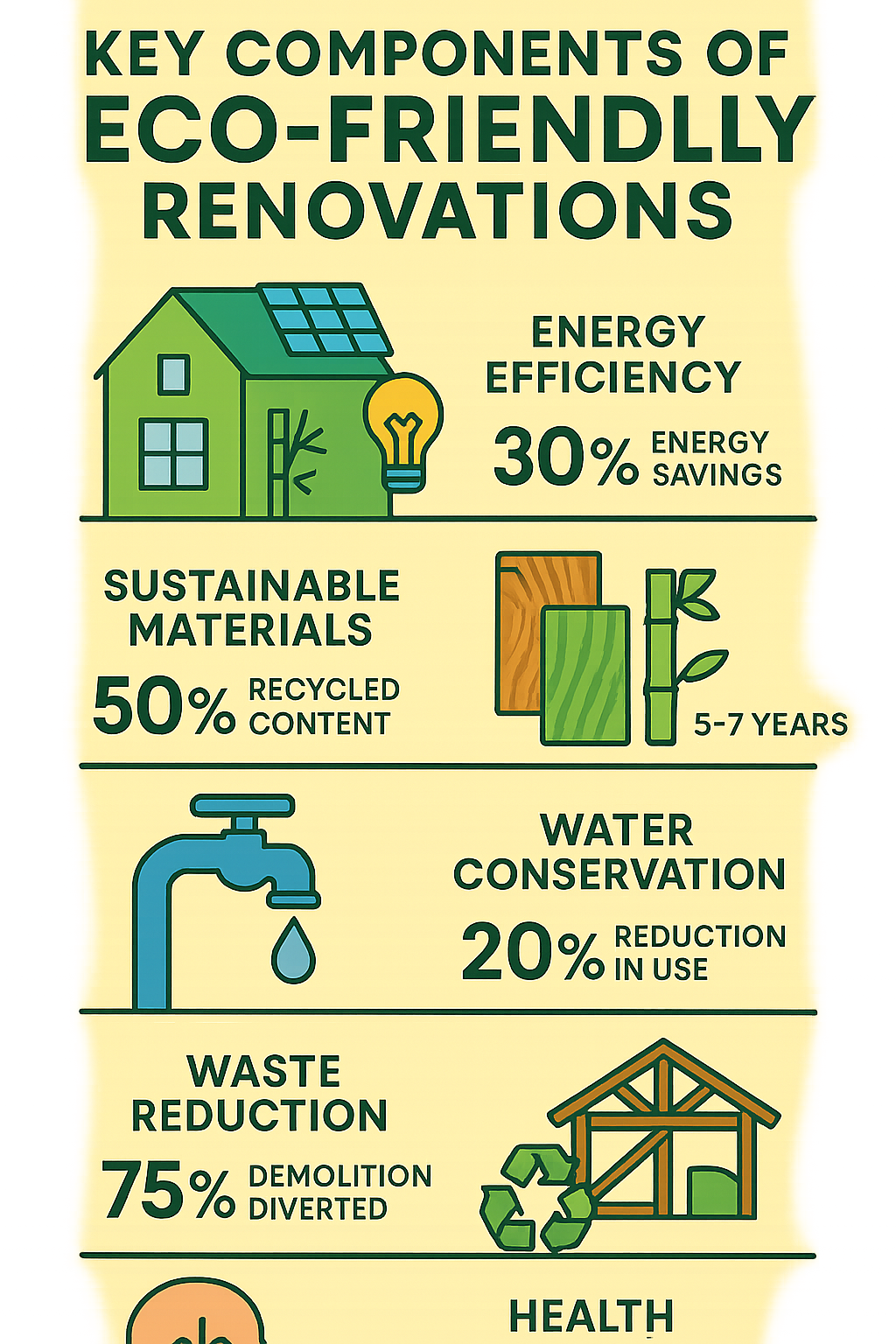
“The average eco-friendly home with solar panels, double-glazed windows, and smart lighting can reduce energy bills by as much as 30%.”
Looking for ways to make your home renovation more sustainable? Here are the key elements of eco-friendly renovations:
- Energy efficiency: Upgraded insulation, high-performance windows, LED lighting
- Sustainable materials: Reclaimed wood, bamboo, low-VOC paints
- Water conservation: Low-flow fixtures, efficient appliances
- Waste reduction: Deconstruction instead of demolition, material recycling
- Healthy indoor environment: Non-toxic finishes, proper ventilation
I’m John Doron, owner of Salt & Pepper Construction, where we’ve been implementing eco-friendly home renovations throughout Tampa for over a decade, helping homeowners reduce their environmental footprint while creating beautiful, healthy living spaces that stand the test of time.
Key Eco-friendly home renovations vocabulary:
– Affordable bathroom remodeling
– complete home changes
– Tampa kitchen remodeling
Eco-friendly Home Renovations 101: What Makes a Project Green?
Ever wondered what truly makes a renovation “green”? Let’s explain it together! At its heart, eco-friendly home renovations focus on creating spaces that tread lightly on our planet while making your home healthier, cozier, and more efficient.
When we talk about green remodeling at Salt & Pepper, we’re looking at several key elements working in harmony:
Energy efficiency stands as the foundation of any sustainable renovation. Think of your home as a thermos that should keep hot things hot and cold things cold. A well-insulated envelope with proper air sealing, energy-efficient windows, and smart appliances can dramatically cut your energy needs. Many Tampa homeowners are surprised to learn their older homes can become energy superstars with the right upgrades!
Water conservation has become especially crucial in Florida’s climate. Simple switches to low-flow fixtures and efficient appliances can slash water usage without sacrificing performance. As one of our clients recently told us, “I never thought a shower could use so little water but feel so luxurious!”
Choosing healthy materials means prioritizing products that won’t off-gas harmful chemicals into your home. Low or zero-VOC paints and finishes, natural materials, and minimally processed products create spaces where you can literally breathe easier. The EPA’s research on indoor air quality confirms that thoughtful material selection significantly improves respiratory health and overall wellbeing.
Waste reduction transforms how we approach demolition. Instead of the sledgehammer approach, we carefully deconstruct, salvage reusable items, and ensure materials find new homes rather than landfill space. One Tampa renovation we completed diverted over 85% of construction waste from the landfill!
Adopting life-cycle thinking means looking beyond the price tag to consider a product’s entire environmental journey—from raw material extraction through manufacturing, transportation, use in your home, and eventual disposal. This perspective often reveals that more expensive options actually deliver better long-term value.
Several respected certification programs help verify green credentials, including LEED certification, ENERGY STAR ratings for homes and appliances, WaterSense labels for water-efficient products, and FSC certification for responsibly harvested wood products.
Key Benefits for Homeowners
The perks of eco-friendly home renovations go far beyond feeling good about helping the planet (though that’s pretty awesome too!).
Your wallet will thank you through lower utility bills—most comprehensive green renovations can slash energy usage by up to 30%. Water-efficient fixtures often reduce water consumption by 25-60%, creating significant monthly savings. One Tampa family we worked with saw their summer electric bills drop by nearly $100 per month after their green renovation!
When it’s time to sell, you’ll likely command a higher resale value. Studies consistently show that green-certified homes sell for about 8% more than conventional homes. As sustainability becomes increasingly important to buyers (especially younger ones), homes with eco-credentials stand out in the market.
Perhaps most immediately noticeable is the improved health and comfort your family will enjoy. Better indoor air quality, more consistent temperatures, and reduced drafts create living spaces that simply feel better. Many clients report fewer allergy symptoms, better sleep, and more comfortable indoor environments year-round.
By making sustainable choices now, you’re future-proofing your home against rising energy costs and evolving environmental regulations. It’s like giving your home a suit of armor against whatever the future brings!
Common Misconceptions About Eco-friendly Home Renovations
Despite all these benefits, several myths continue to make some homeowners hesitate:
Myth 1: Green renovations are prohibitively expensive. While some sustainable features have higher upfront costs, many are comparable to or even less expensive than conventional options. Plus, when you factor in long-term savings, the math often works strongly in favor of green choices. LED lighting might cost a bit more initially but saves hundreds over its much longer lifespan while requiring far fewer replacements.
Myth 2: Sustainable design means limited style options. This couldn’t be further from today’s reality! Modern eco-friendly materials come in virtually every style imaginable. From character-rich reclaimed wood to sleek recycled glass countertops, green materials can match any design vision. Your sustainable kitchen can be farmhouse chic, ultra-modern, or anything in between!
Myth 3: Only new construction can be truly green. Some of our most impressive eco-friendly home renovations happen in Tampa’s existing housing stock. In fact, renovating an existing home is often more sustainable than building new because it preserves all the energy already invested in the original structure.
Myth 4: The payback period is too long to be worthwhile. While some features like solar panels may take several years to recoup through energy savings, many green upgrades deliver immediate benefits in comfort alongside reasonable financial returns. When you factor in increased home value and quality of life improvements, the real payback often comes much sooner than you might think.
At Salt & Pepper, we’ve helped countless Tampa homeowners find that going green doesn’t mean compromise—it means creating homes that work better, feel better, and help protect the Florida environment we all love.
Audit & Plan Before You Swing a Hammer
I’ll let you in on a little secret that can save you thousands: before you grab that sledgehammer, take a breath and get to know your home first. Think of it like going to the doctor for a check-up before starting a new workout routine – you need to understand what’s actually happening before you can make meaningful improvements.
A good home energy audit is truly the foundation of any successful eco-friendly home renovation. When we conduct these for Tampa homeowners, we’re essentially giving your house a complete physical examination:

We use blower door tests to find where your home is leaking air (and your money along with it). The rainbow-colored images from thermal imaging cameras reveal hidden cold spots where insulation is missing or compressed. We’ll check your ducts for leaks, evaluate your appliances, and even test your indoor air for pollutants that might be affecting your family’s health.
As one of our clients recently told me, “I had no idea my master bedroom was basically a sieve until I saw that thermal image! No wonder it was always freezing in winter.”
Professional audits typically run between $300-$600, but here’s the good news: many Tampa utility companies offer discounted or even free energy audits. It’s money incredibly well spent – The Washington Post called it “the best money I’ve ever spent” for good reason.
Once you have your results, we help you create a smart, prioritized plan that tackles:
- Health and safety issues first (moisture problems can turn into expensive repairs)
- Quick-win efficiency improvements with fast payback periods
- Water-saving opportunities (especially important in Florida’s climate)
- Material upgrades as existing ones wear out
- Renewable energy options once your home is properly sealed and efficient
Calculating Baseline & ROI
To really understand if your eco-friendly home renovations are working, you need to know where you started. It’s like tracking your weight before a diet – you need that “before” picture!
Gather at least a year’s worth of utility bills to see your home’s energy patterns. Florida homes often show dramatic summer spikes from air conditioning, which might point to where you’ll see the biggest improvements.
Track your kilowatt-hours of electricity, therms of natural gas, and gallons of water. Most Tampa utilities now offer online dashboards that make this easy. I love showing clients their “before and after” energy usage – seeing those lines drop after renovations brings genuine smiles.
For each potential upgrade, we help you look beyond just the sticker price:
– How quickly will this improvement pay for itself?
– What’s the annual return on your investment?
– What’s the present value of all those future savings?
Some benefits don’t show up directly on your utility bills – like the priceless feeling of a home that stays comfortably cool during Tampa’s hottest days without your AC constantly running.
Finding the Right Green Pros
Not all contractors understand sustainable building, and choosing the wrong team can turn your green dreams into a not-so-green reality. Here’s how to find professionals who truly know their stuff:
Look for meaningful green credentials rather than just marketing talk. Certifications like LEED AP, Certified Green Professional (CGP), or BPI certification show a genuine commitment to sustainable building practices.
When interviewing potential contractors, ask to see examples of their previous sustainable projects. Don’t be shy about calling their references with specific questions like “Did they actually recycle the construction waste as promised?” or “How much did your energy bills actually decrease?”
Request detailed waste-diversion plans before signing any contracts. A truly green contractor should be able to keep at least 50-75% of construction debris out of landfills through careful sorting, recycling, and reuse strategies.
The Energy Star partner locator is a fantastic resource for finding contractors who have committed to energy-efficient building practices.
At Salt & Pepper, we’re proud that all our project managers are thoroughly trained in sustainable building practices. We maintain a construction waste diversion rate above 70% for all our Tampa renovations – because we believe beautiful homes and environmental responsibility go hand in hand.
High-Impact Upgrades for Eco-friendly Home Renovations
Ready to transform your home into an eco-friendly haven? Let’s explore the renovations that give you the biggest bang for your buck—both environmentally and financially. These aren’t just minor tweaks; they’re game-changers that can dramatically reduce your home’s carbon footprint while boosting comfort and value.
Eco-friendly Home Renovations: Shell & Insulation
Think of your home’s outer shell as its winter coat—if it’s full of holes, you’re going to feel every draft. A well-insulated, airtight home simply needs less energy to stay comfortable year-round.
When upgrading insulation, you’ve got some wonderfully green options to consider. Cellulose made from recycled newspapers not only insulates well but gives those old Sunday editions new life. Cork offers a naturally renewable alternative that’s harvested without harming trees. Other excellent choices include recycled denim (yes, old jeans can keep your home cozy!), mineral wool, and spray foam (look for formulations with low global warming potential).
Don’t forget about air sealing—the unsung hero of energy efficiency. Those tiny gaps around windows, doors, electrical outlets, and material joints might seem insignificant, but together they can drain 10-20% of your energy.
One of our South Tampa clients shared: “After upgrading our attic insulation from R-19 to R-49 and sealing those pesky air leaks, our summer AC bills plummeted by almost $100 monthly. Plus, no more mysterious hot spots in the house!”
Want to dive deeper? Check out our guide to Home Insulation Upgrades for more tips.
Eco-friendly Home Renovations: Windows & Doors
Windows are like the eyes of your home—beautiful, but potentially major energy wasters if they’re outdated. Modern high-performance windows can transform both your comfort and energy bills.
Double or vacuum-glazed windows with insulated frames dramatically reduce heat transfer while welcoming natural light. Look for features like Low-E glass coatings that reflect infrared light (keeping heat where you want it), warm-edge spacers between panes, and appropriate solar heat gain coefficients for Tampa’s sunny climate.
ENERGY STAR reports that certified windows can trim energy bills by up to 13% nationwide—and in our hot Florida climate, those savings can climb even higher.
Don’t overlook your doors! Insulated exterior doors and especially garage doors make a surprising difference. An insulated garage door can reduce energy loss through your garage by up to 71%—significant for attached garages that influence your home’s temperature.
Even the most efficient window performs poorly if improperly installed. Professional installation with thorough air sealing around all openings ensures you get the performance you’re paying for.
For region-specific savings estimates, check out the ENERGY STAR window statistics.
Water & HVAC Efficiency
In Florida’s climate, water conservation and efficient cooling aren’t just environmentally responsible—they’re budget-friendly necessities.
Water-saving fixtures offer impressive returns with minimal investment. Low-flow toilets using 1.28 gallons per flush or less, WaterSense-labeled faucets and showerheads, and simple dual-flush conversion kits can slash water usage by 25-60%. Most of these upgrades pay for themselves within months—not years!
For hot water, consider upgrading to tankless water heaters (24-34% more efficient for homes using less than 41 gallons daily) or heat pump water heaters (up to three times more efficient than conventional electric models). Solar water heating and smart recirculation pumps that deliver hot water on demand further reduce both water and energy waste.
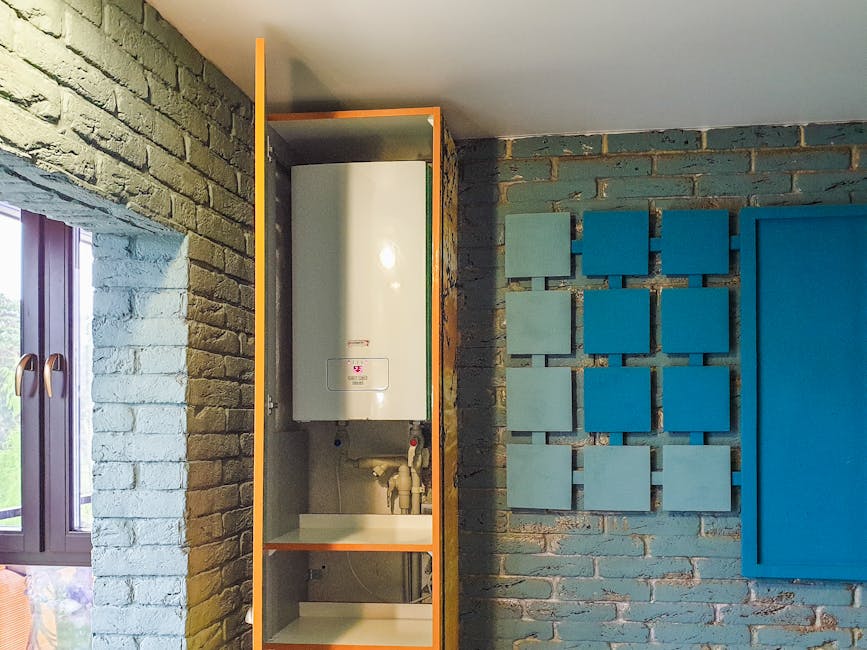
In Tampa homes, HVAC improvements typically yield the largest energy savings. High-efficiency heat pumps provide both efficient cooling and heating for our climate. Smart zoning systems direct conditioning only where needed, while properly sized and sealed ductwork ensures the air you’re paying to cool actually reaches its destination. And don’t underestimate the power of regular maintenance—a well-tuned system can be significantly more efficient than a neglected one.
For bathroom-specific water efficiency ideas, browse our guide to Eco-Friendly Bathroom Fixtures.
Renewable Energy & Smart Tech
Once you’ve reduced your home’s energy appetite through efficiency measures, it’s time to consider generating your own clean energy and optimizing usage with smart technology.
Solar photovoltaic (PV) systems have become much more affordable and efficient in recent years. In sunshine-rich Tampa, solar panels can generate substantial electricity—potentially eliminating your electric bill entirely. Beyond the immediate savings, homes with solar installations typically sell for about $15,000 more than comparable non-solar homes.
Want to take energy independence further? Battery storage systems like the Tesla Powerwall store excess solar energy for evening use or during power outages—particularly valuable during hurricane season!
Smart home technology helps squeeze maximum efficiency from your home’s systems. Programmable thermostats can trim 10% annually from heating and cooling costs by adjusting temperatures when you’re away or sleeping. Smart lighting systems with occupancy sensors ensure lights aren’t burning in empty rooms, while energy monitoring systems help identify waste. Even automated window coverings can adjust throughout the day for optimal solar gain in winter or shading in summer.
Thanks to the Inflation Reduction Act, these technologies are more affordable than ever with tax credits covering up to 30% of solar installation costs and significant rebates for other efficiency upgrades.
At Salt & Pepper, we’ve helped countless Tampa homeowners steer these options, creating homes that are not just beautiful, but brilliantly efficient and forward-thinking too.
Choosing Sustainable Materials & Cutting Renovation Waste
The materials you select for your home renovation speak volumes about your environmental values. Making sustainable choices doesn’t just reduce your ecological footprint—it often creates a healthier, more distinctive living space with character and soul.
When we approach eco-friendly home renovations at Salt & Pepper, we love guiding Tampa homeowners through the exciting world of sustainable materials. The options today are far more diverse and beautiful than most people realize!
Reclaimed wood brings best character to floors and accent walls. There’s something magical about walking on floorboards that might have supported a historic Ybor City warehouse or decorating with beams from an old Florida barn. Beyond their beauty, these materials carry stories while preventing new trees from being harvested.
Bamboo offers a modern, sustainable alternative that grows to maturity in just 3-5 years (compared to decades for hardwoods). For kitchen renovations, we recommend formaldehyde-free versions that won’t off-gas harmful chemicals into your home.
Cork flooring provides a uniquely comfortable walking surface that’s naturally antimicrobial and harvested without harming trees—just the bark is removed, and it regrows! It’s perfect for kitchens where you spend hours standing.
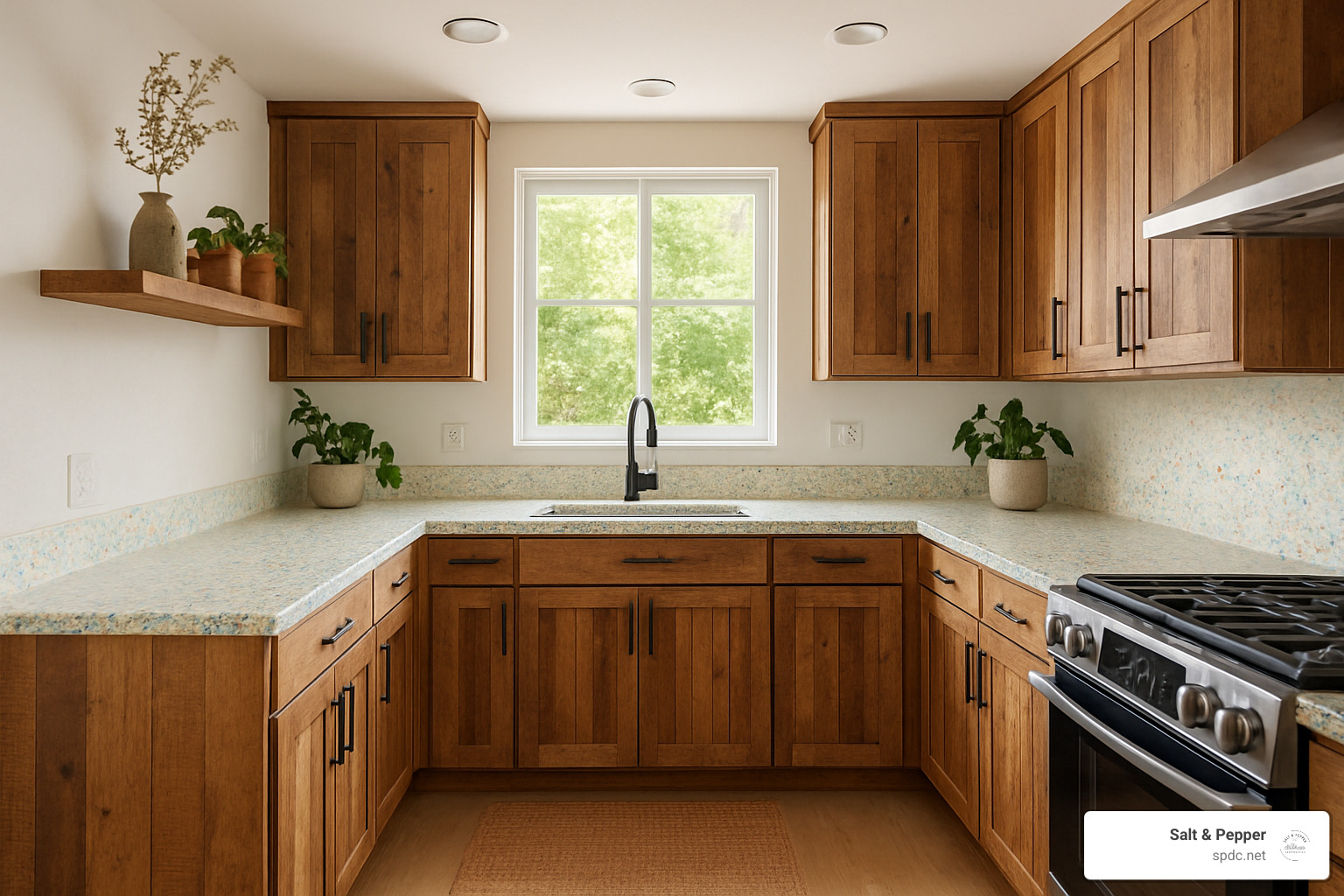
For countertops, we’ve seen clients fall in love with recycled glass surfaces that sparkle with bits of repurposed bottles, Paperstone made from recycled paper and non-petroleum resins, and even mycelium composites created from mushroom roots. These alternatives often become conversation pieces while reducing demand for quarried stone.
As one delighted Tampa homeowner told us: “We incorporated reclaimed heart pine flooring from an old warehouse in Ybor City into our kitchen renovation. Not only is it beautiful and durable, but it also connects our home to Tampa’s history in a meaningful way.”
But choosing sustainable materials is only half the equation—how we handle construction waste matters tremendously.
Did you know the average home renovation sends about 4.5 tons of material to landfills? At Salt & Pepper, we’ve flipped that model through thoughtful deconstruction instead of demolition. This careful approach allows us to salvage usable materials, from vintage doorknobs to perfectly good cabinets, and donate them to organizations like Habitat for Humanity ReStore where they’ll find new life in another home.
We also implement rigorous on-site sorting systems to separate recyclables from true waste. This extra step typically diverts 70-80% of project debris from landfills—a fact we’re immensely proud of.
Material Certifications & Healthy Finishes
With so many products claiming to be “green,” certifications help cut through the marketing noise to find truly sustainable options.
When selecting wood products, look for the FSC (Forest Stewardship Council) certification. This isn’t just another logo—it represents rigorous standards for responsible forest management, ensuring your beautiful new maple cabinets didn’t contribute to deforestation.
For products that will be inside your home, Greenguard certification is worth its weight in gold. It verifies that materials meet strict chemical emission limits, helping protect your family from harmful indoor air pollutants.
We’re particularly fond of Declare labels because they provide complete transparency about product ingredients—there’s nowhere for harmful chemicals to hide. Similarly, Cradle to Cradle certification evaluates materials based on health impacts, recyclability, and manufacturing practices.
When it comes to finishes, the choices you make directly impact the air you breathe. Zero-VOC paints have come a long way—brands like Clare offer beautiful colors without the headache-inducing fumes of conventional options. For wood finishes, we often recommend natural oils that highlight wood’s beauty without harsh chemicals.
One of our favorite finishing techniques for walls is natural clay plaster. Beyond its gorgeous texture and depth, it naturally regulates humidity and never off-gasses. Clients are always amazed by how these walls seem to “breathe” with the seasons.
Waste-Smart Jobsite Practices
Construction generates a staggering 600 million tons of waste annually in the US alone. At Salt & Pepper, we’re committed to being part of the solution through smart practices that make a real difference.
Source separation is our baseline standard on every Tampa jobsite. Rather than tossing everything into one dumpster, we maintain separate containers for clean wood, metals, cardboard, masonry materials, and mixed debris. This simple step dramatically increases what can be recycled.
We also implement modular sizing whenever possible, designing with standard dimensions to minimize cutoffs and waste. It’s amazing how planning measurements around available material sizes can reduce waste by 15-20%.
Our forward-thinking approach includes design for disassembly—planning how components can be removed and reused in the future. Simple choices like using screws instead of adhesives make a huge difference when it’s time for the next renovation.
We’ve built strong relationships with local reuse marketplaces that connect unwanted materials with new users. In Tampa, our network includes:
– Habitat for Humanity ReStore
– The Recycled House
– Tampa Salvage
– Several online marketplaces for construction materials
“The reclaimed cypress we salvaged from your last project became the stunning accent wall in our current renovation,” our project manager recently told a client. “That’s the circular economy in action!”
For every eco-friendly home renovation we complete, we track and share our landfill diversion rates with clients. There’s something deeply satisfying about knowing your beautiful new kitchen sent minimal waste to the landfill.
Money Matters, Incentives & Myths Busted
Let’s talk dollars and cents – because we know that’s what often makes or breaks the decision to go green. The good news? Eco-friendly home renovations don’t have to break the bank, especially with the impressive array of financial incentives available today.
The federal government is currently offering some seriously attractive tax credits, including a whopping 30% off the cost of solar PV systems (hello, Florida sunshine!), up to $2,000 for high-efficiency heat pumps, and valuable credits for energy-efficient windows, doors, and insulation. These aren’t just small change – they can significantly reduce your project costs.
Don’t stop at federal incentives, though. Many Tampa homeowners are surprised to learn about the state and local perks available, like property tax exemptions that reward your green improvements, sales tax breaks on energy-efficient products, and specialized rebates for various upgrades.
Your utility company might be your unexpected best friend in this journey. Florida power companies often provide rebates for ENERGY STAR appliances, practically give away LED lighting, and offer substantial incentives for insulation and HVAC upgrades. Water companies frequently chip in with conservation rebates too.
Not sure what’s available in our Tampa area? The DSIRE database is like a treasure map for finding every available incentive that applies to your specific location and project.
Financing these improvements has also gotten much easier with specialized green options:
– Energy-efficient mortgages that factor in your future utility savings
– Home equity loans designed specifically for energy improvements
– PACE financing that ties the investment to your property rather than to you personally
For a Tampa-specific breakdown of available programs, take a peek at our guide to Home Upgrade Rebates.
Balancing Budget & Long-Term Savings
When our clients at Salt & Pepper plan their renovation budgets, we encourage thinking beyond just the upfront costs. The smartest approach considers both immediate expenses and the long-term returns.
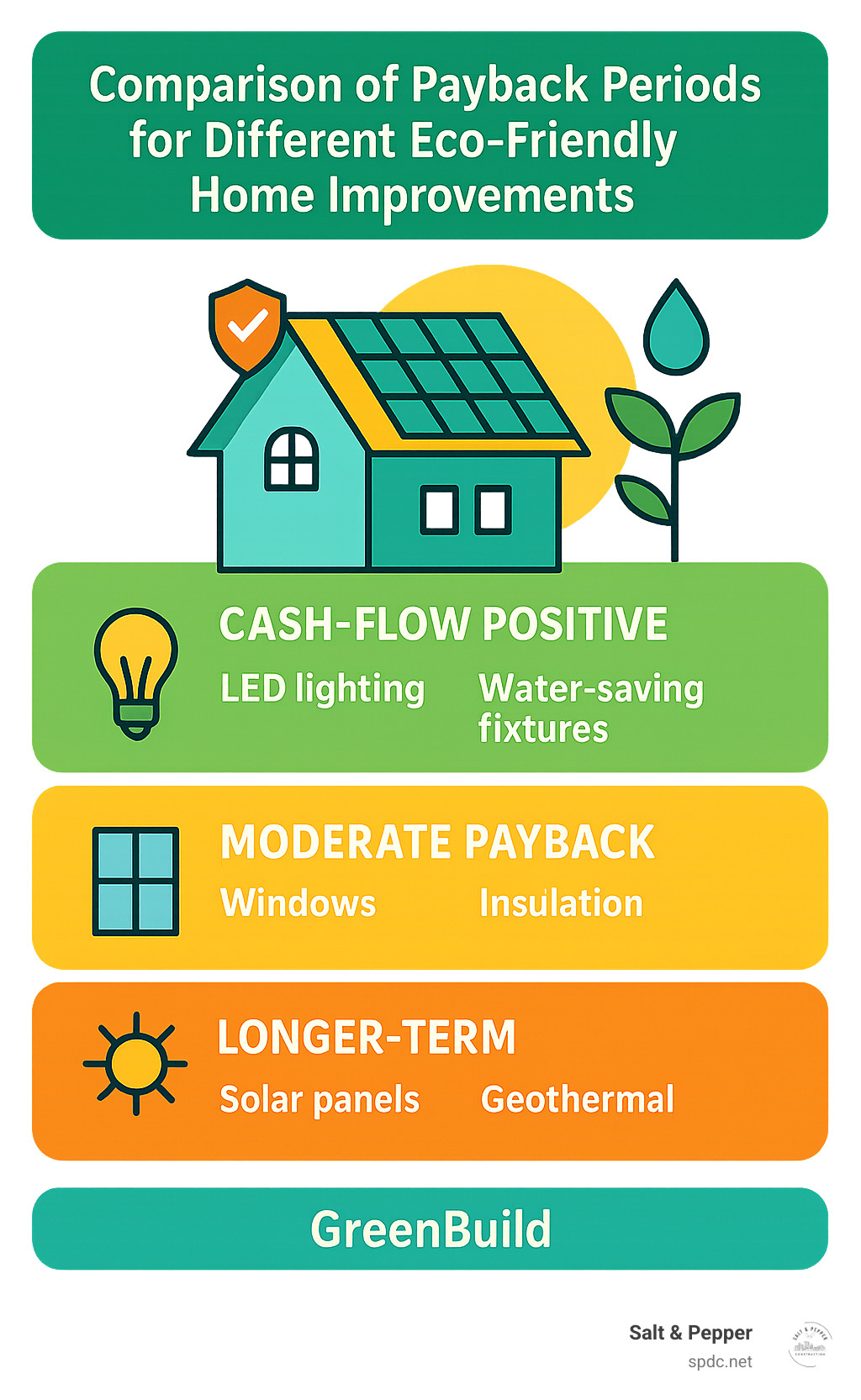
Some upgrades practically pay for themselves right away. Cash-flow positive improvements actually save more each month than they cost to finance – think LED lighting, water-saving fixtures, and certain insulation improvements. One Tampa family we worked with saved enough on their monthly electric bill to completely cover the payment on the small loan they took for these upgrades.
Then there are the moderate payback improvements that take 3-7 years to recoup their costs – typically HVAC upgrades, window replacements, and more extensive insulation work. While not immediate, these still deliver impressive returns well within the time most families stay in their homes.
For the long-haul planners, longer-term investments like solar panels or geothermal systems might take 7-15 years to pay back completely, but they’ll continue providing benefits for decades after that point. Plus, they add substantial value to your home immediately.
Don’t forget about maintenance savings! Many sustainable materials and systems require significantly less upkeep than their conventional counterparts. The composite decking we installed for a Davis Island client five years ago hasn’t needed a single treatment, while their neighbor has already refinished their traditional wood deck twice.
Quick, Budget-Friendly Eco Hacks
Not every green improvement requires knocking down walls or a five-figure investment. Some of the most impactful changes are surprisingly affordable and simple:
LED lighting is perhaps the easiest win in the sustainable home game. These bulbs use 75% less energy than old-school incandescents and last up to 25 times longer. Just replacing the five most-used fixtures in your home can save over $75 annually on your electric bill.
Sealing up your home’s envelope with weather-stripping and caulking around windows, doors, and wherever pipes or wires enter your home can slash energy bills by up to 10%. The materials cost less than $50, and many homeowners can tackle this project themselves over a weekend.
Those electronics still draw power even when they’re “off,” but smart power strips eliminate this vampire power drain, potentially saving up to $200 yearly in a typical Tampa home. They’re especially valuable in entertainment centers and home offices.
A programmable thermostat is a no-brainer in our Florida climate, with basic models starting around $30 and the potential to cut 10% or more from your heating and cooling costs. The smart versions that learn your preferences and adjust automatically are worth the extra investment for many families.
In water-conscious Florida, low-flow aerators for your faucets cost just a few dollars each and can reduce water use by 30% or more – you’ll barely notice the difference except in your water bill.
We love seeing the creative upcycled décor our Tampa clients incorporate into their renovations. One South Tampa family created stunning wall art from cypress wood salvaged during their kitchen remodel – a conversation piece with both beauty and history.
For more wallet-friendly green ideas, check out our popular article on Environmentally Friendly Home Improvements.
FAQs About Sustainable Renovations
What is the average payback period for major eco upgrades?
Payback periods vary based on the specific improvement, local energy costs, our Tampa climate, and available incentives. Here’s what we typically see:
Insulation upgrades generally pay for themselves in just 1-4 years, making them one of the smartest investments for Florida homes where cooling costs dominate.
LED lighting is the ultimate quick win, with payback often under 1 year.
High-efficiency HVAC systems typically take 5-10 years to recoup their costs, but considering they’ll last 15-20 years, that’s still excellent value.
Solar PV systems in sunny Florida usually reach payback in 7-12 years, faster than the national average thanks to our abundant sunshine.
Energy-efficient windows have a longer horizon of 7-15 years, but they immediately improve comfort by eliminating hot spots and drafts.
Water-saving fixtures are another quick win, usually paying for themselves in under 2 years in most Tampa homes.
These improvements deliver benefits beyond just dollars – including improved comfort, healthier indoor environments, and reduced environmental impact.
How do I maintain my green features over time?
Proper maintenance ensures your sustainable improvements perform at their best for years to come:
Your HVAC system needs professional service annually, with filters changed every 1-3 months. This is especially important in Florida where systems work overtime during our hot summers.
Solar panels are remarkably low-maintenance, generally needing just occasional cleaning, particularly after our dustier spring months or pollen season.
If you’ve installed a rainwater harvesting system, plan to clean filters and check pumps seasonally to prevent clogs and ensure efficient operation.
Smart home technology requires software updates and occasionally new batteries for sensors. Setting up automatic updates when available helps keep everything running smoothly.
Low-VOC finishes sometimes need more frequent refreshing than their conventional, chemical-laden counterparts, but the trade-off of healthier indoor air quality is worth it for most families.
We recommend creating a simple maintenance calendar to track necessary upkeep and set reminders for seasonal tasks. Many of our clients use digital calendar reminders to stay on top of these important but easy-to-forget tasks.
Can I DIY Eco-friendly home renovations without a pro?
Absolutely! Many sustainable improvements are perfect for DIY enthusiasts, while others definitely benefit from professional expertise:
DIY-friendly projects that most homeowners can tackle include installing programmable thermostats, replacing fixtures with LED models, adding weather-stripping and caulking, installing low-flow faucet aerators and showerheads, setting up rain barrels for garden irrigation, and applying window films for improved efficiency.
Projects typically requiring professionals include major insulation upgrades, window replacements, solar PV installation, HVAC system upgrades, and structural modifications for passive solar. These usually involve specialized knowledge, tools, or safety considerations that make professional installation the wiser choice.
Even when you hire professionals like our team at Salt & Pepper, staying involved and informed throughout your renovation ensures your sustainability goals remain front and center. We love working with engaged homeowners who share our passion for creating homes that are both beautiful and environmentally responsible.

Conclusion
Let’s face it – your home is more than just four walls and a roof. It’s your sanctuary, your biggest investment, and increasingly, a reflection of your values. Eco-friendly home renovations offer a unique opportunity to align these aspects while creating a space that’s healthier, more comfortable, and kinder to both your wallet and our planet.
Throughout our journey exploring sustainable renovations, we’ve seen how thoughtful changes – from simple weekend projects to comprehensive remodels – can dramatically transform a home’s environmental footprint without sacrificing style or comfort.
For Tampa homeowners considering taking the green plunge, here are the essential takeaways:
Begin with an energy audit to pinpoint exactly where your home is losing efficiency. This diagnostic step eliminates guesswork and ensures your renovation dollars target the most impactful improvements for your specific situation.
Focus first on tightening your home’s envelope – the boundary between conditioned and unconditioned space. Proper insulation, thorough air sealing, and high-performance windows create the foundation for every other efficiency measure. In our hot, humid Tampa climate, this step alone can slash cooling costs dramatically.
Accept materials that are kind to both your family and the environment. Today’s sustainable options – from reclaimed wood flooring to zero-VOC paints – offer stunning aesthetics while creating healthier indoor spaces free from harmful chemicals and pollutants.
Don’t leave money on the table! Take full advantage of available tax credits, rebates, and incentives that can significantly offset upgrade costs. The financial landscape for green renovations has never been more favorable.
Look beyond immediate price tags to consider the complete picture. Many eco-upgrades that seem expensive initially deliver impressive returns through utility savings, increased home value, and reduced maintenance costs.
Perhaps most importantly, understand that going green doesn’t mean compromising on beauty or function. Today’s sustainable options stand toe-to-toe with conventional alternatives in performance, durability, and style – while offering benefits conventional materials simply can’t match.
At Salt & Pepper, we’ve witnessed how eco-friendly home renovations transform not just houses, but the daily lives of the families who live in them. From the client whose chronic allergies disappeared after removing VOC-laden materials to the family whose utility bills plummeted by 40%, these improvements deliver real, tangible benefits beyond mere environmental feel-good points.
We’re passionate about guiding Tampa homeowners through every step of the sustainable renovation journey – from initial energy audits to selecting the perfect materials to flawless execution that brings your green vision to life.
Ready to explore how an eco-friendly renovation could transform your Tampa home? Learn more about our remodeling services or reach out to schedule a consultation. Together, we can create a space that nurtures your family, respects your budget, and honors the planet we all share.


