

For the first time in nine years, white is no longer the top preferred kitchen cabinet finish among homeowners. This seismic shift in kitchen remodeling trends 2026 signals something far more significant than a simple color preference change—it represents a fundamental transformation in how homeowners approach one of their home’s most valuable spaces. As housing stock ages and homeowners stay in their properties longer, the kitchen has evolved from a purely aesthetic showcase into a highly functional, personalized command center designed for both daily living and long-term value.
The kitchen remodeling trends 2026 landscape is shaped by real market pressures and changing lifestyle priorities. With more than three-quarters of renovating homeowners now adding specialty storage features and 100% of design professionals agreeing that custom lifestyle features will dominate the next three years, the message is clear: today’s kitchen investments must work harder, look better, and adapt smarter than ever before.
Why Do 2026 Kitchen Remodeling Trends Matter for Your Investment?
Understanding kitchen remodeling trends 2026 isn’t about chasing fleeting design fads—it’s about making informed investment decisions that protect and enhance your home’s value. The NKBA 2026 Kitchen Trends Report reveals that design philosophy has fundamentally shifted toward function, personalization, and smarter storage rather than aesthetics alone.
This evolution reflects broader housing market dynamics. Homeowners are staying in their properties longer, and aging housing stock motivates people to invest in improving existing kitchens rather than moving. When you commit to a kitchen remodel in 2026, you’re not just updating countertops and cabinets—you’re creating a space that must serve your family’s needs for the next 10-15 years while maintaining strong resale appeal.
The financial stakes are substantial. Kitchen remodels consistently rank among the top home improvement projects for return on investment, but only when executed with both current functionality and future market trends in mind. Projects like professional kitchen renovations require strategic planning that balances personal preferences with proven market demand.
“Kitchen design in 2026 is fundamentally driven by function, personalization, and smarter storage rather than aesthetics alone. This shift reflects broader housing market pressures, motivating people to invest in improving existing kitchens rather than moving.”
What Makes Sculptural Islands the Statement Centerpiece of 2026?
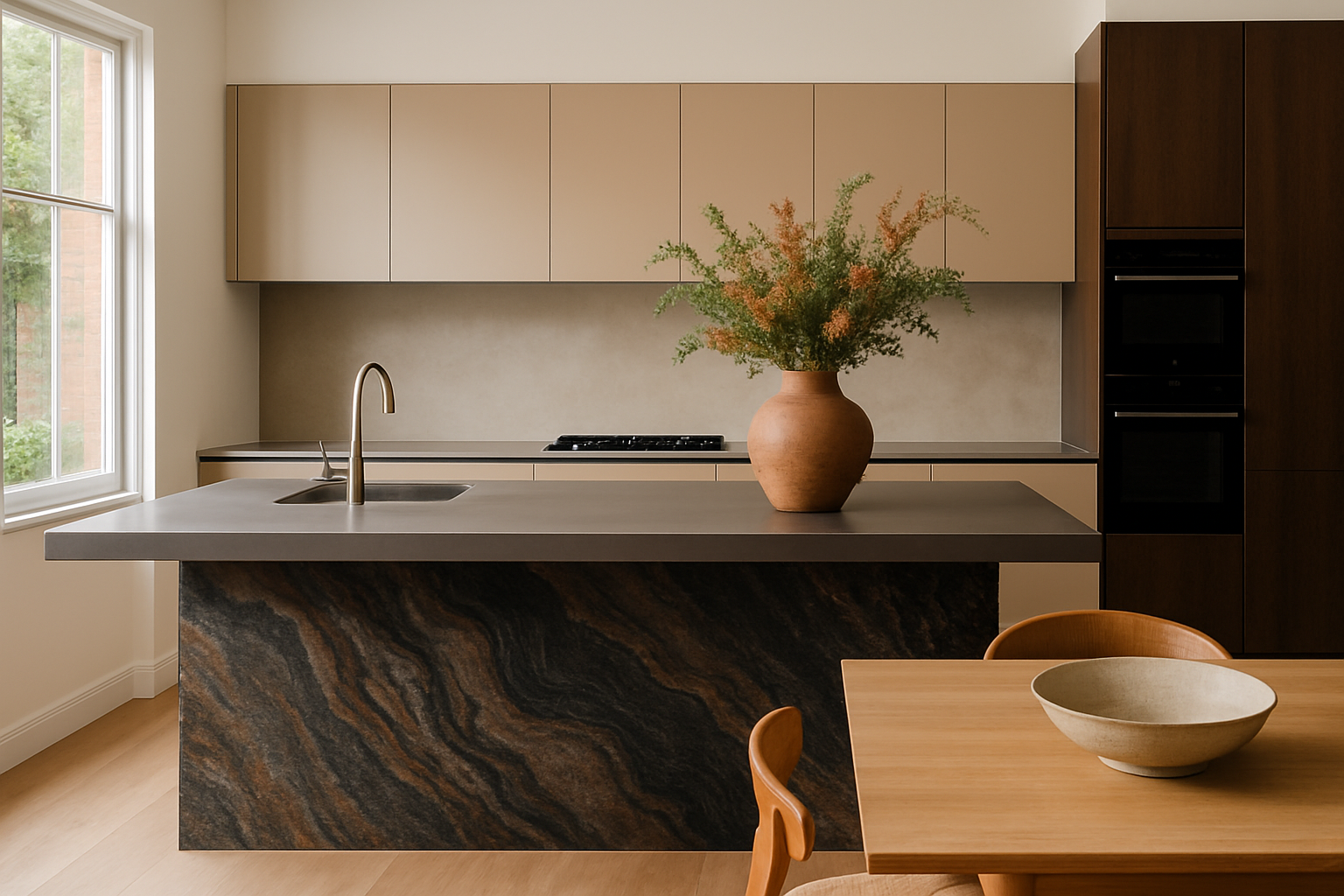
The kitchen island has evolved from a simple prep surface into the architectural heart of the modern kitchen. In 2026, sculptural islands with dramatic shapes, mixed materials, and multi-functional capabilities are transforming how families interact with their kitchens. According to industry data, 57% of homeowners are incorporating statement colors specifically in their islands, making them the focal point of kitchen design.
Today’s islands pack maximum functionality into their footprint. Designers are incorporating refrigerated drawers, hidden charging stations, integrated trash and recycling centers, and specialized storage compartments. 85% of design professionals report that dedicated beverage areas rank among the top custom lifestyle features, and islands provide the perfect location for these amenities.
The aesthetic possibilities have expanded dramatically. Waterfall countertops in book-matched natural stone create museum-quality focal points. Curved edges soften the kitchen’s geometry while improving traffic flow. Contrasting materials—such as a honed marble top paired with richly stained wood cabinetry or metal accents—add depth and visual interest that flat, uniform designs cannot achieve.
Multi-level islands are gaining traction for their practical benefits. A raised section conceals meal prep clutter from guests while providing comfortable bar seating. Lower sections accommodate children’s homework stations or pet feeding areas. This vertical variation creates natural zones within open-concept spaces without requiring walls or visual barriers.
How Are Smart Technology and Connected Kitchens Transforming Daily Life?
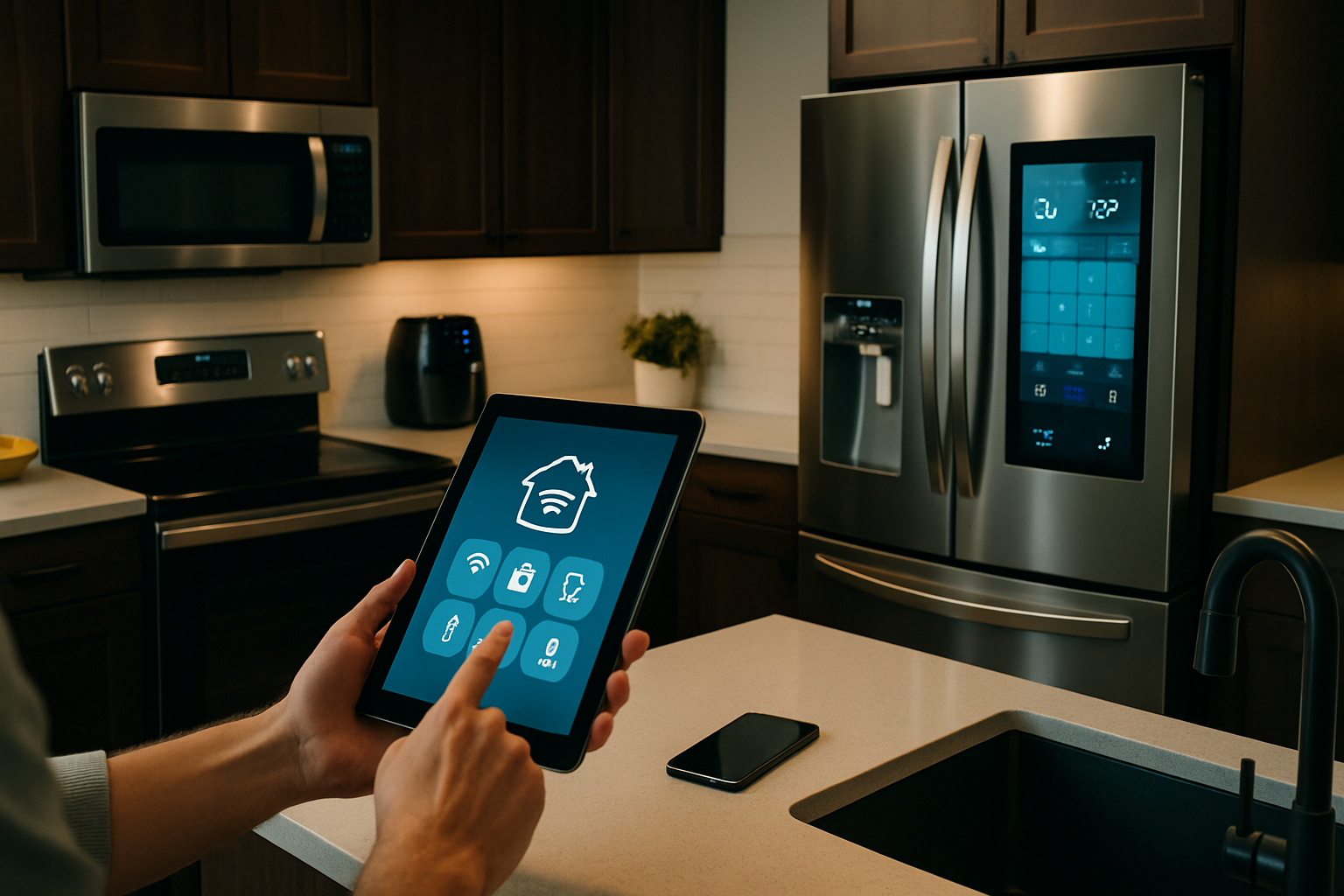
The kitchen remodeling trends 2026 place significant emphasis on seamlessly integrated technology that simplifies daily routines without cluttering countertops or disrupting the design aesthetic. Smart technology has moved beyond novelty status to become expected infrastructure in high-functioning kitchens.
Voice-activated faucets, precision induction cooktops with temperature monitoring, refrigerators with inventory management systems, and smart ovens that adjust cooking times based on internal food temperature represent just the beginning. The most successful implementations hide technology behind beautiful facades—72-85% of homeowners now prefer panel-faced refrigeration and dishwashers that blend invisibly into cabinetry.
Charging infrastructure has become non-negotiable. Islands now include discreet USB ports and wireless charging surfaces built directly into countertops. Dedicated device docking stations with cable management keep smartphones and tablets accessible but organized, addressing the reality that kitchens function as family communication hubs.
Lighting technology has advanced beyond simple task illumination. Smart LED systems adjust color temperature throughout the day, providing energizing cool light for morning meal prep and warm, ambient lighting for evening entertaining. Motion sensors automatically illuminate cabinet interiors when doors open, while under-cabinet strips eliminate shadows on work surfaces.
The most forward-thinking installations incorporate whole-home integration, allowing the kitchen to communicate with HVAC systems, security cameras, and entertainment systems. This connectivity enables scenarios like automatically activating the range hood fan when smoke is detected or adjusting room temperature when the oven is preheating.
What Textured Finishes and Material Innovations Are Defining 2026?
The reign of glossy, reflective surfaces has ended. Kitchen remodeling trends 2026 embrace tactile, sensory-rich finishes that add depth, hide fingerprints, and create more forgiving, livable spaces. Industry experts report that textured materials now dominate specification sheets across all kitchen elements.
Cabinet finishes showcase this evolution dramatically. Matte and satin sheens have replaced high-gloss lacquers as the preferred option. Specialized techniques like wire-brushing, cerusing, and hand-scraping highlight natural wood grain while adding three-dimensional interest. These treatments create character that improves with age rather than showing wear as defects.
| Material Type | Popular Finishes | Key Benefits | Design Professional Preference |
|---|---|---|---|
| Wood Cabinets | Wire-brushed, cerused, hand-scraped | Hides wear, adds dimension | Light wood stains rank #1 |
| Backsplashes | 3D tile, zellige, textured stone | Visual interest, light play | 60% incorporating statement colors |
| Countertops | Leathered stone, honed surfaces | Low maintenance, fingerprint resistant | 75% choosing slab backsplashes |
| Hardware | Unlacquered brass, aged bronze | Living finish, patina development | Warm metals dominate specifications |
Stone and solid surface materials are moving away from polished perfection toward more natural presentations. Leathered granite and honed marble provide sophisticated matte finishes that resist water spots and etching far better than polished alternatives. These surfaces feel warmer to the touch and create visual calm rather than high-contrast reflection.
Metal accents embrace patina and character. Unlacquered brass, aged bronze, and blackened steel develop unique finishes over time, creating individualized character impossible to replicate. This “living finish” philosophy extends to hardware, lighting fixtures, and even appliance trim, celebrating natural aging rather than fighting against it.
Backsplash treatments have become textural showcases. Three-dimensional tiles, handmade zellige with irregular surfaces, and natural stone slabs with pronounced veining transform vertical surfaces into art installations. 60% of homeowners are incorporating statement colors specifically in backsplash areas, making these textured surfaces doubly impactful.
How Are Color Palettes and Wellness-Inspired Design Reshaping Kitchens?
The most significant color shift in kitchen remodeling trends 2026 marks the end of the all-white kitchen era. Light wood stains now rank first among cabinet finish preferences, with off-white slipping to third place—the first time white has lost its top position in nine years. This transformation reflects deeper priorities around wellness, warmth, and psychological comfort.
Medium-toned woods lead the natural material comeback, followed by lighter finishes that bring organic warmth without overwhelming smaller spaces. Walnut, white oak, and ash create foundations that ground kitchens in nature while providing versatile backdrops for evolving accent colors. These wood tones work harmoniously with both cool and warm color schemes, offering flexibility as design preferences shift.
Multi-color kitchens have moved decisively mainstream. The traditional formula of a colored island with white perimeter cabinets is evolving significantly, with substantial increases in color on perimeter cabinets—not just islands. Many kitchens now incorporate two, three, or more finishes in a single space. Hybrid approaches mixing painted cabinets with natural wood—such as sage-green lowers with ash uppers—add depth and allow for easier future updates without complete replacement.
Statement color integration follows strategic patterns. According to the NKBA data, new statement colors appear in:
- Backsplash: 60% of respondents
- Wallpaper: 60% of respondents
- Island: 57% of respondents
- Decorative accessories: 55% of respondents
This distribution allows homeowners to incorporate personality and trend-forward elements without committing expensive permanent installations entirely to bold colors. A vibrant backsplash or painted island provides impact while maintaining neutrality where it matters most for resale value.
Wellness-inspired palettes emphasize earth tones, muted greens, warm terracotta, and soft blues that promote calm and reduce stress. These biophilic color choices connect interior spaces to nature, supporting mental health and creating restorative environments. The psychological impact of kitchen color cannot be overstated—families spend significant time in these spaces, and color choices profoundly affect mood and wellbeing.
What Storage Solutions and Hidden Functionality Features Are Essential?
Built-in storage has become foundational to kitchen design success, with more than three-quarters of renovating homeowners adding specialty storage features. Kitchen remodeling trends 2026 prioritize intelligent organization systems that maximize every cubic inch while maintaining clean, uncluttered appearances. Professional designers report that comprehensive storage planning now drives entire layout decisions.
Pantry solutions dominate storage investments, with 47% of homeowners adding pantry cabinets, 16% incorporating walk-in pantries, and 7% creating butler’s pantries or dedicated prep kitchens. These spaces address the reality of bulk shopping, specialized dietary needs, and small appliance proliferation that characterize modern households.
Custom lifestyle features show 100% agreement among survey respondents that these elements will be popular in the next three years. Leading functional additions include:
- Dedicated beverage areas: 85% of design professionals
- Pet feeding stations: 64% of design professionals
- Eat-in kitchen spaces: 59% of design professionals
- Refrigerators with custom configurations: 70% top demand lists
Hidden functionality represents the ultimate marriage of aesthetics and practicality. Appliance garages with tambour doors conceal coffee stations and toasters. Pull-out cutting boards and integrated knife storage keep counters clear. Toe-kick drawers utilize previously wasted space for flat items like baking sheets and cooling racks.
Islands packed with storage solution s transform underutilized volume into highly organized zones. Deep drawers with custom inserts accommodate pots, pans, and small appliances. Vertical dividers organize baking sheets, cutting boards, and serving platters. Specialized organizers for spices, utensils, and food storage containers ensure everything has a designated home.
The minimalist aesthetic driving 60% of identified popular styles depends entirely on robust hidden storage. Slab cabinet doors with integrated handles (69% popularity) and panel-faced appliances (72-85% preference) create seamless surfaces possible only when clutter is systematically eliminated through comprehensive storage planning.
Innovative storage extends to unexpected locations. Vertical pull-outs maximize narrow spaces between appliances. Corner solutions with kidney-shaped rotating shelves or pull-out systems eliminate dead zones. Ceiling-height cabinets with integrated step stools provide accessible storage while maximizing vertical space.
How Can You Future-Proof Your Kitchen Investment for Maximum ROI?
Strategic kitchen remodeling trends 2026 planning requires balancing current needs with long-term flexibility and market appeal. Future-proofing protects your investment by ensuring your kitchen remains functional, stylish, and valuable for years to come. When working with experienced kitchen remodeling professionals, consider these evidence-based strategies.
Design style selection critically impacts longevity. Transitional/timeless design leads at 72% of respondents naming it as popular in the next three years, followed by contemporary/modern/minimalism at 60%, and organic/natural designs at 58%. This data suggests that avoiding extreme stylistic statements in permanent installations preserves broader market appeal while allowing personality expression through changeable elements.
Infrastructure investments should exceed current needs. Electrical capacity for future appliance upgrades, plumbing rough-ins for potential fixture additions, and structural support for reconfiguration options cost relatively little during initial construction but become exponentially expensive as retrofits. Plan for charging stations, smart appliance integration, and potential accessibility modifications even if not immediately required.
Material quality trumps trendy finishes. Solid wood cabinets with dovetail joinery and full-extension soft-close hardware will outlast and outperform particleboard alternatives regardless of style changes. Natural stone countertops can be refinished and resealed; laminate cannot. Quality materials appreciate with age while inferior products simply deteriorate.
Modular and adaptable systems provide flexibility as needs evolve. Adjustable shelving, removable drawer organizers, and reconfigurable storage systems accommodate changing household dynamics without requiring reconstruction. Cabinet interiors that adapt to new storage needs extend functional life considerably beyond fixed configurations.
Universal design principles integrate seamlessly while broadening appeal. Varied counter heights accommodate different users and tasks. Pull-out work surfaces and lowered wall cabinets improve accessibility without appearing institutional. These features benefit households at every life stage while significantly expanding potential buyer pools during resale.
The continuous countertop trend—with 22% of homeowners planning matching backsplash and countertop materials—offers both aesthetic coherence and practical future-proofing. Slab backsplashes eliminate grout maintenance while creating timeless visual impact that transcends specific trend cycles. 75% of respondents favor this approach for good reason: it delivers lasting elegance with minimal upkeep.
Key Takeaways
- Function drives design: Kitchen remodeling trends 2026 prioritize personalization, smart storage, and practical functionality over pure aesthetics, with more than 75% of homeowners adding specialty storage features.
- Color revolution underway: White cabinets have lost their nine-year dominance as light wood stains claim the #1 position, while multi-color kitchens using two, three, or more finishes become mainstream.
- Textured materials dominate: Matte and tactile finishes replace glossy surfaces across all elements, with wire-brushed woods, leathered stone, and three-dimensional tiles creating sensory-rich environments.
- Islands become multifunctional centers: Sculptural islands integrate storage, technology, seating, and specialized zones, with 57% of homeowners making islands the primary statement element.
- Smart technology integrates invisibly: Connected appliances and systems hide behind panel-faced designs (72-85% preference) while providing voice activation, inventory management, and whole-home integration.
- Timeless design preserves value: Transitional styles lead at 72% professional preference, supporting long-term investment protection while allowing personality expression through changeable accent elements.
- Custom lifestyle features are universal: 100% of design professionals agree that personalized elements like beverage stations (85%), pet areas (64%), and flexible spaces (94%) will dominate the next three years.
Conclusion
The kitchen remodeling trends 2026 represent far more than aesthetic preferences—they reflect fundamental shifts in how we live, work, and invest in our homes. From the dethroning of all-white kitchens to the rise of sculptural islands and smart technology integration, these trends demonstrate that successful kitchen design now balances beautiful form with exceptional function.
The data is compelling: with transitional design leading at 72%, storage additions exceeding 75%, and custom features achieving 100% professional agreement, the path forward is clear. Homeowners who embrace these evidence-based trends position their kitchens as valuable, adaptable assets that serve their families beautifully while protecting their investment for years to come.
Whether you’re planning a complete renovation or strategic updates, understanding these trends empowers better decision-making. The most successful projects don’t simply follow fashion—they thoughtfully integrate proven design principles, quality materials, and personalized functionality that stands the test of time. Ready to transform your kitchen with 2026’s most impactful trends? Connect with experienced design professionals who can translate these insights into your perfect space.
Frequently Asked Questions
What is the biggest kitchen trend for 2026?
The most significant kitchen remodeling trend 2026 is the shift away from all-white kitchens, with light wood stains now ranking #1 for the first time in nine years. This change reflects a broader move toward warm, natural materials and personalized, functional design over purely aesthetic considerations. Multi-color kitchens using two or three finishes in a single space have also become mainstream, with substantial color increases on perimeter cabinets rather than just islands.
Are white kitchens going out of style in 2026?
White kitchens are not disappearing entirely, but they’re no longer the default choice. Off-white has slipped to third place in cabinet finish preferences, behind light wood stains and other natural tones. The trend reflects homeowner desire for warmer, more personalized spaces that feel lived-in rather than sterile. However, white still works beautifully as one element in multi-finish kitchens or in specific design contexts where brightness and simplicity are priorities.
What kitchen features provide the best return on investment in 2026?
Specialty storage solutions, quality materials, and timeless design styles provide the strongest ROI. With over 75% of homeowners adding built-in storage features and 72% of professionals recommending transitional design, these investments satisfy both current function and future market appeal. Smart technology integration, panel-faced appliances (72-85% preference), and multi-functional islands also rank highly for adding value while improving daily usability.
How much should I budget for a kitchen remodel incorporating 2026 trends?
Kitchen remodeling costs vary significantly based on scope, materials, and location, but incorporating 2026 trends doesn’t necessarily increase costs—it redirects spending priorities. Investing in quality cabinetry with smart storage (pantry cabinets at 47% adoption), durable natural materials, and integrated technology often provides better long-term value than superficial aesthetic upgrades. Professional design consultation helps allocate budgets strategically across elements that deliver both immediate function and lasting appeal.
What colors are most popular for kitchen cabinets in 2026?
Light wood stains lead cabinet color preferences, followed by medium-toned natural woods like walnut and white oak. Warm earth tones, muted greens (especially sage), and soft blues are popular for painted cabinets, often combined with natural wood in hybrid finishes. The multi-color approach allows homeowners to use 2-3 finishes in a single kitchen, with statement colors appearing on islands (57%), backsplashes (60%), and through decorative accessories (55%) rather than dominating entire spaces.
Should I include smart technology in my 2026 kitchen remodel?
Yes, but prioritize integration over gadgetry. The most valuable smart technology includes panel-faced appliances that blend invisibly (72-85% preference), integrated charging stations, precision cooking systems, and lighting with adjustable color temperature. Focus on infrastructure that improves daily function—voice-activated faucets, refrigerators with inventory management, and smart ovens with temperature monitoring—rather than novelty features. The key is technology that simplifies life without cluttering counters or disrupting design aesthetics.
How can I make my kitchen remodel timeless while incorporating 2026 trends?
Focus on transitional design elements (72% professional preference) and quality materials while incorporating trends through changeable components. Choose natural wood cabinets with clean lines, durable stone countertops, and classic layouts as your foundation. Express personality and current trends through backsplashes (60% statement color adoption), wall treatments, lighting fixtures, and accessories that can be updated without major reconstruction. This approach balances immediate style with long-term flexibility and market appeal.


