

Kitchen Remodeling in Clearwater FL: Your Complete 2026 Guide to Costs, ROI, and Design Trends
Quick Answer
Kitchen remodeling in Clearwater FL typically costs $25,000 to $45,000 for mid-range projects, with homeowners recouping 60-70% of costs at resale. This ROI significantly outperforms the regional average of 49%, making kitchen renovations one of the most valuable home improvements in the Tampa Bay area.
Did you know that Clearwater homeowners recoup up to 70% of their kitchen remodeling costs at resale, far exceeding the South Atlantic region’s average of 49%? This remarkable return on investment makes kitchen renovations one of the smartest home improvement decisions you can make in the Tampa Bay area.
Kitchen remodeling in Clearwater FL has become increasingly popular as homeowners recognize the dual benefits of enhanced functionality and substantial property value increases. Whether you’re updating an outdated space or creating your dream culinary hub, understanding local market conditions, costs, and design trends is essential for making informed decisions.
This comprehensive guide provides everything you need to know about kitchen remodeling in Clearwater, from accurate cost projections and ROI data to the latest design trends and permitting requirements specific to Pinellas County. Let’s explore how you can transform your kitchen into a valuable asset that serves your family for years to come.
What Does Kitchen Remodeling Cost in Clearwater FL?
Understanding the financial investment required for kitchen remodeling in Clearwater FL is the first step toward planning your project. Local market conditions, labor rates, and material costs all play significant roles in determining your final budget.
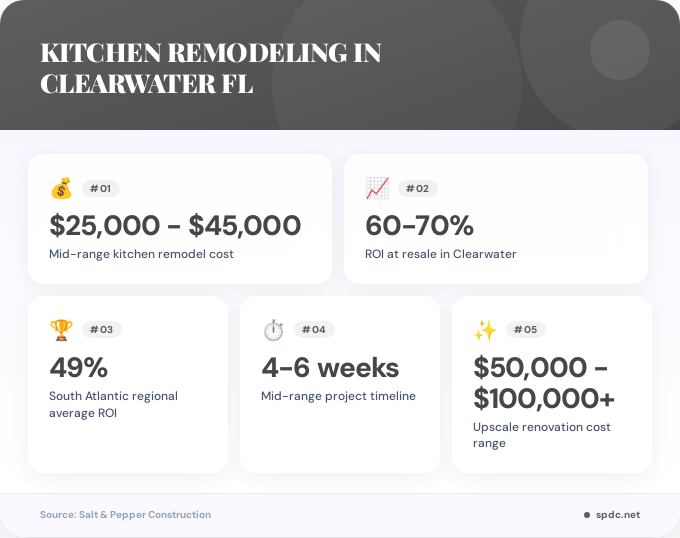
For mid-range kitchen remodels in the Tampa Bay area, including Clearwater, homeowners typically spend between $25,000 and $45,000. This range covers standard updates like new cabinetry, countertops, appliances, flooring, and fixtures without major structural changes.
Upscale renovations that involve custom cabinetry, premium materials, and layout modifications can exceed $75,000. The Tampa Bay market shows consistent pricing across neighborhoods like South Tampa, Westchase, and Clearwater, though specific home values and desired finishes can adjust these figures.
| Remodel Type | Cost Range | ROI at Resale | Project Timeline |
|---|---|---|---|
| Minor Update | $15,000 – $25,000 | 65-75% | 2-3 weeks |
| Mid-Range Remodel | $25,000 – $45,000 | 60-70% | 4-6 weeks |
| Upscale Renovation | $50,000 – $100,000+ | 38-45% | 8-12 weeks |
Several factors influence where your project falls within these ranges. Labor costs in Clearwater reflect the skilled trade shortage affecting Florida, while material selections from budget-friendly laminate to premium quartzite dramatically impact the bottom line.
The scope of work matters significantly. Simple cosmetic updates cost substantially less than projects requiring electrical upgrades, plumbing relocation, or structural modifications. For a detailed breakdown of costs specific to Tampa Bay kitchens, check out this comprehensive pricing guide for 2026.
What ROI Can You Expect from a Clearwater Kitchen Remodel?
Return on investment is where kitchen remodeling in Clearwater FL truly shines compared to other markets. According to Remodeling Magazine’s 2025 Cost vs. Value report, mid-range kitchen remodels in the Tampa Bay area deliver 60-70% ROI at resale, significantly outperforming the South Atlantic region’s average of 49%.
This exceptional performance stems from several local market factors. Tampa Bay’s robust real estate market maintains strong demand for updated homes, and kitchens remain the emotional focal point for buyers touring properties.
“Kitchens consistently rank as the top ROI renovation nationally and in Tampa Bay due to their high buyer emotional appeal. Properly permitted projects in Clearwater often exceed national averages in appraised value lift, especially in the $400,000 to $700,000 home range.”
Upscale remodels see lower percentage returns, averaging around 38% ROI, but this reflects their higher initial investment rather than decreased value add. A $75,000 upscale remodel might return $28,500 at resale, still representing substantial equity gain.
The key to maximizing ROI lies in matching your renovation scope to your neighborhood’s standards. In Clearwater’s waterfront communities, quartz or quartzite countertops are expected, while inland neighborhoods may find solid surface materials perfectly acceptable.
Kitchen and bathroom renovations remain among the most valuable home upgrades in Tampa Bay, with kitchens offering strong absolute returns and powerful buyer appeal.
Why Are Clearwater Kitchen Remodels Faster Than Other Markets?
One surprising advantage of undertaking kitchen remodeling in Clearwater FL is the faster completion timeline compared to other markets. While national averages for kitchen renovations often stretch 8-10 weeks, Clearwater projects frequently complete in 4-6 weeks for mid-range remodels.
Several factors contribute to these accelerated timelines. Clearwater benefits from a concentrated network of experienced contractors, specialized tradespeople, and efficient material suppliers serving the Tampa Bay corridor. This ecosystem reduces delays common in markets with fewer resources.
The local permitting process, while thorough, operates more efficiently than many comparable Florida cities. Pinellas County’s building department has streamlined procedures for standard kitchen renovations, and experienced local contractors understand exactly what documentation is required.
Clearwater’s climate also plays a role. Unlike northern markets where winter weather can delay deliveries or outdoor work for additions, Florida’s year-round construction season maintains consistent supply chains and labor availability.
Working with established local contractors who maintain relationships with suppliers and subcontractors further accelerates projects. These professionals coordinate inspections efficiently, anticipate material needs, and manage scheduling to minimize downtime between construction phases.
What Design Trends Are Dominating Kitchen Remodeling in 2026?
The NKBA 2026 Kitchen Trends Report identifies transitional design as the dominant style for Florida kitchens, and Clearwater homeowners are embracing this timeless approach. Transitional design blends traditional warmth with contemporary clean lines, creating spaces that appeal to current tastes while remaining attractive to future buyers.
Cabinetry choices reflect this trend, with Shaker or slab-front cabinets in warm wood tones leading the market. White oak has emerged as particularly popular, offering natural grain character while maintaining the light, airy feel Florida homeowners prefer. These styles avoid trendy elements that quickly date a kitchen, focusing instead on enduring appeal.
Countertop selections increasingly favor quartz and quartzite over granite. These materials offer superior durability, lower maintenance, and consistent patterning that complements transitional design. In Clearwater homes valued between $400,000 and $700,000, stone countertops significantly impact appraisal values compared to laminate or tile alternatives.
Multi-Functional Kitchen Spaces
Perhaps the most significant shift in 2026 involves kitchens evolving into multi-purpose hubs that serve Florida’s larger and multi-generational households. Modern Florida kitchens now commonly include:
- Beverage and coffee stations: Dedicated areas with built-in coffee makers, wine coolers, and small appliance storage
- Walk-in pantries: Large storage spaces that accommodate bulk shopping and specialty appliances
- Built-in workstations: Desk areas or charging stations integrated into kitchen design
- Breakfast nooks: Casual dining spaces within the kitchen footprint
- Indoor-outdoor connections: Large sliders or accordion doors extending kitchens to lanais and outdoor entertaining areas
These functional additions reflect how families actually use their kitchens, creating value through improved daily living rather than just aesthetic appeal. For Clearwater homes, the ability to extend living space outdoors year-round makes these transitions particularly valuable.
Design Elements That Boost Value
Specific design choices consistently correlate with higher appraised values in the Tampa Bay market. Streamlined matte fixtures in black, brushed gold, or brushed nickel create contemporary sophistication without overwhelming spaces. Simple moldings and trim work maintain clean lines while adding subtle architectural interest.
Lighting design has evolved beyond simple overhead fixtures. Layered lighting including under-cabinet LED strips, pendant lights over islands, and toe-kick lighting creates ambiance while improving functionality. These relatively affordable upgrades deliver outsized impact on perceived value.

How to Maximize Your Kitchen Remodeling Investment
Strategic planning ensures your kitchen remodeling in Clearwater FL delivers maximum value both for daily enjoyment and eventual resale. These best practices combine expert recommendations with Tampa Bay market realities.
Match Your Neighborhood Standards
The single most important value decision involves matching your renovation scope to comparable homes in your area. Over-improving risks investment you won’t recoup, while under-improving leaves money on the table.
For Clearwater homes in the $400,000 to $700,000 range, buyers expect quartz countertops, quality wood cabinetry, stainless appliances, and modern fixtures. Choosing granite or quartzite over quartz might not justify the cost premium, while selecting laminate could negatively impact appraisals.
Tour recent sales in your neighborhood or work with a realtor to understand what finishes are standard versus premium. This research guides budget allocation toward elements buyers notice and value.
Prioritize Proper Permitting
All structural, electrical, and plumbing changes in Pinellas County require permits. While unpermitted work might seem to save money initially, it creates serious problems during appraisals and sales inspections.
Unpermitted renovations can reduce appraised values, complicate insurance claims, and force expensive corrections before closing. Properly permitted projects, conversely, provide documentation that reassures buyers and lenders while protecting your investment.
Reputable contractors like experienced Tampa Bay remodelers handle permitting as standard practice, ensuring all work meets code and passes inspections.
Invest in Quality Where It Matters
Not all kitchen elements deserve equal investment. Focus premium dollars on visible, high-use components while economizing on less critical areas.
Countertops, cabinetry, and fixtures significantly impact both aesthetics and functionality, justifying higher-quality selections. Conversely, few buyers notice the difference between mid-range and premium drawer glides or hinge hardware.
Quality appliances matter, but ultra-premium brands rarely return their cost. Well-reviewed mid-to-upper tier appliances satisfy most buyers while preserving budget for more impactful upgrades.
Consider Phased Renovations
Budget constraints don’t necessarily require postponing all kitchen improvements. Phased renovations let you tackle high-impact projects first while planning future additions.
Starting with cabinetry refacing, new countertops, and updated fixtures can dramatically transform appearance at moderate cost. Later phases might add new appliances, flooring, or layout modifications as budget allows.
This approach works particularly well for homeowners planning to stay long-term, spreading costs while immediately improving daily living. Just ensure initial phases don’t create complications for future work.
What Permits and Requirements Do You Need in Pinellas County?
Understanding permit requirements for kitchen remodeling in Clearwater FL protects your investment and ensures compliance with Pinellas County building codes. While requirements seem complex, experienced contractors navigate these processes routinely.
When Permits Are Required
Pinellas County mandates permits for any work involving:
- Structural changes: Wall removal, beam installation, or modifications affecting load-bearing elements
- Electrical work: New circuits, panel upgrades, or relocated outlets and fixtures
- Plumbing modifications: Moving sinks, adding gas lines, or relocating appliances requiring new connections
- Mechanical systems: HVAC modifications or ventilation system installations
Cosmetic updates like painting, cabinet refacing without structural changes, or replacing appliances in existing locations typically don’t require permits. However, even straightforward-seeming projects often involve electrical or plumbing work that triggers permitting.
The Permitting Process
Professional contractors typically handle permit applications, which require detailed plans showing proposed changes, material specifications, and compliance with Florida Building Code. The county reviews applications to ensure work meets safety standards and zoning requirements.
Once approved, inspections occur at key project stages. For kitchens, this typically includes rough-in inspections after framing and system installations but before closing walls, and final inspections verifying completed work meets approved plans.
Timeline for permit approval varies with project complexity but generally takes 1-2 weeks for straightforward kitchen renovations. Experienced local contractors often receive faster processing due to established relationships and consistent code compliance.
Consequences of Unpermitted Work
Skipping required permits creates multiple risks. During home sales, title companies often require permit verification for any modifications. Unpermitted work discovered during inspections can delay or derail sales, require expensive corrections, or reduce negotiated prices.
Insurance companies may deny claims for damage related to unpermitted work. If an electrical fire stems from unpermitted wiring, coverage might be compromised.
Most seriously, unpermitted work often fails to meet code requirements, creating safety hazards. Proper permitting ensures qualified inspectors verify safe installation of critical systems.
For comprehensive information about bathroom renovations in the Tampa area, including similar permitting considerations, see this detailed guide on bathroom remodeling in Tampa FL.

People Also Ask
What is the ROI for kitchen remodels in Clearwater?
Kitchen remodels in Clearwater typically deliver 60-70% ROI at resale, significantly outperforming the South Atlantic regional average of 49%. This strong return makes kitchen renovations one of the most valuable home improvements in the Tampa Bay market.
How long does a Clearwater kitchen remodel take?
Mid-range kitchen remodels in Clearwater typically complete in 4-6 weeks, faster than most other markets due to local efficiencies in contractor networks, material supply chains, and permitting processes. Minor updates may take only 2-3 weeks, while upscale renovations can extend to 8-12 weeks.
Do I need permits for kitchen remodeling in Clearwater?
Yes, permits are mandatory in Pinellas County for any kitchen work involving structural changes, electrical modifications, or plumbing alterations. Unpermitted work can reduce your home’s appraised value, complicate sales, and create insurance complications.
What materials boost resale value in Clearwater kitchens?
Quartz or stone countertops significantly boost resale value in Clearwater homes valued between $400,000 and $700,000. Shaker or slab-front cabinets in warm wood tones like white oak, quality stainless appliances, and modern fixtures also contribute to higher appraisals compared to dated alternatives.
Should I remodel my kitchen or bathroom first?
Kitchens typically offer stronger absolute returns and greater buyer appeal, making them excellent first projects. However, bathrooms can deliver higher percentage ROI (around 54%) with shorter timelines, making them attractive for budget-conscious homeowners planning to sell soon.
What’s included in a mid-range Clearwater kitchen remodel?
A typical mid-range remodel costing $25,000 to $45,000 includes new semi-custom cabinetry, quartz countertops, mid-to-upper tier appliances, updated flooring, new fixtures and hardware, and fresh lighting. This level represents the sweet spot for ROI in most Clearwater neighborhoods.
Frequently Asked Questions
How much does an average kitchen remodel cost in Clearwater FL?+
The average mid-range kitchen remodel in Clearwater costs between $25,000 and $45,000, covering new cabinetry, countertops, appliances, flooring, and fixtures. Upscale renovations with custom elements and layout changes can exceed $75,000, while minor updates may cost $15,000 to $25,000.
What kitchen improvements add the most value in Clearwater?+
Quartz or stone countertops, quality wood cabinetry in transitional styles, stainless steel appliances, and modern lighting deliver the highest value returns. Multi-functional additions like walk-in pantries, beverage stations, and indoor-outdoor connections also significantly boost appeal and value in the Tampa Bay market.
Can I stay in my home during a kitchen remodel?+
Related: How Long Does Kitchen Remodeling Take in Tampa FL: Complete Timeline Guide for 2026
Many homeowners remain in their homes during kitchen remodels, though it requires planning and flexibility. Contractors can set up temporary kitchens with microwaves, coolers, and portable appliances. The 4-6 week timeline for most Clearwater projects makes this manageable, though dust, noise, and limited access require patience.
What’s the best time of year for kitchen remodeling in Clearwater?+
Florida’s year-round construction season means kitchen remodeling works well any time in Clearwater. However, fall and winter months (October through March) often see slightly lower contractor demand and may offer more flexible scheduling. Summer heat can make living without air conditioning during construction more challenging if work affects HVAC systems.
How do I choose a kitchen remodeling contractor in Clearwater?+
Select contractors with extensive local experience, proper licensing and insurance, positive reviews from recent clients, and detailed portfolios of completed Clearwater projects. Verify they handle permitting, offer transparent pricing with written contracts, and maintain relationships with quality suppliers. Request multiple detailed bids that break down costs by category for accurate comparison.


