

Why Understanding Your Realistic Kitchen Remodel Budget Matters
A realistic kitchen remodel budget typically ranges from $10,000 to $150,000+, depending on your project’s scope. The answers online vary wildly, but there is a way to determine what’s realistic for your kitchen.
Quick Budget Guide by Home Value:
- $200,000 home: $10,000 – $30,000 kitchen budget
- $300,000 home: $15,000 – $45,000 kitchen budget
- $400,000 home: $20,000 – $60,000 kitchen budget
Industry rule of thumb: Plan to spend 5-15% of your home’s value on a kitchen renovation for the best return on investment.
Without proper planning, kitchen remodels can spiral out of control. A simple cabinet refresh can quickly escalate into relocating plumbing and upgrading electrical, blowing past your budget.
This guide will help you avoid that. We’ll break down real costs and show you how to build a budget that works for your home and wallet, giving you the numbers needed to make smart decisions.
I’m John Doron, owner of Salt & Pepper Construction in Tampa. I’ve guided hundreds of homeowners through establishing a realistic kitchen remodel budget that matches their goals without breaking the bank. Let me show you how to get it right from the start.
What Is the Average Cost of a Kitchen Remodel?
Kitchen remodel averages can be confusing because the range is huge. According to the 2024 Cost vs. Value Report, a minor remodel averages $27,000, while a major upscale renovation can exceed $150,000. HomeAdvisor shows most homeowners spending between $14,597 and $41,501.
Your realistic kitchen remodel budget depends on four key factors: project scope (from painting cabinets to a full gut), material choices, labor (pro vs. DIY), and your location.
Location significantly impacts costs. In the Tampa, Clearwater, and Riverview areas, we see how local labor and material prices affect the final budget. Tampa’s costs are moderate compared to other high-cost areas where cabinets alone can hit $100,000. National averages provide a ballpark, but your actual number will be unique to your home and goals.
Minor vs. Major Remodel Costs
Let’s look at what different project types actually cost.
Minor Kitchen Remodel
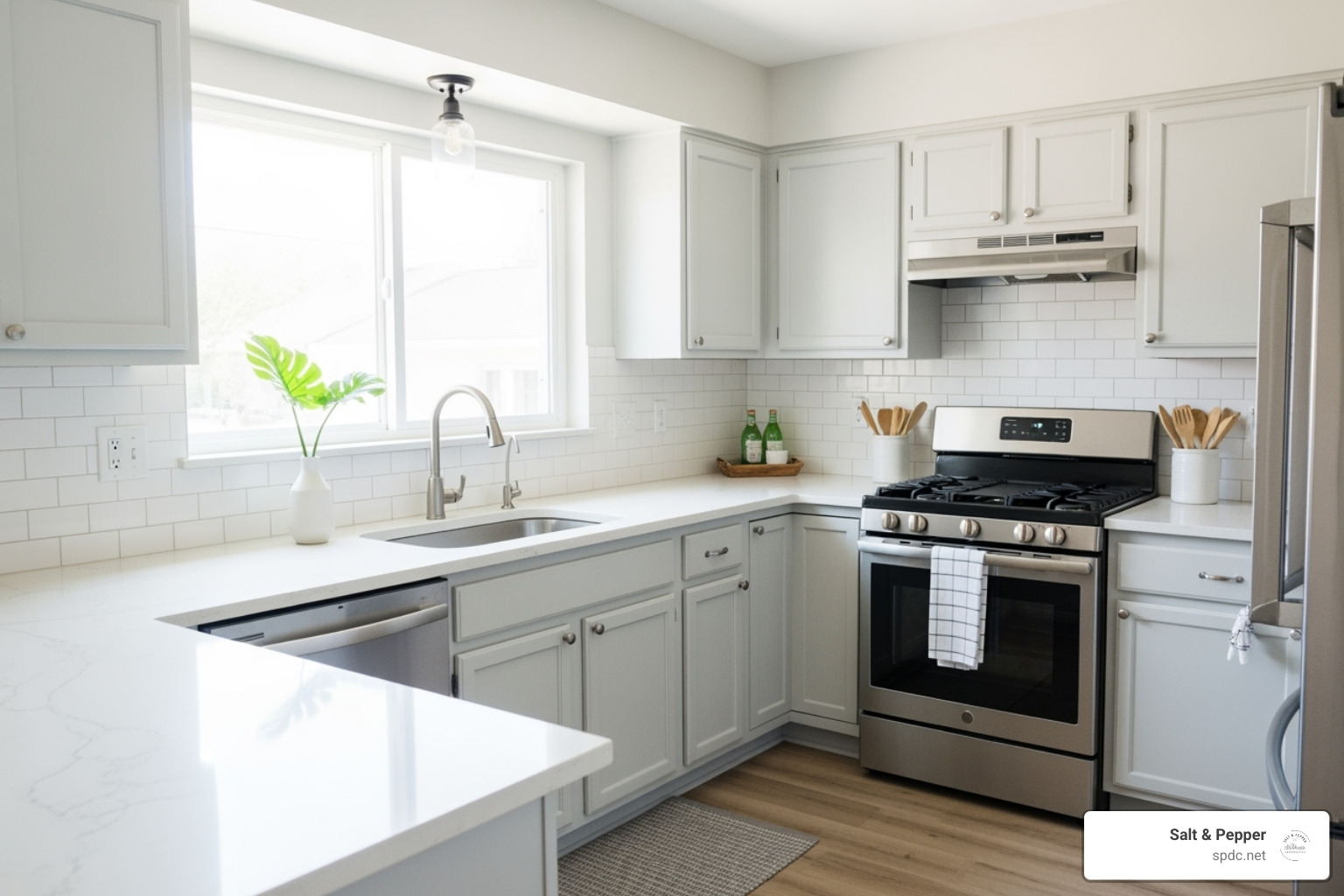
A minor remodel refreshes your kitchen’s look and function without changing the layout. This typically involves refacing cabinets, new countertops, a fresh backsplash, an updated sink and faucet, new paint, and energy-efficient appliances.
Expect to spend $15,000 to $40,000 for a minor remodel. The 2024 average of $27,492 matches what we see in the South Tampa area. One of our clients completed a 9×9 foot kitchen for around $14,000 with new cabinets, flooring, backsplash, counters, and LED lighting, showing what smart planning can achieve.
Major Kitchen Remodel
A major remodel is a gut renovation, often down to the studs. This can include changing the layout, moving walls, relocating plumbing and electrical, and installing all-new custom cabinets, high-end appliances, and surfaces.
Major remodels fall into two categories. A midrange major remodel with semi-custom cabinets and quality appliances runs around $79,982. An upscale major remodel with top-of-the-line materials, professional-grade appliances, and custom designs starts at $158,530 and can easily climb higher.
Be aware that even small layout changes add significant costs. Moving a sink requires relocating drain lines under the floor, and moving a range involves specialized labor. These complexities explain the wide cost gap between minor and major remodels. The scale of your project directly shapes your realistic kitchen remodel budget.
Building Your Realistic Kitchen Remodel Budget Step-by-Step
Planning is crucial for a kitchen remodel. Without a clear financial roadmap, “scope creep” can lead to massive budget overruns. A well-planned budget is your best defense against surprises and the key to a realistic kitchen remodel budget.
Here’s our simple, four-step process to create a budget that makes sense for you.
Step 1: Define Your Goals and Scope
First, clarify your vision by distinguishing between your needs vs. wants. What are the must-haves, like more counter space or new appliances? Then, list your wants, like a wine fridge or smart home features. This helps prioritize what truly matters.
Next, consider your functionality and aesthetic goals. How do you use your kitchen—as a family hub or an entertainer’s space? What look are you going for—modern, farmhouse, or traditional? Gathering inspiration photos helps here.
Finally, think about your long-term plans. Is this your forever home vs. resale? For a forever home, you can add personalized features. If you plan to sell within 5-7 years, focus on universal appeal and ROI. This defines your project scope: a minor refresh, a mid-range renovation, or a major overhaul. A pro tip: 40% of homeowners regret not adding more organizational features, so consider those wants carefully.
Step 2: Calculate a Starting Point for Your Realistic Kitchen Remodel Budget
Next, set a starting budget. A good rule of thumb is to allocate 5% to 15% of your home’s total value for the kitchen renovation. This helps you invest wisely without over-improving for your neighborhood.

For an example calculation, if your home is valued at $300,000, your realistic kitchen remodel budget should fall between $15,000 (5%) and $45,000 (15%). Staying in this range usually means a smart investment with a good return. For more market-specific data, resources like the Cost vs. Value Report are invaluable.
Step 3: Understand the Typical Cost Breakdown
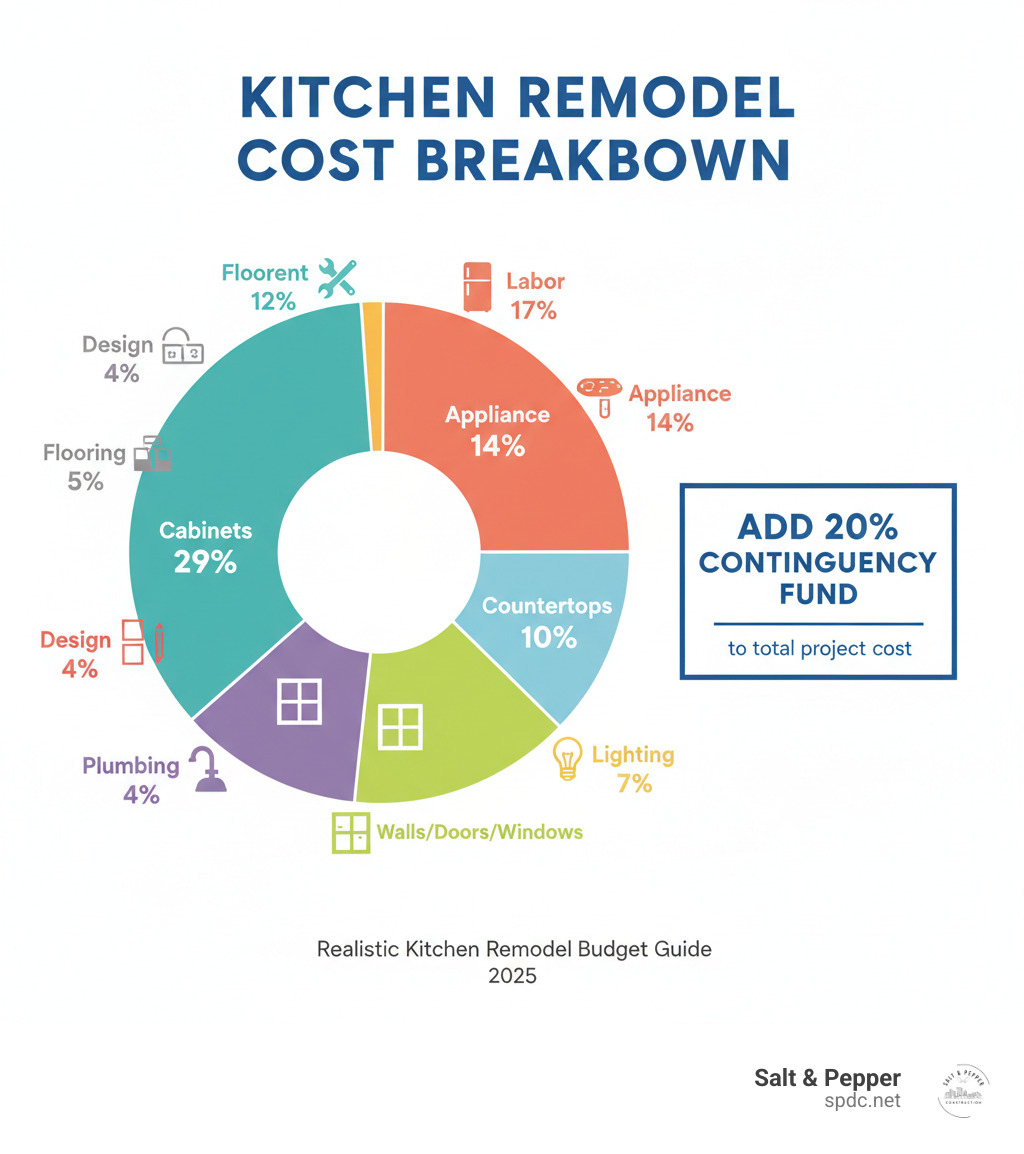
Understanding where your money goes is key for budgeting. Here’s a typical cost breakdown based on industry averages:
| Category | Typical Percentage of Budget |
|---|---|
| Cabinets | 29% |
| Labor | 17% |
| Appliances | 14% |
| Countertops | 10% |
| Walls, Doors, and Windows | 9% |
| Flooring | 7% |
| Lighting | 5% |
| Design | 4% |
| Plumbing and Fixtures | 4% |
| Miscellaneous | 1% |
Cabinetry is consistently the largest expense, making up nearly a third of the budget. Labor costs are also a significant factor. Understanding these allocations helps you prioritize spending and decide where to splurge or save.
Step 4: Plan for the Unexpected with a Contingency Fund
Remodels can uncover surprises like hidden water damage or outdated wiring. That’s why a contingency fund is non-negotiable for a realistic kitchen remodel budget. It’s your project’s financial safety net.
Experts recommend allocating at least 20% of your total remodeling cost for unplanned expenses. This fund covers unexpected costs like:
- Hidden Issues: Mold, old plumbing, or structural problems.
- Code Upgrades: Bringing existing electrical or plumbing up to current building codes.
- Material Delays/Damage: Requiring replacements or rush shipping.
- Scope Adjustments: Deciding to add a small feature mid-project.
For example, on a $30,000 remodel budget, you should have an extra $6,000 available in a contingency fund. This simple step prevents stress and keeps your project on track without derailing your finances.
Key Factors That Drive Your Remodel Costs
Several key factors drive your remodel costs up or down. Think of them as levers to adjust your realistic kitchen remodel budget.
Kitchen size is an obvious factor. A standard 10×10 kitchen remodel typically costs $10,000 to $25,000. A 12×12 kitchen might run $18,000 to $36,000, while a larger 10×20 space could be $20,000 to $45,000. These ranges assume you keep the basic layout intact.
Layout changes can cause budgets to soar. Moving a sink requires opening the floor to relocate drain lines, adding labor and material costs. Relocating a gas range also requires specialized labor and permits. In our experience, clients who keep their existing layout are more likely to stay under budget. Major layout changes often require dipping into the contingency fund.
Material choices offer the most control over your budget. The difference between stock and custom cabinets can swing your total by $15,000 or more. Similarly, laminate countertops are much cheaper than quartz, and builder-grade appliances cost far less than professional-grade options, which can add $10,000+ to your total.
Your location matters. Even within the Tampa, Clearwater, and Riverview areas, labor and material costs vary. A project that costs $150,000 in a high-cost market could be done for less here, but that same budget might be excessive in rural Florida. Local labor rates, transportation, and supply and demand all influence the final price.
Don’t forget permits and fees. Most significant kitchen remodels require permits, usually costing a few hundred dollars, to ensure work meets building codes. We handle all permitting for our clients, but it’s a line item to include in your realistic kitchen remodel budget.
Smart Strategies: Where to Save and When to Splurge
A realistic kitchen remodel budget requires smart choices. We help clients balance desires with financial realities by finding ways to save without sacrificing quality and identifying where to invest for the best results.
8 Effective Ways to Save Money on Your Remodel
Here are some ways to trim costs without compromising your vision:
- Keep your existing layout. Avoiding moving plumbing, electrical, and gas lines is the most impactful way to save thousands.
- Do some DIY tasks (strategically). Demolition, painting, or material pickup can save on labor. Just coordinate with your contractor first.
- Consider cabinet refacing. If your cabinet boxes are solid, replacing just the doors and drawer fronts can save 5-15% on the total project cost and cut project time in half.
- Opt for stock or RTA cabinets. They are more affordable than custom cabinets and offer good quality and style. Avoid expensive cabinet add-ons if your budget is tight.
- Shop smart and consider reuse centers. Look for sales and compare prices early. Discount outlets and reuse centers can offer hidden gems.
- Choose affordable materials. Modern laminate countertops and ceramic tile are great budget-friendly options for surfaces.
- Get multiple quotes. We recommend at least three detailed quotes to compare pricing and negotiate, but ensure you’re comparing “apples to apples.”
- Phase your project. If needed, tackle essential updates now and save cosmetic changes for later to spread out the cost.
When Is It Worth It to Splurge for a Realistic Kitchen Remodel Budget?
Saving money is important, but a realistic kitchen remodel budget also includes strategic splurges on items that offer long-term enjoyment, durability, and value.

Splurge on high-use items. Invest in quality for things you touch daily, like durable countertops (quartz, granite), a good faucet, and main appliances like your refrigerator and range.
Invest in quality cabinetry. As the backbone of your kitchen, well-constructed cabinets with good hardware pay off in longevity and function.
Choose energy-efficient appliances. The upfront splurge can lead to long-term savings on utility bills.
Add features you’ll love, especially for organization. We know 40% of homeowners regret skimping here. A pantry pull-out or custom drawer inserts can significantly improve daily life.
Opt for timeless design elements. Avoid short-lived trends unless it’s your forever home. Classic choices ensure your kitchen remains valuable and stylish for years, protecting your investment.
Financing Your Remodel and Understanding the ROI
Once you have your realistic kitchen remodel budget, the next step is figuring out how to pay for it. Let’s review common financing options and the return on investment (ROI) for your home’s value.
Common Financing Options
The right financing choice depends on your situation. Here are the most common paths:
- A Home Equity Line of Credit (HELOC) is a flexible credit line secured by your home. You draw funds as needed, paying interest only on what you use. It’s ideal for handling evolving remodel costs and has lower interest rates than personal loans.
- A home equity loan provides a lump sum with a fixed interest rate and predictable monthly payments. It’s a straightforward option if you prefer a set budget and payment schedule.
- Personal loans don’t require home collateral and are faster to obtain, but they typically have higher interest rates. They can be a good option for smaller projects.
- Paying with cash savings is the simplest, debt-free option. However, be sure not to deplete your emergency fund. Always keep a financial safety net.
- FHA 203k loans are great for fixer-uppers. They roll renovation costs into your mortgage, making improvements financially feasible, though they’re geared more toward functional than luxury upgrades.
We always suggest consulting a loan officer to review your financial picture and choose the best path for you.
What Is the Return on Investment (ROI)?
A kitchen remodel consistently ranks among the best home improvement projects for ROI. When your realistic kitchen remodel budget aligns with your home’s value, you’re making a smart investment.
A minor kitchen remodel can recoup about 96% of its cost in increased home value. You get to enjoy a beautiful kitchen and get almost all your money back at resale.
Major remodels see different returns. A major midrange renovation might recoup around 49.5% to 71% of its cost. An upscale overhaul typically returns a lower percentage, as it’s possible to over-improve for your neighborhood. This is why matching your budget to your home’s value is so important.
But statistics don’t capture the daily joy of a functional, beautiful kitchen. The ease of meal prep, pride in entertaining, and simple pleasures of a well-designed space are invaluable. Your kitchen is the heart of your home, and the improved livability is a return you experience every day.
Your Dream Kitchen is Within Reach
We’ve covered a lot, and hopefully, you now feel more confident. Your dream kitchen is within reach, and it all starts with smart planning.
Together, we’ve defined goals, calculated a starting budget, broken down costs, planned a contingency fund, and explored where to save and splurge. This groundwork is your recipe for success. The key takeaway is that a realistic kitchen remodel budget is a personalized plan. Doing your homework helps you set a budget that works for you and avoids future headaches.
Here at Salt & Pepper Construction, we love helping homeowners in Tampa, South Tampa, Clearwater, and Riverview bring their kitchen dreams to life. We pride ourselves on innovative designs, quality craftsmanship, and smooth project management. We’re here to be your trusted partner, helping you make informed decisions every step of the way.
Ready to turn those dreams into reality? We’re excited to hear from you!


