

Home upgrade rebates are changing how Americans are approaching home improvements. With a growing emphasis on energy savings and efficiency, these rebates offer a significant opportunity for homeowners to reduce costs while upgrading their spaces. Here’s what you need to know quickly:
- What are Home Upgrade Rebates? They are financial incentives provided to homeowners to invest in energy-efficient home improvements.
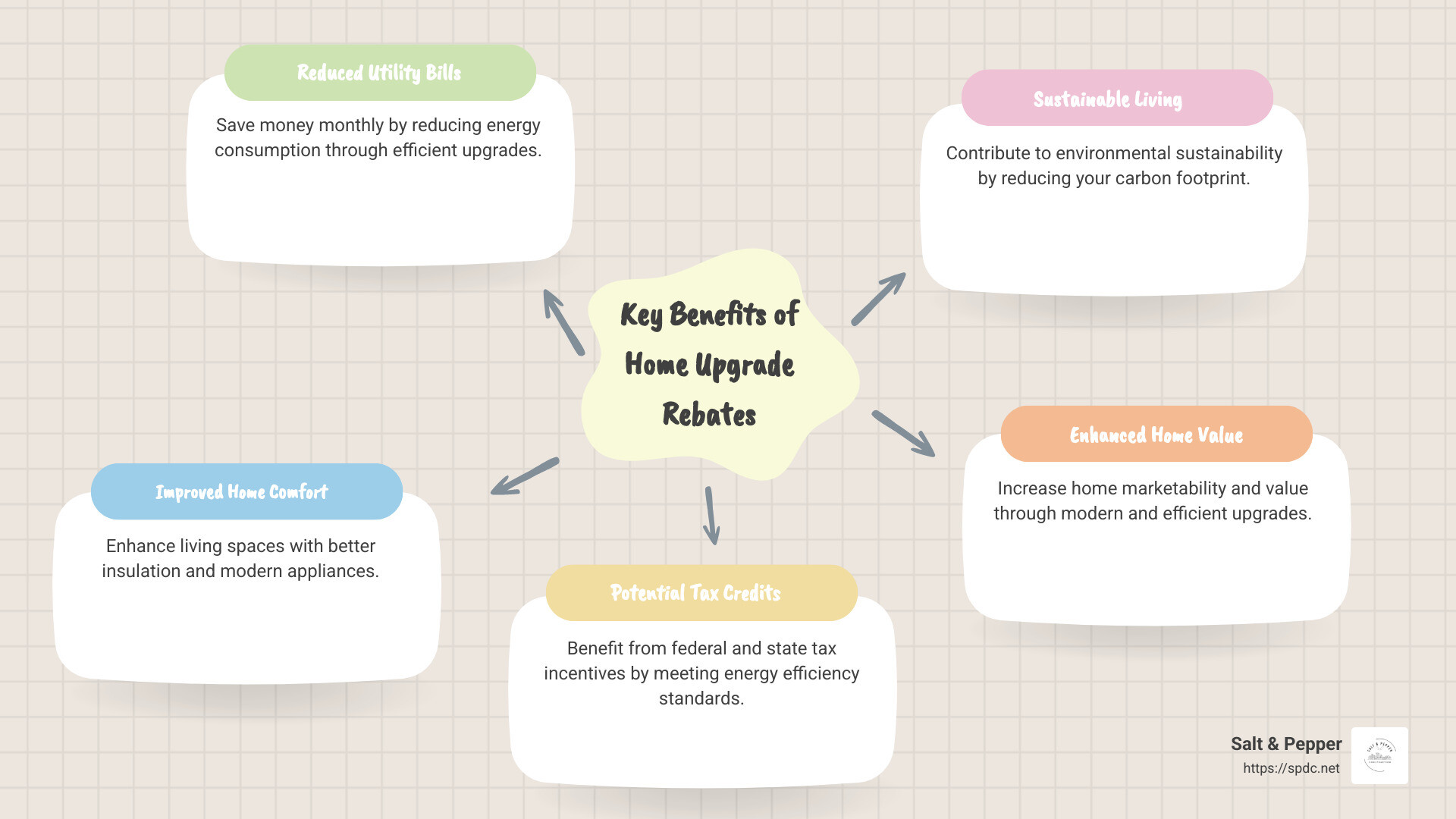
- Key Benefits: Reduced utility bills, improved home comfort, and potential tax credits.
- Major Programs: The Inflation Reduction Act and various state-level initiatives.
- Eligibility: Typically based on household size and income, with higher benefits for lower-income families.
These rebates are not only about making your home more stylish and functional; they’re also about committing to sustainable, smart living.
I’m John Doron, owner of Salt & Pepper Construction. With years of experience changing homes, I’ve seen how home upgrade rebates can improve lives while offering impressive savings. Join me as we explore how you can harness these benefits for your home.
Quick look at home upgrade rebates:
– best ways to improve home energy efficiency
– environmentally friendly home improvements
– home insulation upgrade
Understanding Home Upgrade Rebates
Home Efficiency Rebates
Home efficiency rebates are a game-changer for homeowners looking to cut energy costs. These rebates can save you up to $8,000 on projects that significantly reduce energy use in your home. Think of it as getting paid to make your home more efficient!
Why are these rebates important?
- Energy Savings: By upgrading to energy-efficient systems, you can lower your utility bills and reduce your carbon footprint. This is a win-win for your wallet and the planet.
- Federal Incentives: The Inflation Reduction Act has boostd these programs, providing substantial funding to encourage smart energy decisions.
To give you an idea of how impactful these upgrades can be, consider that installing a heat pump can drastically reduce your home’s energy consumption, and with these rebates, the cost becomes much more manageable.
Home Electrification and Appliance Rebates
The push towards electrification in homes is gaining momentum, and home electrification rebates are here to help. These rebates focus on transitioning homes from fossil fuels to electric systems. This includes everything from electric heat pumps to induction cooktops.
Key Highlights:
- Appliance Rebates: You can receive up to $840 for upgrading to electric stoves or heat pump clothes dryers. This makes switching to more efficient appliances easier on the budget.
- Comprehensive Coverage: For those with incomes below 80% of their area’s median income, rebates can cover 100% of the upgrade costs, up to $14,000. This significantly lowers the barrier for families wanting to make greener choices.

These programs are designed to make it easier for everyone to accept sustainable living. By taking advantage of these rebates, you’re not just saving money—you’re investing in a cleaner, more efficient future for your home.
How to Qualify for Home Upgrade Rebates
Qualifying for home upgrade rebates is simpler than you might think. The key is understanding the income-based eligibility and contractor requirements.
Income-Based Eligibility
To qualify for these lucrative rebates, your household income plays a crucial role. The area median income (AMI) is the benchmark used to determine eligibility.
- Below 80% of AMI: If your household income is less than 80% of the AMI, you could have up to 100% of your project costs covered by rebates, up to a certain limit.
- Between 80% and 150% of AMI: Households in this range might receive rebates covering 50% of their project costs, also up to a cap.
- Above 150% of AMI: Unfortunately, if your income exceeds this threshold, you’re not eligible for these specific rebates.
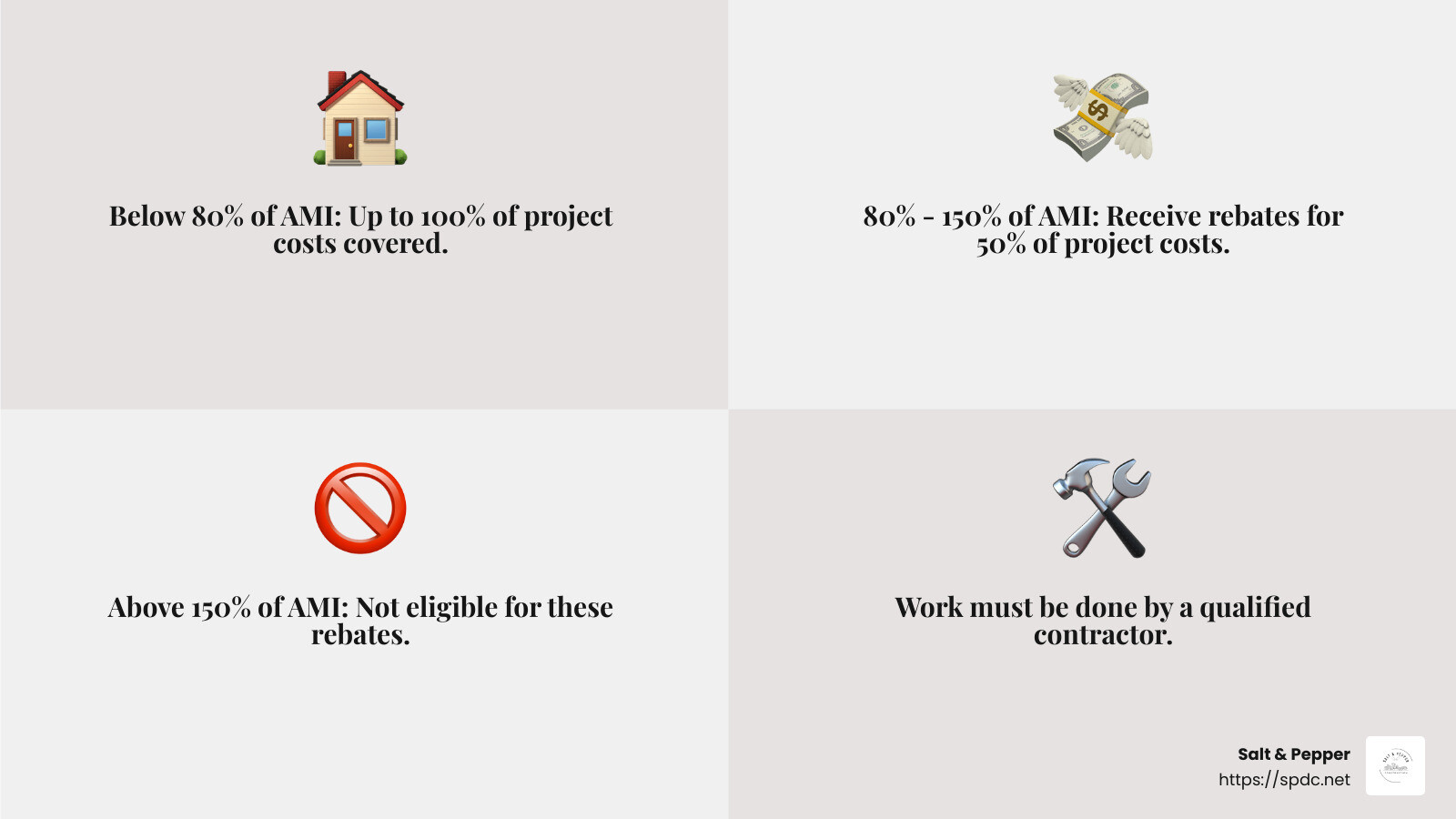
Income thresholds are key to open uping maximum savings.
Contractor Requirements
Choosing the right contractor is just as important as meeting income eligibility. The work must be done by a qualified contractor to ensure that the installation meets the required standards.
- Qualified Contractor Network: Use resources like contractor finder tools to connect with certified professionals. These tools ensure you hire someone who knows the ins and outs of energy-efficient installations.
- Installation Standards: Only contractors who adhere to specific standards can perform installations eligible for rebates. This guarantees that your upgrades meet energy efficiency criteria, ensuring you get the most out of your investment.
By understanding these requirements, you can confidently steer the process and maximize your savings on home upgrades. Next, we’ll dive into the application process and what documentation you’ll need to claim your rebates.
Claiming Your Home Upgrade Rebates
Navigating the home upgrade rebates process might seem daunting, but it’s quite straightforward once you know what to do. Let’s break it down into simple steps.
Application Process
Applying for rebates involves a few key steps. Most programs offer online applications, making it easier than ever to get started.
Gather Required Documentation: Before you apply, collect all necessary documents. This usually includes proof of income, project estimates, and contractor details. Having these ready will streamline the process.
Complete the Application: Head to the rebate portal relevant to your locality. Fill out the online application form. Make sure to double-check all information for accuracy.
Submit and Track: Once submitted, you’ll receive a confirmation. Some programs offer tracking so you can monitor the status of your application. Keep an eye on this to ensure everything is on track.
Rebate Limits and Restrictions
Understanding the limits and restrictions of home upgrade rebates is crucial to maximizing your benefits.
Rebate Caps: Each program has a cap on the rebate amount. For instance, the Home Efficiency Rebate can offer up to $8,000, but this depends on the specifics of your project and income eligibility.
Eligible Expenses: Not all expenses are covered. Typically, costs related to energy-efficient appliances, insulation, and HVAC systems are eligible. Always check the specific guidelines for your area to ensure your project qualifies.
Documentation Requirements: Keep all receipts and documentation. You may need to submit these as proof of purchase and installation. This helps verify that your expenses align with rebate criteria.
By understanding the application process and rebate restrictions, you can confidently move forward and capitalize on these valuable savings. Next, we’ll tackle frequently asked questions about these rebates to clarify any remaining doubts.
Frequently Asked Questions about Home Upgrade Rebates
What is the $8,000 Inflation Reduction Act Rebate?
The $8,000 rebate is part of the Inflation Reduction Act, aimed at encouraging homeowners to make energy-efficient upgrades. This rebate is available through the Home Efficiency Rebate program. It rewards homeowners who significantly cut their energy use. If you reduce your home energy consumption by at least 35%, you could qualify for a rebate of up to $8,000, or half of your upgrade costs—whichever is less.
For those with an income 80% or less of the area’s median income, the rebate can double. This means you can receive up to $8,000 even if it covers 100% of your project costs.
How to Claim the $600 Energy Credit?
Claiming the $600 Energy Credit involves a straightforward process. This credit is part of the federal incentives to promote energy efficiency. Here’s how you can claim it:
Make Eligible Upgrades: Ensure your home improvements qualify for the energy credit. This includes upgrades like insulation, energy-efficient windows, or certain heating and cooling systems.
Use IRS Form 5695: When filing your federal taxes, fill out Form 5695. This form helps you calculate your Residential Energy Credits.
Submit with Tax Return: Attach the completed form to your federal tax return. The credit will directly reduce the amount of tax you owe or increase your refund.
Are Rebates Available for Past Upgrades?
Unfortunately, rebates typically do not apply retroactively. Most programs require that upgrades be made after the program’s start date to qualify. However, if you have made recent upgrades, check the program guidelines to see if there’s any flexibility. Some programs may offer grace periods or exceptions under certain circumstances. Always consult the specific rebate program details to ensure you understand the eligibility requirements.
By staying informed about these home upgrade rebates, you can make smarter decisions and maximize your savings. In our next section, we’ll explore how Salt & Pepper can help you achieve energy-efficient upgrades and maximize your savings.
Conclusion
At Salt & Pepper, we believe that energy-efficient upgrades are not just an investment in your home—they’re an investment in your future. By taking advantage of home upgrade rebates, you can significantly reduce your energy bills while enhancing the comfort and value of your home.
Maximizing Savings with Salt & Pepper
Our team specializes in turning your energy-efficient dreams into reality. With our innovative designs and quality craftsmanship, we ensure that every project not only meets but exceeds energy efficiency standards. Whether it’s a kitchen makeover or a full home renovation, we guide you through the process, helping you make the most of available rebates and incentives.
Why Choose Us?
Expert Guidance: We help you steer the complexities of rebate programs, ensuring you qualify for the maximum savings possible.
Qualified Contractors: All installations are done by our network of qualified contractors, meeting the highest standards required for rebate eligibility.
Comprehensive Project Management: From design to execution, we manage every detail, so you can focus on enjoying your newly upgraded home.
Local Expertise: As a Tampa-based company, we’re familiar with local incentives and can tailor solutions that best fit your needs.
Ready to start your energy-efficient journey? Let Salt & Pepper help you open up the full potential of your home. Visit our home renovation page to learn more about how we can help you maximize your savings with energy-efficient upgrades.
By choosing Salt & Pepper, you’re not just making a home improvement—you’re making a smart investment in a sustainable future.


