

Why Finding Trustworthy Home Renovation Contractors Is Critical to Your Success
Home renovation contractors are professionals who manage and execute residential remodeling projects. Hiring the right one is the most critical factor in your project’s success.
Quick Answers:
- What they do: Manage permits, budgets, timelines, and coordinate all workers (electricians, plumbers, carpenters).
- Where to find them: Professional associations like the NAHB, local Home Builders’ Associations, and referrals from friends.
- What to check: Valid licenses, insurance (liability + workers’ comp), client references, and detailed written contracts.
- Red flags: Cash-only deals, vague estimates, no written contract, unusually low bids, and high-pressure tactics.
- Your rights: Entitlement to a written contract, a 10-day cooling-off period, and protection against unapproved price hikes.
You’re ready to transform your Tampa home, but finding a contractor you can trust can be daunting. The industry has horror stories of spiraling budgets and poor workmanship. The stakes are high, with projects often costing thousands of dollars. The good news is that a proven process can help you separate the professionals from the pretenders.
This guide provides seven smart strategies to help you hire a reliable home renovation contractor with confidence, from vetting candidates to understanding your legal rights.
I’m John Doron, owner of Salt & Pepper Construction in Tampa. With years of experience in kitchen and bathroom remodels, I’ve seen what separates exceptional contractors from the rest, and I’m sharing those insights with you.
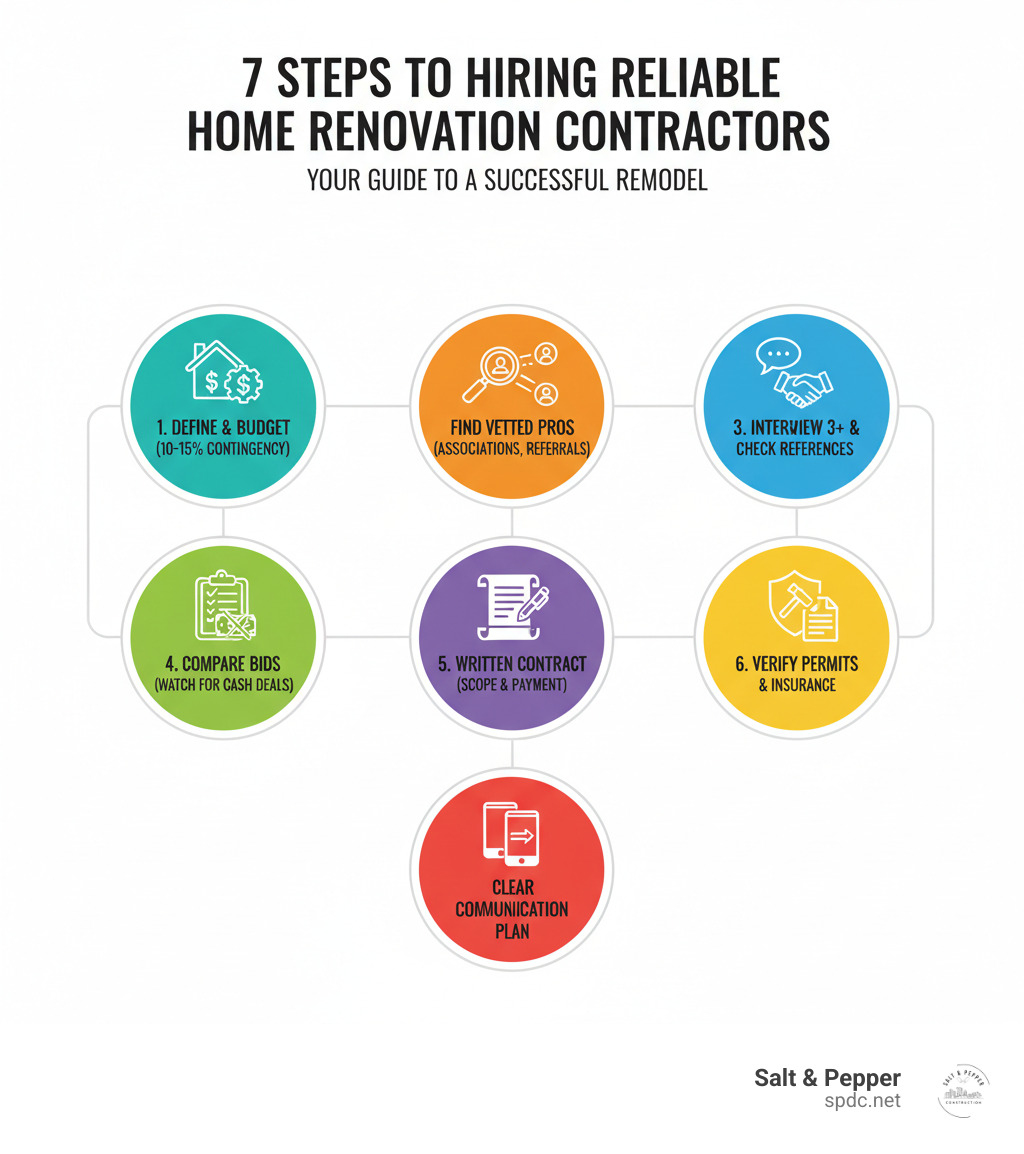
1. Define Your Vision and Set a Realistic Budget
Before contacting home renovation contractors, you must define your vision and set a budget. Start by creating a detailed wish list for your ideal space, covering every cabinet, tile, and fixture. This preparation is key.
Popular projects in the Tampa area include:
- Kitchen renovations: New cabinetry, countertops, and smarter layouts.
- Bathroom renovations: From powder room refreshes to complete master ensuite overhauls.
- Home additions: Adding a second story or extending living areas.
- Basement renovations: Converting storage into media rooms or home offices.
- Entire home renovations: Creating a cohesive new look throughout the property.
- Major repairs: Addressing water, fire, or storm damage.
Once you have your list, prioritize what you need versus what you want. Is a waterfall countertop worth sacrificing upgraded appliances? This focus helps you and your contractor.
Next, research what similar projects cost in the Tampa area. A small painting job may be a few hundred dollars, while a full kitchen remodel can exceed $30,000. Understanding the typical range helps you set a realistic budget.
Here is our most important advice: build a 10-15% contingency fund into your budget. This is non-negotiable. Renovations almost always uncover surprises, like hidden plumbing or outdated electrical panels. A contingency fund ensures these normal issues don’t derail your project while you scramble for more money.

2. Find Vetted Professionals, Not Just Any Name
With a clear vision and budget, it’s time to find qualified home renovation contractors. Avoid grabbing the first name from an online search or being swayed by a flashy website. Finding the right professional requires some detective work.
The best contractors often come from word-of-mouth referrals. Ask neighbors, coworkers, and family in the Tampa area for recommendations. Their honest feedback is invaluable. Don’t just ask who they hired; ask the most important question: “Would you hire them again?” Also, inquire how the contractor handled unexpected problems, as their response under pressure reveals their professionalism.
Local building suppliers are another excellent source for recommendations. They work with contractors daily and know who is reliable, pays their bills, and produces quality work.
While online searches are convenient, proceed with caution. Many listings are unvetted, posing a risk of hiring someone inexperienced or unreliable.
How to find reputable home renovation contractors
The smartest approach is to seek contractors who are members of professional associations. These organizations require members to meet high standards and follow a code of ethics.
Here’s where to look for vetted professionals:
- The National Association of Home Builders maintains a Professional Remodelers Directory of members who meet their quality standards.
- The Better Business Bureau provides ratings and complaint histories. A strong BBB rating is a good sign of a reputable business.
- Local Home Builders’ Association directories are great for finding contractors who are well-regarded in your specific area and familiar with local codes and conditions.
Your goal at this stage is to build a shortlist of qualified home renovation contractors. The effort you invest now will prevent major headaches later.
3. Conduct Thorough Interviews and Check References
Once you have a shortlist, it’s time to interview your potential home renovation contractors. Treat this as a formal job interview—you are hiring them to work on your most valuable asset.
Plan to meet with at least three contractors. This allows you to compare their communication styles, enthusiasm, and problem-solving approaches. Pay attention to whether they listen to your ideas or push their own agenda. A contractor’s communication during the interview is a preview of how they’ll behave mid-project.
Ask about their specific experience with projects like yours. If you’re planning a kitchen remodel, you want a kitchen specialist. At Salt & Pepper Construction, we focus on kitchen and bathroom renovations throughout the Tampa area, giving us deep expertise in these projects.
A step you must not skip is checking references. A reputable contractor will gladly provide contact information for past clients. When you call, ask critical questions: Was the project on time and on budget? How were problems handled? Would you hire them again? Inquire about both recent and older projects to gauge the durability of their work.
Key questions for your potential home renovation contractors
During interviews, cover these essential topics to ensure you’re making an informed decision:
- Business History: How long have they operated in the Tampa area? A long-standing business is more likely to be financially stable and available for future warranty work.
- License and Insurance: Are they licensed and bonded in Florida? Ask for current certificates for general liability and workers’ compensation insurance to protect yourself from liability.
- Subcontractors: Do they use subcontractors? If so, how are they vetted, and are they also licensed and insured?
- Project Management: What is their process for managing timelines, budgets, and quality control?
- Communication Plan: How often will you receive updates, and who will be your main point of contact?
To stay organized, use these worksheets to compare candidates consistently:
Completing these interviews will give you a clear picture of which home renovation contractors are the right fit for you.
4. Scrutinize Bids and Watch for Red Flags
After interviews, you’ll compare bids from your shortlisted home renovation contractors. This is about understanding value, not just finding the lowest price.
A quality bid is comprehensive and itemized, detailing material costs, labor charges, subcontractor fees, and allowances. It should also include a project timeline, a payment schedule, and a list of exclusions. When comparing bids, ensure each contractor is quoting for the same scope of work and comparable materials.
The lowest bid is often not the best choice; in fact, it can be a warning sign. Focus on value—the right mix of quality, skill, communication, and fair pricing.
Be aware of these red flags:
- Vague descriptions: Phrases like “kitchen updates” without specifics lead to misunderstandings and disputes. A bid must detail exactly what work will be done and what materials will be used.
- Unusually low prices: A bid that is dramatically lower than others may indicate subpar materials, inexperience, or a contractor who might abandon the job for a higher-paying one.
- High-pressure sales tactics: A professional gives you time to make a decision. Anyone pushing you to sign immediately with a “special price” is more interested in the sale than the quality of work.
- The danger of “cash deals”: A contractor offering a discount for cash is admitting they evade taxes. This practice leaves you unprotected, with no contract, no insurance, and no legal recourse if the work is poor or a worker is injured on your property. At Salt & Pepper Construction, we provide receipts for every payment and maintain full transparency.
A professional bid will also include permit costs and explain the process for handling change orders for unexpected issues.

If a bid is unclear, ask for clarification. A good contractor will happily explain the details. Evasiveness is another red flag.
5. Insist on a Detailed Written Contract
Never start a renovation project without a detailed written contract. It is your legal safety net and the roadmap that keeps everyone aligned. Most horror stories begin with a handshake deal or a vague agreement.
In Florida, written contracts are often legally required for projects above a certain value. But even for small jobs, a contract protects both you and your home renovation contractors.
Your contract must include:
- Detailed scope of work: A specific list of every task, from demolition to final installation.
- Total cost and payment schedule: Payments should be tied to project milestones. A request for a large down payment (over 10%) is a major red flag. Never pay in full before the work is complete.
- Start and completion dates: Target dates keep the project on track and provide recourse for unreasonable delays.
- Process for change orders: It should outline how changes are approved, priced, and documented in writing before new work begins.
- Warranties and guarantees: The contract should specify what workmanship is covered and for how long, along with manufacturer warranties.
- Dispute resolution clause: This outlines the steps for resolving disagreements, potentially avoiding costly litigation.
- Contractor information: Full business name, address, license numbers, and proof of insurance.
For major renovations, consider having a lawyer review the contract. The small cost is cheap insurance for a large investment.
As a homeowner, you have legal rights. These often include a “cooling-off period” to cancel contracts signed in your home and limits on how much the final price can exceed the estimate without your written approval. You can learn more about general consumer protections, but always check your specific state’s regulations, like those related to Your rights under the Consumer Protection Act.
A contractor who hesitates to put everything in writing is not a professional. Walk away.
6. Understand Permits, Insurance, and Logistics
Beyond design and craftsmanship, a successful renovation depends on behind-the-scenes logistics. Professional home renovation contractors handle these complexities for you.
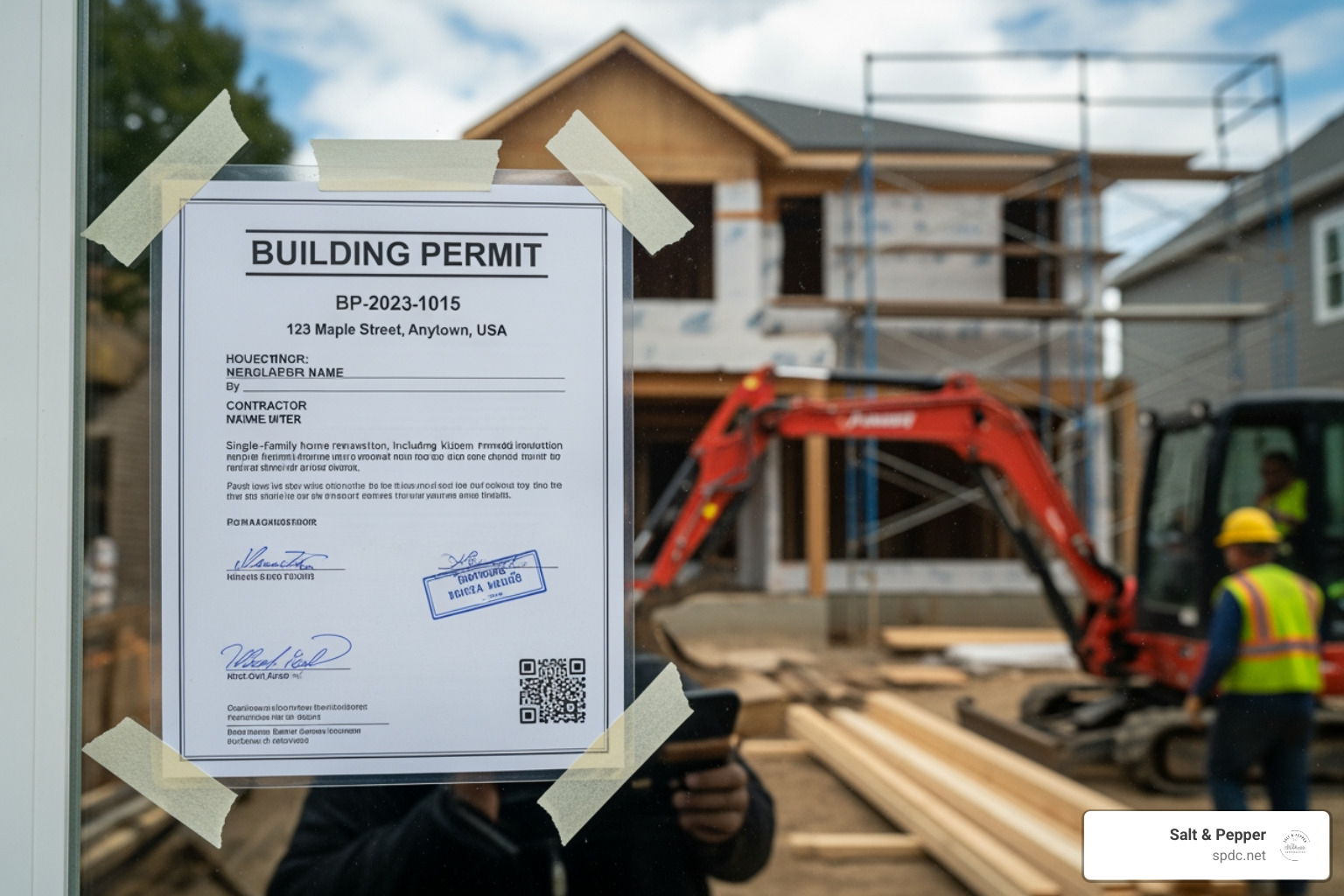
Building permits are a crucial safety net, ensuring your project meets local building codes in Tampa and surrounding areas. They are required for most structural, electrical, and plumbing work. Your contract should specify that the contractor is responsible for obtaining all necessary permits. Never allow work to begin until the permits are posted on-site.
Insurance is another critical protection. Your contractor must carry two types of coverage:
- General liability insurance: Protects against property damage or injury during the project.
- Workers’ compensation insurance: Covers the contractor’s employees if they get hurt on your property. Without it, you could be personally liable.
Don’t just take their word for it; ask for proof of insurance directly from their provider. At Salt & Pepper Construction, we ensure all crews are fully licensed and insured for your peace of mind.
Finally, discuss site logistics with your contractor before work starts. Establish rules for working hours, material storage, bathroom use, and daily cleanup. Preparing the work area by clearing it out and protecting remaining items will help the project run smoothly.
7. Establish Clear Communication for a Smooth Project
Even with the best home renovation contractors, a project can falter if communication breaks down. Clear communication is the foundation for a stress-free renovation.
Before work begins, establish a communication plan with your contractor. Agree on:
- Frequency of updates: Daily check-ins or weekly summaries, depending on your preference.
- Preferred method: Phone calls, emails, or in-person meetings.
- Main point of contact: Know who to go to with questions or concerns, whether it’s the owner, a project manager, or a foreman.
At Salt & Pepper Construction, we use project management tools and apps to keep clients informed. These platforms provide daily progress photos, budget tracking, and a documented message history, which prevents misunderstandings.
Minor issues are inevitable in any renovation. The key is to handle disagreements promptly. If something seems wrong, speak up immediately. Address concerns with your main contact, refer to your contract, and document the resolution in writing, such as in a follow-up email.
Once the project is complete, you’ll conduct a final walkthrough with your contractor. Inspect everything carefully—faucets, drawers, outlets, and doors. Create a punch list of any small items that need adjustment, like a paint touch-up or a misaligned cabinet door. A professional contractor expects this step and will quickly address these finishing touches before you make the final payment.
Good communication transforms a construction project into a successful collaboration, ensuring you love the final result.
The Benefits of Hiring Professional Home Renovation Contractors vs. DIY
The DIY question often comes up as a way to save on labor costs. However, what starts as a money-saving shortcut can quickly become an expensive, time-consuming lesson. For significant projects, the benefits of hiring professional home renovation contractors are clear.
| Factor | DIY Renovation | Professional Renovation |
|---|---|---|
| Cost | Lower upfront labor; potential for costly mistakes, re-dos, or hidden issues. | Higher upfront labor; potential for trade discounts, efficient material use, fixed pricing. |
| Time | Often takes longer due to inexperience, learning curve, juggling with other commitments. | Faster completion due to expertise, dedicated crew, project management. |
| Quality | Varies widely based on skill; potential for uneven finishes or structural flaws. | High quality craftsmanship; adherence to industry standards and best practices. |
| Safety | Higher risk of accidents, injury, or improper installation without proper training. | Safer due to experienced workers, proper equipment, adherence to safety protocols. |
| Warranty | No warranty on labor; only manufacturer warranties on materials. | Written warranty on workmanship; manufacturer guarantees on materials. |
Professionals bring years of expertise and craftsmanship that can’t be learned from online tutorials, ensuring a high-quality, lasting result. They manage the entire process, saving you significant time and stress.
Contractors also have access to trade discounts on materials, which can offset a portion of their labor costs. Most importantly, they handle safety and code compliance, carrying the necessary insurance to protect you from liability. Finally, a professional provides a warranty on their workmanship, offering peace of mind that a DIY project can’t match. For any project that affects your home’s structure, systems, or value, partnering with an experienced professional is the smartest investment.
Frequently Asked Questions
Here are answers to some of the most common questions we hear from Tampa homeowners planning a renovation.
What’s the difference between a general contractor and a design-build firm?
A general contractor is hired to execute a pre-existing design plan created by a separate architect or designer. They manage the construction phase only.
A design-build firm, like Salt & Pepper Construction, handles the entire project under one roof, from the initial design concept to the final construction. This integrated approach streamlines communication, improves collaboration between the design and construction teams, and provides better cost control, resulting in a smoother experience for the homeowner.
How much should I pay for a down payment?
A reasonable down payment should be minimal, typically no more than 10% of the total project cost. This initial payment covers preliminary costs without exposing you to significant risk.
Be very wary of any home renovation contractor who demands a large upfront payment, such as 50% or more. This is a major red flag that could indicate financial instability or a dishonest operator. A professional’s payment schedule should tie payments to the completion of specific project milestones.
What are my legal rights as a homeowner during a renovation?
While laws vary, Florida homeowners have several key protections. For most projects, you have the right to a written contract that details the scope, cost, and timeline.
For contracts signed in your home, you typically have a “cooling-off” period (often 3 to 10 days) to cancel without penalty. This protects you from high-pressure sales tactics.
Additionally, the final price generally cannot exceed the original estimate by more than a set percentage (e.g., 10%) without your approval via a signed change order. While your contractor usually pulls permits, as the homeowner, you are ultimately responsible for ensuring they are in place. Familiarizing yourself with Florida’s consumer protection laws is always a wise decision.
Conclusion: Start Your Renovation with the Right Partner
You now have a roadmap to hire home renovation contractors who will bring your vision to life. By following these seven strategies—from defining your budget to establishing clear communication—you can avoid the common pitfalls of remodeling.
This process replaces the anxiety of hiring with the confidence that you’ve done your homework. You can trust that professionals are handling every detail, allowing you to enjoy the change of your space without regrets.
That peace of mind is priceless.
For homeowners in Tampa, South Tampa, Clearwater, and Riverview, we at Salt & Pepper Construction understand this journey. Our design-build approach provides one trusted partner to manage everything, from design and permits to construction and finishing touches. We believe your renovation should be an exciting collaboration, built on clear communication and quality craftsmanship.
Ready to transform your Tampa home? Contact us for a consultation!
Your dream renovation is within reach. You just need the right partner to make it happen.


