
Low Maintenance Yard Ideas That Thrive in Tampa Heat
A Low-Maintenance Tampa Yard Starts With Less Turf and Smarter Materials
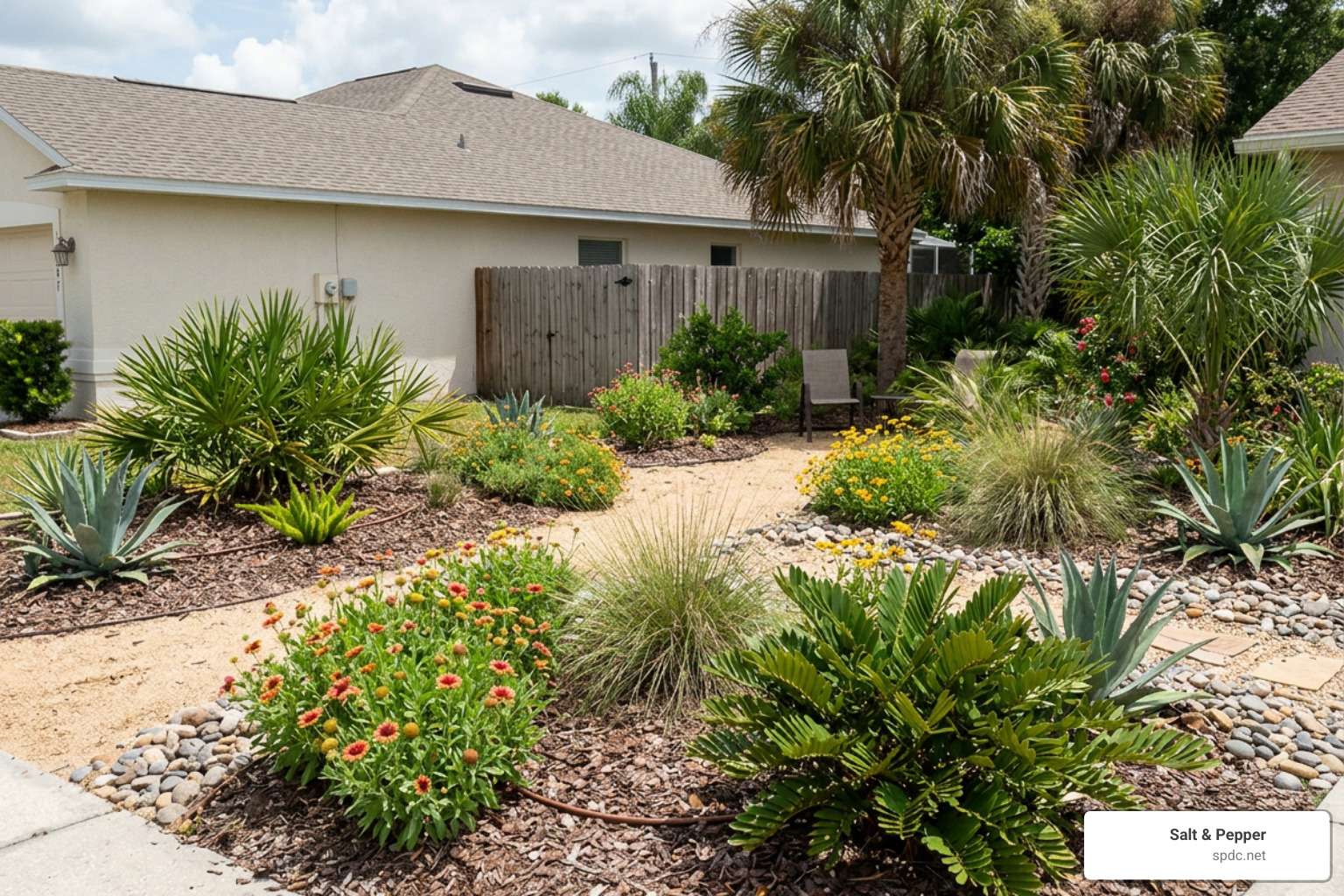
A low maintenance yard Tampa homeowners can enjoy usually has less thirsty turf, more Florida-friendly plants, and durable surfaces where grass is hard to maintain. Start by replacing unused lawn areas with native planting beds, groundcovers, mulch, pavers, or gravel; group plants by water needs; and use irrigation with a rain sensor for establishment and dry periods.
Tampa’s Zone 9b heat, sandy soil, summer downpours, and watering limits can make a traditional lawn a weekly job. Turfgrass may use up to 1,000 gallons of water per 1,000 square feet each week in dry weather, while native plants such as coontie, muhly grass, firebush, and Simpson’s stopper need far less care once their roots are established.
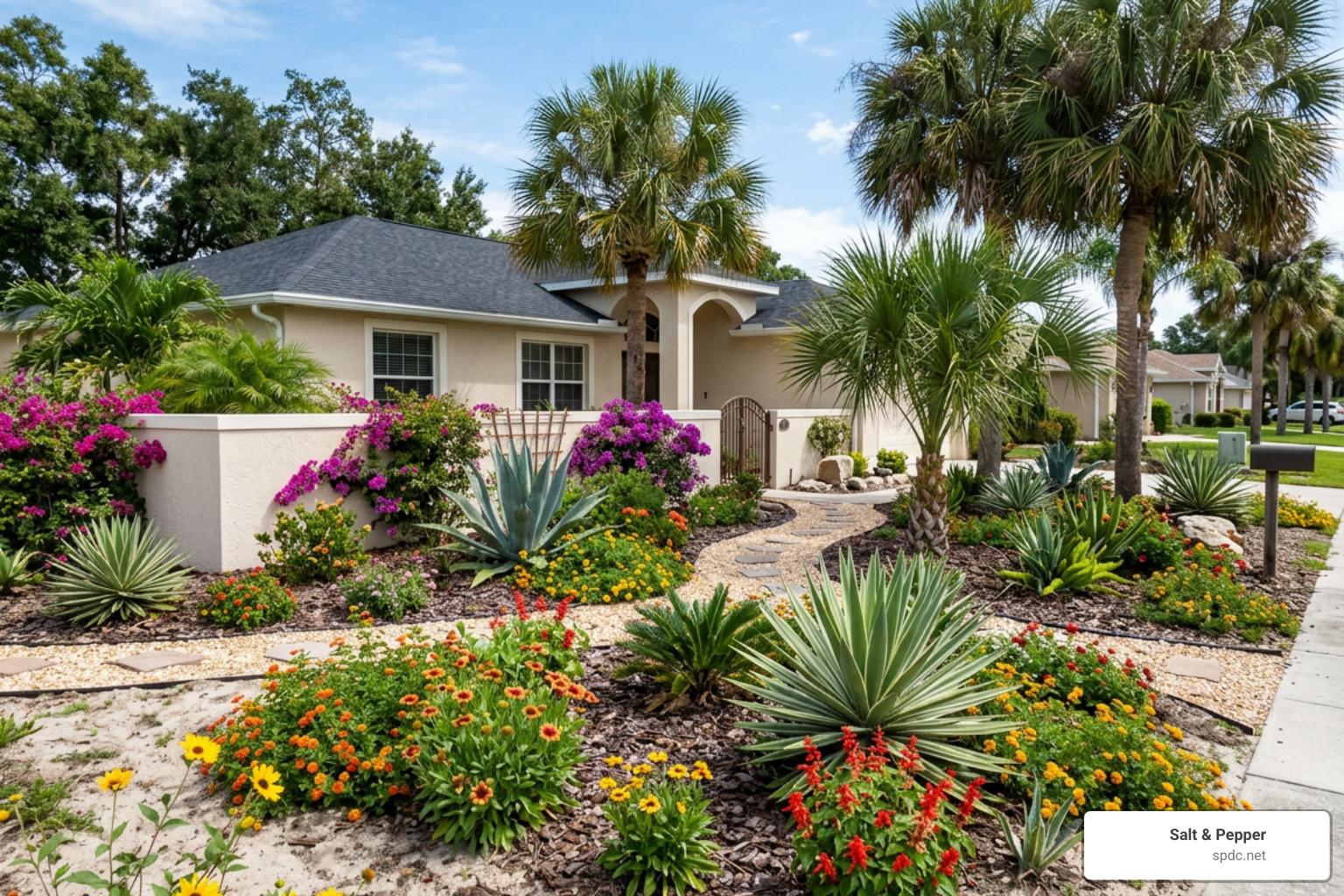
The goal is not a bare yard. It is a clean, modern outdoor space with defined beds, shade, drainage, and curb appeal – without spending every weekend mowing, watering, and weeding.
I am John Doron, owner of Salt & Pepper Construction in Tampa, where I help homeowners plan practical, lasting upgrades with clear communication and careful craftsmanship. That same focus helps shape every low maintenance yard Tampa design: beautiful materials, functional layouts, and fewer chores over time.
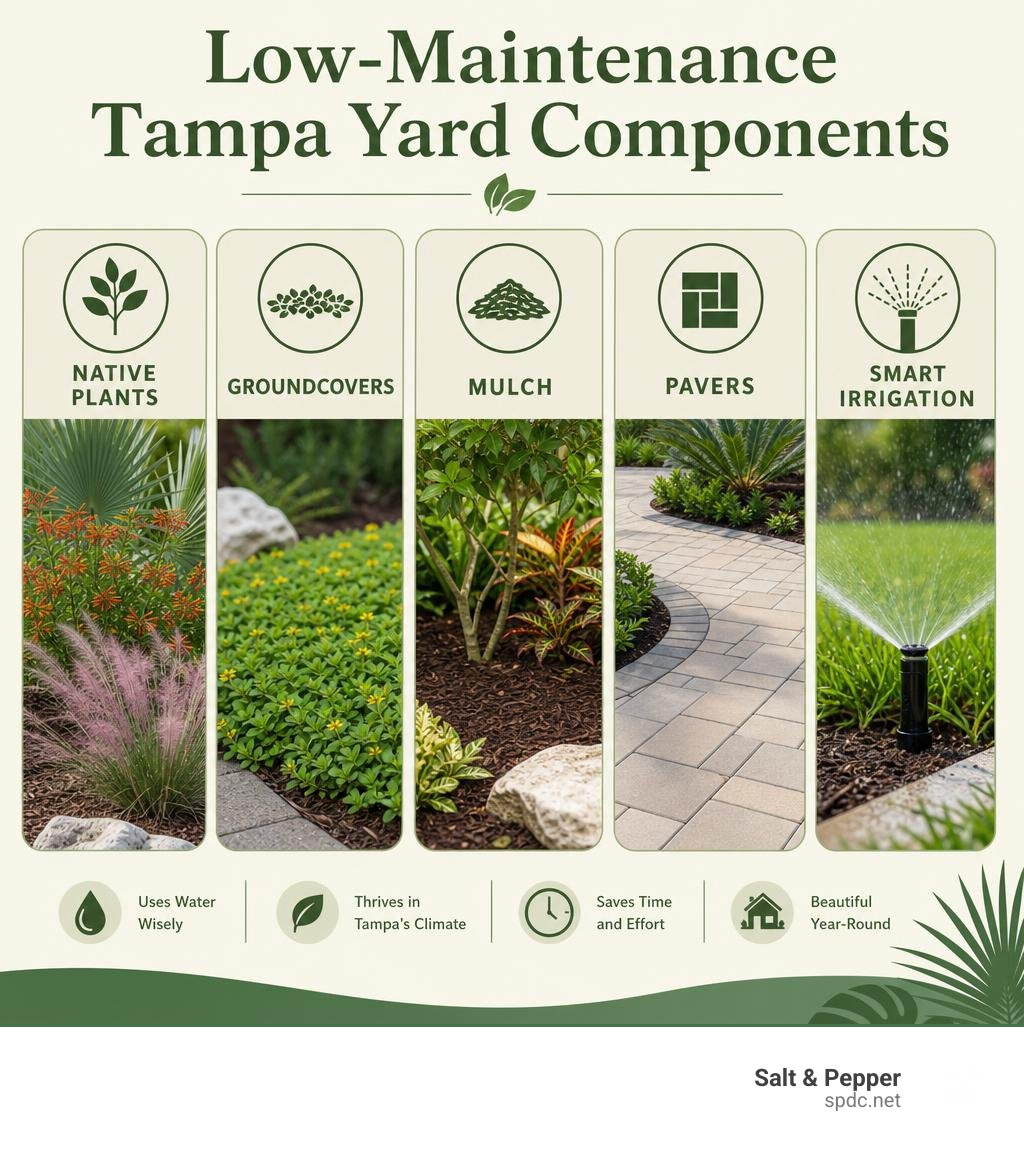
Quick low maintenance yard Tampa definitions:
Core Strategies for a Low Maintenance Yard Tampa Homeowners Can Rely On
Maintaining a traditional lawn across Tampa, South Tampa, Carrollwood, or Riverview can quickly become an exhausting routine. In our humid, subtropical Zone 9b climate, turfgrass grows at full speed for most of the year. During the sweltering summer months, routine mowing on a typical quarter-acre to half-acre lot runs $45 to $75 per visit—a recurring cost that adds up quickly when grass demands weekly attention.
Beyond mowing, traditional grass creates massive irrigation demands. High-water turf varieties can gulp up to 1,000 gallons of water per 1,000 square feet each week during dry spells. When paired with high humidity, these thirsty conditions invite fungal blights and destructive pests like chinch bugs.
To break free from this cycle, we prioritize water conservation, sustainable site planning, and practical eco-friendly home ideas that replace high-stress turf with durable, self-sustaining surfaces.
Grass Alternatives for a Low Maintenance Yard Tampa Properties Need
Replacing standard sod with resilient alternatives immediately cuts down on yard chores. Homeowners across neighborhoods like Westchase, Hyde Park, and Brandon are trading finicky grass for living groundcovers and synthetic turf that never need mowing.
- Artificial Turf: A premium choice for clean, green, year-round aesthetics. Modern artificial turf costs between $5 and $20 per square foot installed and can last 15 to 20 years. Quality synthetic systems use perforated backings for rapid stormwater drainage and antimicrobial infills that make them perfect for high-traffic pet runs.
- Perennial Peanut (Arachis glabrata): An exceptional, drought-tolerant living turf alternative. It produces bright yellow flowers throughout the warm season, naturally fixes nitrogen into sandy Florida soil, and eliminates mowing completely. It typically costs $4.50 to $26 per square foot to install across landscape beds.
- Sunshine Mimosa (Mimosa strigillosa): A native groundcover featuring pink powderpuff blooms. It handles light foot traffic, spreads rapidly to lock down sandy banks, and thrives in direct sun with zero supplemental fertilizer.
- Asiatic Jasmine (Trachelospermum asiaticum): A hardy evergreen groundcover that forms a dense, weed-choking carpet in both deep shade and partial sun.
| Surface Type | Upfront Cost (per sq. ft.) | Mowing Needs | Water Demand | Foot Traffic Tolerance |
|---|---|---|---|---|
| Artificial Turf | $5.00 – $20.00 | None | Zero | High |
| Perennial Peanut | $4.50 – $26.00 | None (optional trimming) | Very Low | Moderate |
| Sunshine Mimosa | $4.50 – $15.00 | None | Low | Light to Moderate |
| Bahiagrass | $0.40 – $0.80 (sod only) | Bi-weekly / Weekly | Moderate | Moderate |
| St. Augustine (Floratam) | $0.50 – $0.90 (sod only) | Weekly in Summer | High | Moderate |
Drought-Tolerant Turf Options and Lawn Care
If you prefer keeping a functional grass lawn for children or pets, choosing the right turf species makes a dramatic difference in maintenance hours.
- Bahiagrass: Ideal for larger residential lots in areas like Lutz, Valrico, and Apollo Beach. Bahiagrass has deep root systems that survive drought cycles, requiring far less fertilizer and irrigation than standard sod.
- Bermudagrass: Consumes the least amount of water among common Florida warm-season turfgrasses, boasting rapid recovery from heavy activity, though it requires ample direct sunlight.
- Zoysiagrass: Offers a dense, carpet-like feel with great weed resistance and good drought tolerance once established.
- Floratam (St. Augustine): The classic Tampa sod. While it requires consistent watering, proper management reduces problems.
To keep any natural turf healthy without constant upkeep, apply proven lawn care in Tampa tips and tricks. Raise your mower deck to 3.5–4 inches during the summer rainy season to encourage deeper root growth and prevent scalping, which shields the turf against invasive weeds and pest attacks.
Resilient Plant Selection for Zone 9b Sandy Soils
Tampa’s native soil is predominantly fast-draining, nutrient-poor sand. Non-native ornamentals struggle in this environment without heavy watering and chemical fertilizers. By shifting to native and Florida-Friendly flora that evolved in these conditions, your garden beds will thrive naturally.
Using a vertical layering strategy—arranging tall canopy shade, structured midstory shrubs, and low-lying ground accents—mimics natural ecosystems, shades the soil, suppresses weeds, and preserves groundwater.
Native Plants to Perfect Your Low Maintenance Yard Tampa Design
Native Florida plants naturally resist local pests, tolerate severe dry spells, and endure torrential summer thunderstorms.
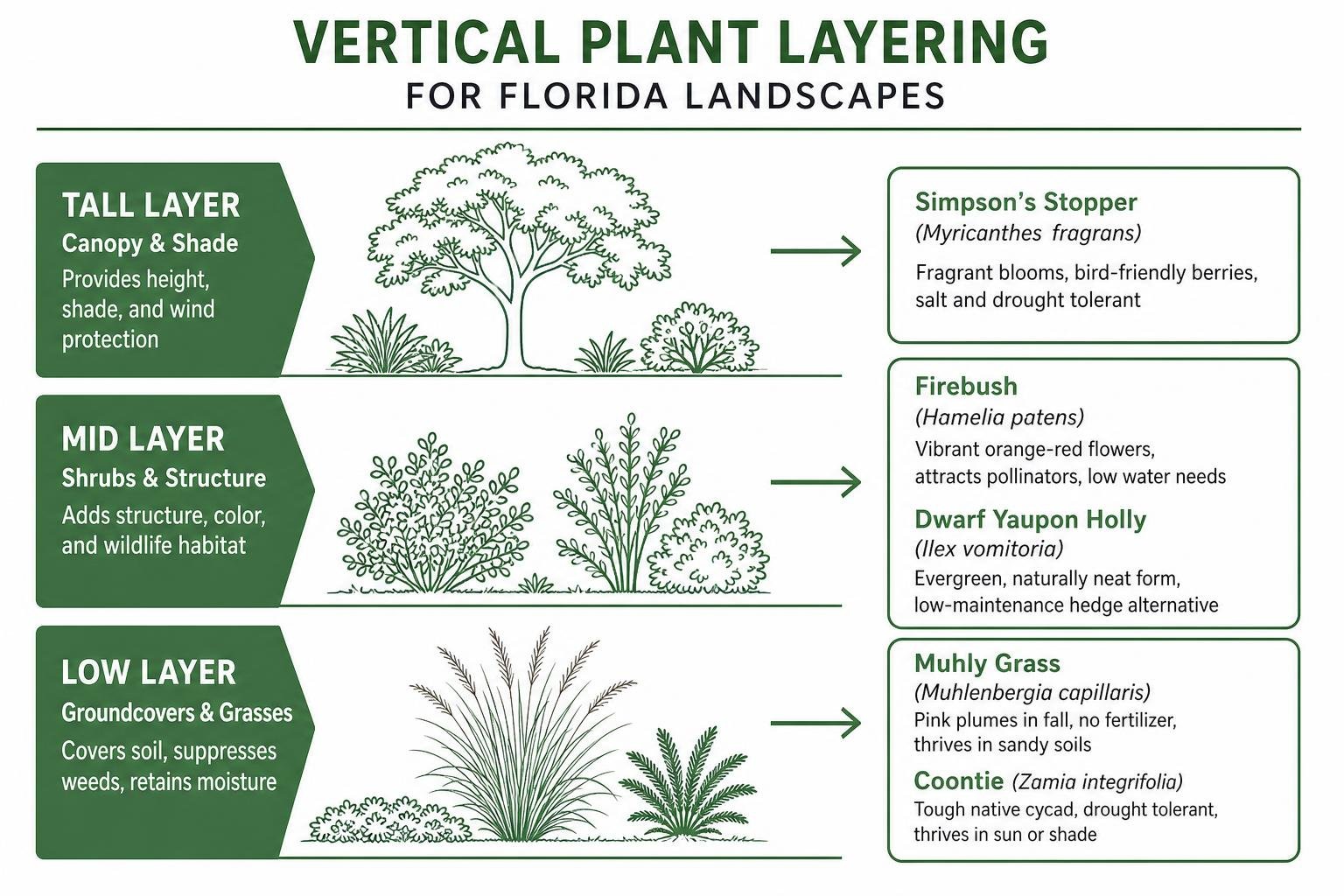
- Coontie (Zamia integrifolia): A tough, slow-growing native cycad that thrives in full sun or deep shade. It requires almost zero pruning, tolerates drought, and handles sandy soils effortlessly.
- Simpson’s Stopper (Myricanthes fragrans): A versatile native shrub or small tree offering fragrant white blooms, colorful berries for songbirds, and exceptional salt and drought resistance.
- Muhly Grass (Muhlenbergia capillaris): A clump-forming native grass producing dramatic plumes of pinkish-purple flowers in autumn. It needs no fertilizer and thrives in sandy beds.
- Firebush (Hamelia patens): A fast-growing native shrub with vibrant tubular orange-red flowers that attract butterflies and hummingbirds while demanding little water.
- Dwarf Yaupon Holly (Ilex vomitoria): An evergreen native shrub that naturally maintains a neat, rounded form, making it an ideal low-maintenance substitute for traditional boxwood hedges.
- Sandhill Milkweed (Asclepias humistrata): A deep-rooted, drought-hardy native host plant for monarchs that flourishes in dry, open sand. For a complete deep-dive on these resilient sandhill plant communities, review the UF/IFAS Extension guide on drought-tolerant sandhill landscaping.
Native plant pricing typically ranges from $15 to $50 per shrub, $5 to $50 per vine, and $150 to $3,000 for mature specimen trees.
Hardy Shrubs, Trees, and Florida-Friendly Perennials
Pairing Florida natives with non-invasive, climate-adapted exotics creates a lush, stress-free garden. You can easily integrate these choices when designing vibrant Florida-friendly tropical landscapes:
- Adonidia Palm (Christmas Palm): A neat, slow-growing palm ideal for compact spaces. It is naturally “self-cleaning,” dropping spent fronds on its own without demanding manual pruning ladders.
- Podocarpus: An evergreen shrub that works exceptionally well for privacy screens and property buffers across Oldsmar, Temple Terrace, and Palm Harbor. It grows reliably in sun or shade and requires only minimal seasonal trimming.
- Silver Buttonwood (Conocarpus erectus): Displays striking silver-velvet foliage with outstanding salt and heat tolerance.
- Blue Daze (Evolvulus glomeratus): A hardy, heat-loving perennial groundcover producing brilliant sky-blue flowers that open daily without supplemental irrigation.
- Plumbago (Plumbago auriculata): A sprawling, drought-tolerant mounding shrub that produces clusters of light blue flowers nearly all year.
- Longleaf Pine (Pinus palustris): A canopy tree with deep taproots that withstands tropical winds while dropping a blanket of free pine straw mulch.
Hardscaping, Mulching, and Xeriscaping Solutions
The most permanent way to eliminate yard chores is to replace high-maintenance grass with hardscaping and xeriscaping. Converting a traditional lawn into a xeriscape generally costs between $1.50 and $2.50 per square foot, with total project conversions running from $8,737 to $22,226 depending on features and lot size.
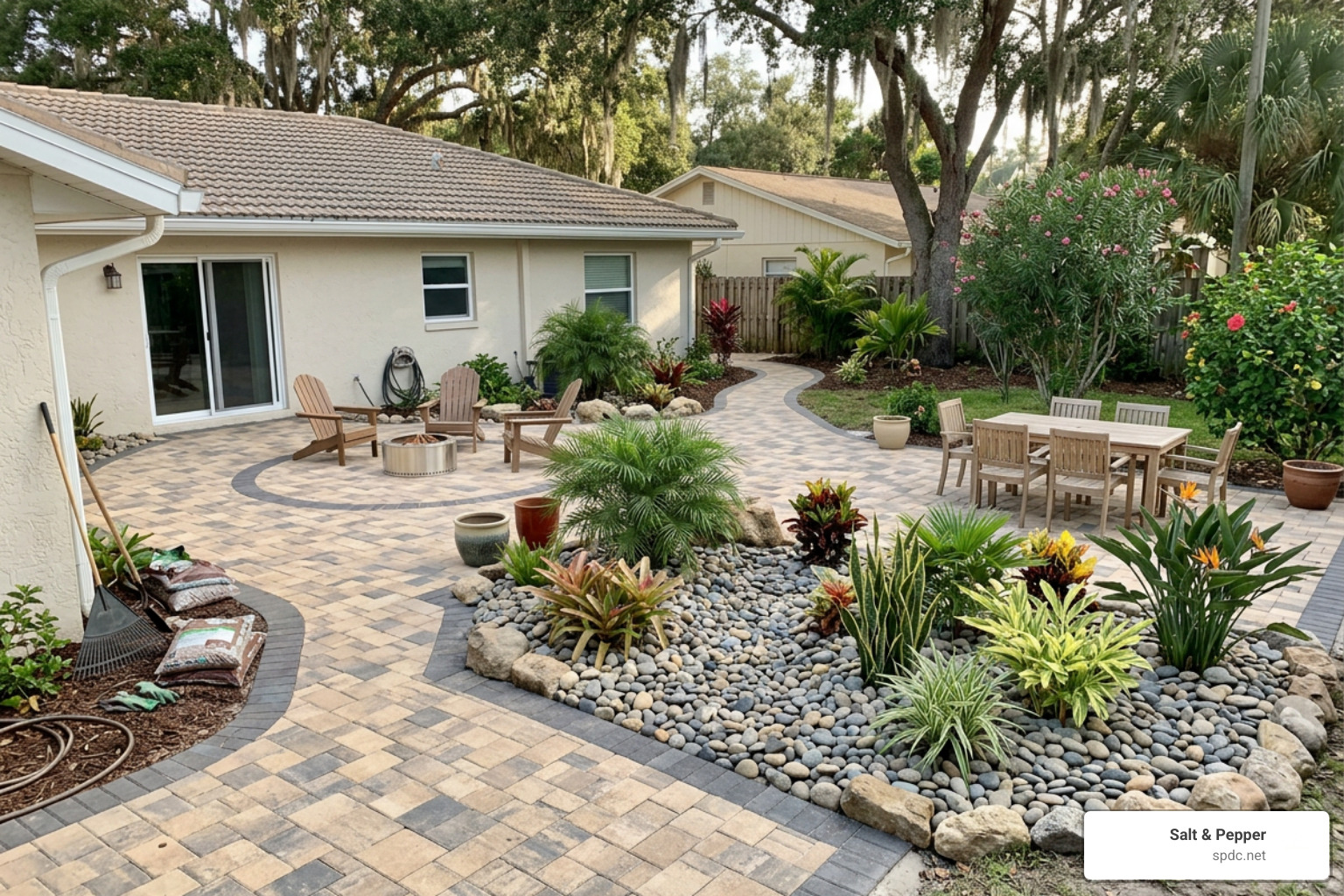
Xeriscaping relies on hydrozoning—grouping plants with identical moisture requirements together so you never waste water on drought-hardy specimens.
Patios, Pavers, and Walkways for Functional Outdoor Living
Expanding your outdoor living footprint reduces mowing while boosting property value and everyday usability. Homeowners throughout New Tampa, Wesley Chapel, and South Tampa often incorporate durable hardscaping to maximize usable entertaining space.
- Stone Pavers & Walkways: Interlocking concrete or natural stone pavers create clean circulation paths and outdoor living areas ($8 to $22 per sq. ft.).
- Custom Patios & Decks: Patio installations typically run from $2,000 to $6,500, while custom deck constructions range from $4,000 to $11,000.
- Pergolas and Fire Pits: Pergolas ($2,000 to $9,000) and fire pits ($500 to $3,000) establish welcoming gathering hubs that require virtually no upkeep.
- Retaining Walls: Retaining walls ($3,622 to $9,582) stabilize grades and manage site drainage during our summer wet season.
When building hardscapes in Tampa’s sandy soils, proper excavation and sub-base compaction are essential. Because heavy summer deluges can quickly erode poorly prepped sand, establishing a compacted aggregate base prevents shifting and uneven settling. To explore hardscape layouts, look into our custom Florida outdoor living designs and broader structural exterior renovations in Florida.
Mulch vs. Decorative Rock: Choosing the Right Ground Cover
Covering bare soil protects plant roots, curbs weed growth, and prevents moisture evaporation under the harsh Florida sun.
- Organic Wood Mulch: Hardwood chips ($70 per cubic yard) or pine bark ($65 per cubic yard) enrich sandy soils as they break down. Lay down a 2- to 3-inch layer around beds to regulate soil temperature.
- Landscape Gravel & River Rock: Decorative stone ($460 to $1,000 per rock garden installation) provides a clean, permanent look. While rock does not degrade, it absorbs and radiates heat back onto nearby plants, making it best suited around sturdy succulents, palms, and dedicated architectural zones. Always install a heavy-duty commercial weed barrier fabric under stone beds to prevent pebbles from sinking into the sand.
Smart Water Management and Front Yard Layouts
Creating an easy-care front yard requires planning for seasonal rainfall shifts. In Hillsborough County, winter droughts contrast sharply with intense afternoon summer deluges.
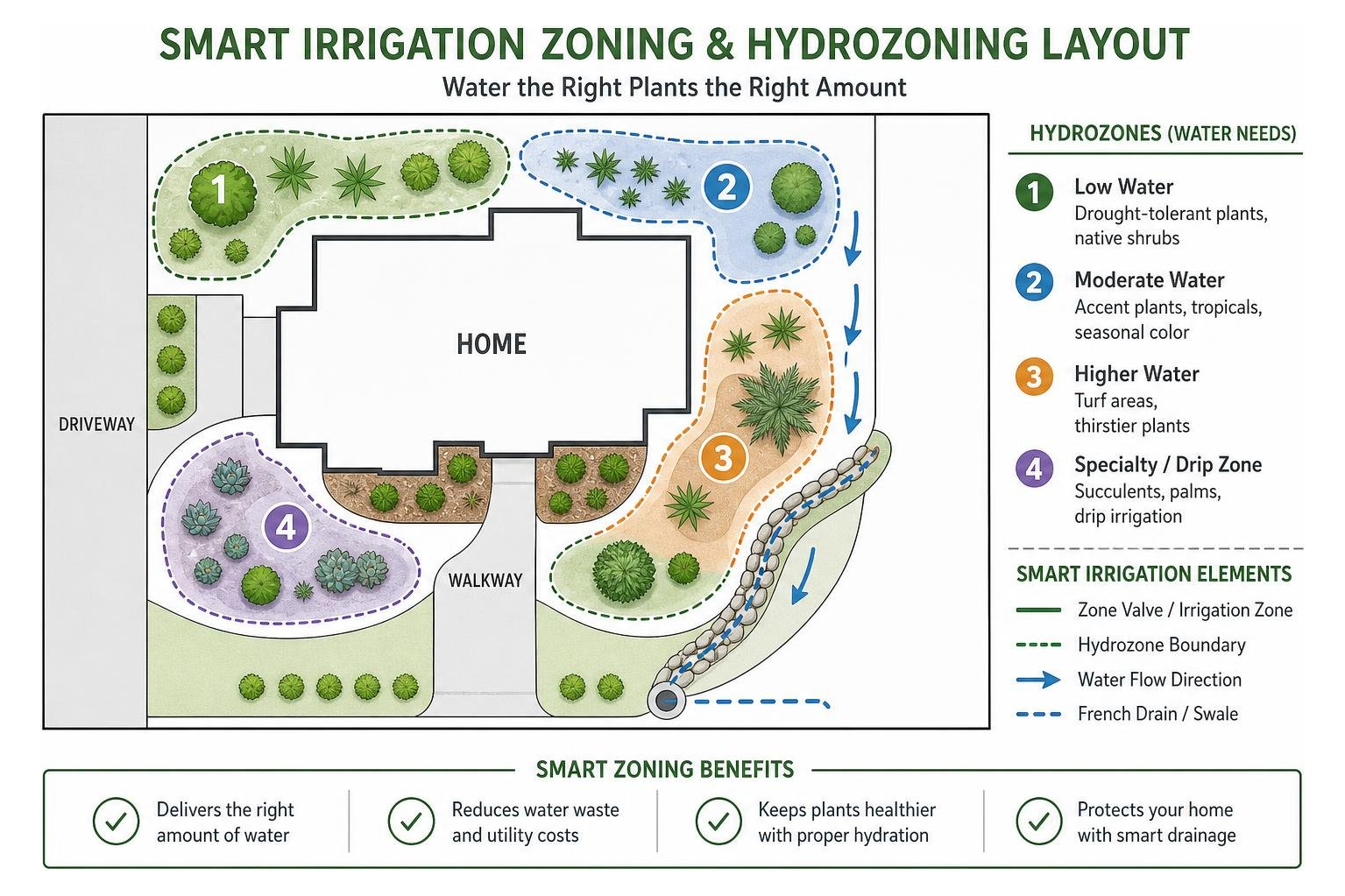
A well-planned landscape incorporates proper grading, French drains, and stone-lined swales to steer torrential roof runoff away from your home’s foundation and into planting zones. Tailoring beds to your home’s layout is central to effective South Tampa landscape design and architecture.
Smart Irrigation Upgrades and Local Watering Rules
An in-ground automatic irrigation system typically costs between $2,400 and $4,200 to install, while above-ground smart attachments run $9 to $36. Upgrading your setup saves thousands of gallons of water and prevents costly county utility penalties:
- Smart Wi-Fi Controllers: Automatically adjust watering runtimes based on real-time satellite rainfall data.
- Rain and Soil Moisture Sensors: Mandated across Hillsborough County and regional water management districts to prevent sprinklers from firing during or immediately after rainstorms.
- Drip Irrigation: Delivers water straight to plant root zones, cutting evaporation losses by up to 50% compared to traditional spray heads.
- Local Watering Restrictions: Tampa and surrounding municipalities enforce one-day-a-week watering schedules during dry periods, alongside a summer fertilizer blackout between June 1 and September 30 to protect our local bay and waterways from nutrient runoff.
Front Yard Curb Appeal Without the Upkeep
You do not need a sprawling grass lawn to have great curb appeal. Designing with clear focal points and crisp borders creates an upscale look:
- Layer Plant Beds: Position taller specimen palms or Silver Buttonwoods near the back, fill the middle with Coontie and Plumbago, and edge the front with low-growing Blue Daze or Asiatic Jasmine.
- Define Hardscape Edges: Use stacked stone, slate, or concrete curbs to separate planting beds from walkways. Clean borders prevent weed invasion and keep mulch inside the beds.
- Accentuate with Containers: Place large glazed decorative pots with slow-growing succulents or dwarf palms flanking garage and front door entryways.
Frequently Asked Questions About Tampa Low-Maintenance Landscaping
What is the most drought-tolerant grass variety for Tampa?
Bermudagrass is the most drought-tolerant warm-season turfgrass in Florida due to its extensive root network. Bahiagrass is another great choice for large lots because it survives extended dry spells by entering dormancy and greens up rapidly once rainfall returns.
How much does it cost to convert a Tampa lawn to xeriscaping?
Converting standard turf into xeriscaping averages $1.50 to $2.50 per square foot. Overall project costs typically range between $8,737 and $22,226, depending on the square footage, plant choices, hardscape integration, and stone features.
Is artificial turf or natural groundcover better for Florida heat?
Both options excel in different areas. Artificial turf provides a neat, weed-free, mud-free lawn that requires zero watering and lasts 15 to 20 years, making it ideal for pet runs and patio surrounds. Living groundcovers like perennial peanut help cool the surrounding air naturally, cost less upfront, and support native pollinators.
Conclusion
Redesigning your yard around climate-resilient plantings, durable stone hardscapes, and smart water management eliminates the endless cycle of weekend weeding, mowing, and high water bills.
At Salt & Pepper, we combine extensive project management expertise, custom home construction, and exterior remodeling know-how to help homeowners throughout Tampa, South Tampa, Hyde Park, Westchase, Carrollwood, Brandon, and Clearwater build functional, lasting outdoor spaces. When you are ready to upgrade your property, consult our team for professional landscaping in Tampa to turn your outdoor space into an easy-care retreat.


