
Go Wild or Go Home: The Ultimate Guide to Florida-Friendly Tropical Landscapes
Why Tampa Is the Perfect Canvas for Tropical Landscape Design
Tropical landscape design in Tampa is one of the most requested outdoor styles in the region — and it’s easy to see why. Tampa sits in USDA Hardiness Zone 9b–10a, which means hot, humid summers, mild winters, and just enough warmth year-round to keep bold, lush plantings thriving.
Here’s what makes a great tropical landscape in Tampa:
- Climate-matched plants — palms, hibiscus, bird of paradise, and crotons that love the heat and humidity
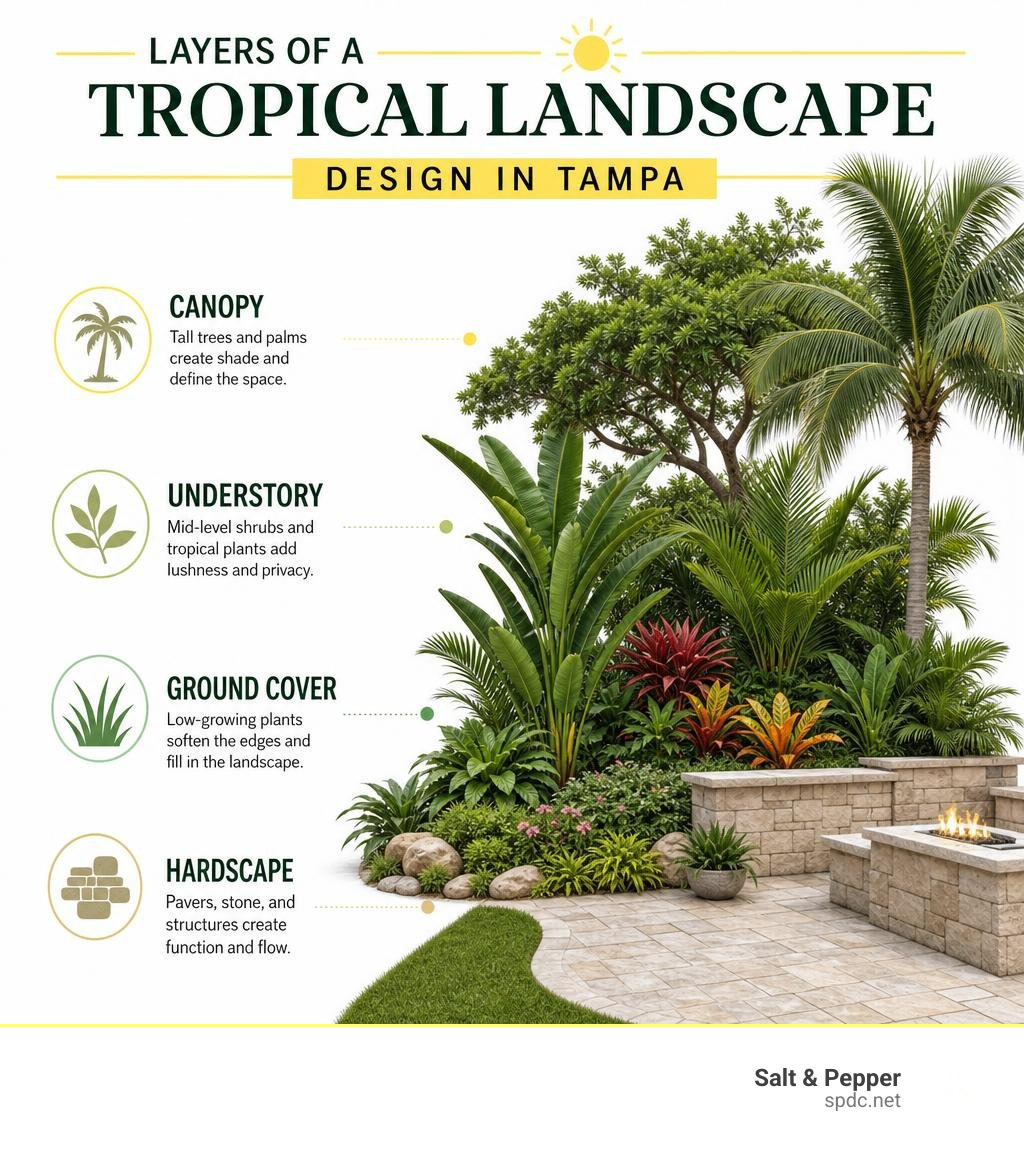
- Layered planting — canopy trees, mid-level shrubs, and ground cover for that dense, resort feel
- Smart hardscaping — paver patios, fire pits, and outdoor kitchens that extend your living space outdoors
- Drainage and irrigation — designed for Tampa’s heavy summer rains and sandy soil
- Hurricane-resilient choices — wind-tolerant species and proper spacing that hold up during storm season
The result? A yard that feels less like a lawn to mow and more like a private getaway.
Tampa’s subtropical climate is genuinely built for this style. Unlike homeowners in colder states who have to fake the tropical look, Tampa homeowners can grow the real thing — year-round color, towering palms, and flowering shrubs that never fully go dormant.
Whether you want a resort-style pool garden, a shaded native retreat, or a modern tropical entrance, the fundamentals stay the same: choose the right plants, solve for drainage, and design with your outdoor lifestyle in mind.
I’m John Doron, owner of Salt & Pepper Construction, and while my roots are in high-end kitchen and bathroom remodeling, I’ve spent years working alongside Tampa homeowners to extend that same quality craftsmanship into their outdoor spaces — including tropical landscape design in Tampa that complements a beautifully renovated home. In this guide, I’ll walk you through everything you need to know to get it right the first time.
Learn more about tropical landscape design tampa:
- landscaping services Tampa
- south tampa landscape design
- outdoor kitchen landscaping Palm Harbor
What is Tropical Landscape Design Tampa Style?
When people think of a “tropical oasis,” they often picture wild, overgrown jungles. But in places like Hyde Park, Westchase, and Carrollwood, a successful tropical landscape is highly intentional. It is a carefully curated ecosystem that balances lush, dense greenery with clean, functional outdoor living areas.

At its core, tropical landscape design in Tampa leverages our unique subtropical climate. Because we experience intense summer heat, high humidity, and a distinct wet-and-dry seasonal cycle, we cannot just plant anything and hope for the best. The “Tampa Style” is defined by several visual and structural pillars:
- Dense, Layered Vegetation: Instead of single-level garden beds, we stack plants by height. This mimics a natural rainforest canopy, transitioning from towering palms down to broad-leafed understory shrubs and thick ground covers.
- Bold Foliage and Textures: Tropical designs rely heavily on leaf shape and texture rather than just flowers. Think massive split-leaf philodendrons, glossy bird of paradise leaves, and the fine, feathery fronds of palms.
- Organic Curves and Flowing Transitions: Straight lines feel formal and rigid. Tropical designs embrace soft, curving pathways, rounded garden beds, and natural stone borders that invite you to wander.
- Vibrant Pops of Color: Deep, rich greens form the background, punctuated by bright splashes of red, orange, pink, and yellow from tropical bloomers and variegated foliage.
By partnering with professional designers who understand Tampa Bay Landscaping, homeowners can craft a space that feels wild yet completely controlled, ensuring every plant and hardscape element works in perfect harmony.
Selecting the Best Plants and Palms for Tampa’s Subtropical Climate
Designing a stunning yard in West Central Florida requires a realistic understanding of our weather. Sitting in USDA Hardiness Zone 9b–10a means our winters are mostly mild, but we can still get occasional brief freezes or light frosts. If you plant ultra-tropical species that cannot handle a dip into the low 30s, you will end up with a yard full of brown, mushy leaves by January.
To build a resilient landscape, we focus on Florida-Friendly choices. This means selecting plants that can handle our summer downpours, survive our dry spring months, resist common pests, and stand strong against high winds during hurricane season.
Here is a quick comparison of how native tropicals and adapted exotic plants stack up in a local landscape:
| Plant Type | Pros | Cons | Best Examples for Tampa |
|---|---|---|---|
| Native Tropicals | Extremely drought-tolerant once established; supports local wildlife; cold-hardy for Zone 9b. | Often has more subtle blooms; grows slower than some exotics. | Coontie Palm, Firebush, Simpson’s Stopper, Wild Coffee. |
| Exotic Tropicals | Unmatched visual drama; vibrant, show-stopping colors; fast-growing foliage. | Requires more water/fertilizer; sensitive to cold snaps; needs pruning. | Crotons, Bird of Paradise, Bougainvillea, Hibiscus. |
Essential Palms and Canopy Trees for Tropical Landscape Design Tampa
Every great tropical yard needs a ceiling. Canopy trees and palms provide essential shade, block the intense afternoon sun, and create that sought-after resort feel.
When choosing palms, look for species that offer structural strength. Areca palms are excellent for creating dense, living privacy screens along property lines in areas like Riverview and Brandon. Majesty palms offer classic, sweeping fronds, while native cabbage palms (Sabals) are virtually indestructible.
Don’t ignore our native hardwood canopies, either. Preserving mature native oaks is highly beneficial; they provide a natural shade canopy that keeps understory tropical plants from burning in the July heat. If you need expert guidance on placing these large specimens, it is wise to consult a certified Landscape Architect Tampa to ensure your trees have room to grow without lifting your concrete.
Bold Foliage and Exotic Flowers for Layered Understories
Once your canopy is set, it is time to fill in the middle and lower layers. This is where you bring in the striking colors and textures that define the tropical aesthetic:
- Crotons: These are the ultimate color workhorses of Tampa yards. With leaves splashed in bright yellow, deep red, and orange, they look incredible planted in groups.
- Bird of Paradise: Both the orange and giant white varieties offer massive, banana-like leaves that bring instant structural drama.
- Hibiscus: Known for their large, showy flowers, they bloom almost year-round in our climate if placed in full sun.
- Ginger (Shell Ginger & Red Ginger): These plants offer highly fragrant leaves and unique, drooping flower clusters that love partial shade.
- Caladiums: Perfect for adding seasonal color to shady spots under oak trees, especially during our hot, humid summers.
- Split-Leaf Philodendron (Monstera deliciosa): With its iconic cut-out leaves, this plant thrives in shady, damp areas of the garden.
Addressing Soil, Irrigation, and Drainage in West Central Florida
You can buy the most beautiful plants in the world, but if you put them in poor soil with bad drainage, your tropical dream will quickly wash away.
Our local soil is notoriously sandy. Sand does not hold onto nutrients or water very well, meaning your plants can starve or dry out quickly. To combat this, we always recommend amending planting beds with organic compost or rich topsoil before planting. This gives root zones a fighting chance to establish.
Once planted, ongoing care is crucial to keep things looking pristine. For long-term yard health, setting up a routine with a professional service for Landscape Maintenance Tampa ensures your soil, mulch, and seasonal fertilizing needs are always met.
Smart Irrigation and Water Conservation
Tropical plants love water, but that does not mean you should run your sprinklers non-stop. In fact, over-watering is one of the leading causes of root rot and pest issues in Florida.
Using smart, water-wise practices is essential. We design systems that group plants with similar water needs together (a concept called hydrozoning).
- Drip Irrigation: Instead of overhead sprayers that lose water to evaporation, drip lines deliver water directly to the base of the plants.
- Rain Sensors: A simple rain sensor prevents your irrigation system from running during our daily summer thunderstorms, saving water and money.
- Mulching: A thick, 3-inch layer of organic mulch (like eucalyptus or pine bark) is non-negotiable. It keeps soil cool, retains vital moisture, and naturally stops weeds from taking over.
Solving Tampa’s Drainage Challenges
During our summer rainy season, we routinely get heavy downpours that drop inches of rain in a single hour. If your yard lacks proper grading, you will end up with standing pools of water that drown plant roots and ruin your hardscaping.

To keep your yard healthy, we design drainage systems that blend seamlessly into the landscape:
- French Drains: Underground pipes wrapped in gravel that divert excess water away from your home’s foundation and planting beds.
- Permeable Pavers: Using porous materials for your patios and walkways allows rainwater to soak directly into the ground rather than pooling on top.
- Grading: Ensuring your yard gently slopes away from high-traffic zones to natural runoff points or rain gardens filled with water-loving plants.
Popular Tropical Landscape Styles and Hardscaping Elements
Not all tropical yards look the same. Depending on your home’s architecture and your personal taste, you can steer your design in a few different directions.

- Resort-Style Tropical: Think of your favorite Caribbean hotel. This style features wide paver pool decks, tiki torches, manicured lawns, and clusters of majestic palms surrounding a sparkling pool.
- Modern Tropical: This style pairs clean, geometric lines with wild greenery. It uses minimalist concrete planters, white stone pathways, and architectural plants like snake plants and giant elephant ears for a stark, high-contrast look.
- Native Tropical: A highly sustainable approach that uses Florida-native plants like wild coffee, coontie palms, and firebush to create a lush, low-maintenance habitat for local birds and butterflies.
No matter which style you choose, integrating high-quality outdoor living features makes the space truly usable. From summer kitchens to cozy fire pits, you can explore beautiful concepts in our guide to Florida Outdoor Living Designs.
Integrating Hardscapes and Lighting in Tropical Landscape Design Tampa
To make your yard feel like a true extension of your home, you need to balance soft plants with solid hardscaping.
We love using natural stone, wide concrete pavers, and warm wood tones to create pathways and functional zones. A custom pergola draped in flowering vines like bougainvillea provides a shaded spot for dining, while a built-in outdoor kitchen turns your backyard into the ultimate weekend hangout. For structural additions that stand up to our coastal weather, we specialize in durable Outdoor Construction Tampa.
Do not forget about the night, either. Low-voltage LED lighting completely transforms a tropical garden after dark. By placing uplights at the base of your palms and soft path lights along your walkways, you create dramatic shadows and a warm, inviting glow that lets you enjoy your yard long after the sun goes down. To see how these trends are evolving, check out our insights on Outdoor Construction in Tampa: Top Design Trends Transforming Backyards in 2026.
Comparing Tropical Landscapes to Other Tampa Design Styles
How does a tropical look compare to other popular styles in the Tampa Bay area? Choosing a style depends on your home’s architecture, your budget, and how much time you want to spend on upkeep.
- Mediterranean: This style relies heavily on symmetry, formal hedges, classical fountains, and muted colors. While beautiful, it requires a lot of shearing and pruning to keep its formal shape.
- Modern Minimalist: Focuses on clean lines, large expanses of turf or gravel, and a highly limited plant palette. It looks fantastic with contemporary homes but can feel a bit sterile if not balanced with enough green.
- Xeriscape: Designed entirely around water conservation, xeriscaping uses native, drought-tolerant plants, gravel beds, and minimal grass.
To help you decide, here is a breakdown of the key differences between a lush tropical design and a sustainable xeriscape:
- Water Needs: Tropical yards require regular moisture (especially during dry spring months), while xeriscapes survive almost entirely on natural rainfall once established.
- Foliage Density: Tropical designs focus on dense, overlapping layers of broad-leafed plants. Xeriscapes lean toward spaced-out plantings, ornamental grasses, and rock mulch.
- Maintenance: Tropical yards need regular pruning, fertilizing, and mulching to stay lush. Xeriscapes are highly low-maintenance, requiring only light seasonal cleanup.
If you are trying to match your landscape to a specific neighborhood vibe, take a look at The Ultimate Guide to South Tampa Landscape Design and Architecture for localized design inspiration.
Frequently Asked Questions about Tampa Tropical Landscaping
How do I protect my tropical landscape during Tampa’s hurricane season?
The best defense is a good offense. During design, we select wind-resistant palm species (like Sabal palms and Areca palms) and plant them with proper spacing. Regular pruning is also key; removing dead or weak fronds before storm season starts keeps wind from catching in the canopy and pulling trees down.
Can I have a lush tropical look while practicing water conservation?
Absolutely! By using “Florida-Friendly” native plants like wild coffee, coontie, and dwarf firebush, you get a thick, leafy look that naturally requires very little water. Combine these with smart drip irrigation and a heavy layer of organic mulch to keep water from evaporating.
What are the long-term maintenance costs of a tropical yard in Tampa?
Tropical yards do require a bit more investment than simple grass-and-mulch yards. You should budget for seasonal mulching (twice a year), regular fertilizer applications to keep palms from turning yellow, and pruning to keep fast-growing species like hibiscus and ginger in check.
Conclusion
Creating a beautiful, resilient tropical yard is all about working with Florida’s unique climate, not against it. By layering the right plants, solving your drainage challenges, and adding high-quality hardscaping, you can turn your backyard into a private, resort-style escape that lasts for years.
At Salt & Pepper, we handle everything from complete home renovations to stunning outdoor living construction. Whether you are looking to build a custom outdoor kitchen, add a beautiful new pergola, or completely redesign your backyard layout in Tampa, South Tampa, Clearwater, or Wesley Chapel, we are here to bring your vision to life.
Ready to start planning your dream outdoor space? Learn more about our custom Tampa Landscaping Services and let’s build something incredible together.


