

Kitchen Remodeling for Clearwater FL Homes: Complete 2026 Cost Guide
Did you know that homeowners in Clearwater, FL are spending between $20,324 and $28,214 on medium-sized kitchen remodels in 2026, significantly above the national average? Whether you’re a retiree looking to refresh your coastal home or an investor preparing a property for the competitive Tampa Bay market, understanding local kitchen remodeling costs is critical to making informed decisions. This comprehensive guide breaks down every expense, from permits to premium countertops, helping you budget accurately for your Clearwater kitchen transformation.
What Are the Current Kitchen Remodeling Costs in Clearwater, FL?
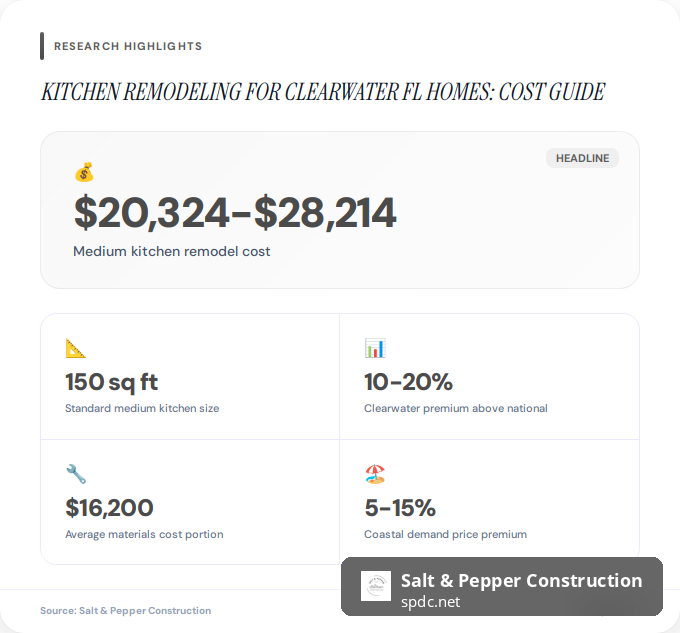
Kitchen remodeling in Clearwater, FL has become increasingly expensive, with 2026 data showing costs ranging from $20,324 to $28,214 for a medium-sized 150 square foot project. This comprehensive estimate includes materials averaging $16,200, labor at approximately $7,260, and permits costing around $450, all adjusted for local Bureau of Labor Statistics wage data and regional pricing variations.
Across Florida, the broader range spans $14,700 to $73,500 per project, with Clearwater costs trending slightly above the national average of $27,000 due to Tampa Bay’s construction demand surge, the prevalence of older block homes requiring additional structural work, and intense retiree and investor activity in the coastal market.
The Tampa Bay region’s construction boom has elevated Clearwater kitchen remodeling costs by 10 to 20 percent above national benchmarks. Coastal demand adds an additional 5 to 15 percent premium for both labor and materials, particularly in neighborhoods like Clearwater Beach, Island Estates, and Feather Sound where saltwater exposure necessitates corrosion-resistant materials.
“Clearwater’s unique combination of block construction, coastal humidity, and an older housing stock means homeowners must invest more in moisture-resistant materials and specialized labor compared to inland Florida markets. This isn’t just about aesthetics; it’s about longevity and protecting your investment.”
How Do Kitchen Remodeling Costs Break Down by Size?
Understanding how kitchen remodeling costs scale with square footage helps homeowners budget appropriately. The variation isn’t linear because larger kitchens often require proportionally more expensive structural modifications, additional electrical circuits, and expanded plumbing systems.
| Project Size | Square Footage | Budget Range | Standard Range | Premium Range | All-In Clearwater Estimate |
|---|---|---|---|---|---|
| Small | Less than 70-110 sq ft | $6,428-$8,697 | $8,571-$11,596 | $11,999-$16,235 | $20,000-$40,000 |
| Medium | 70-170 sq ft | $10,714-$14,495 | $14,285-$19,327 | $19,999-$27,058 | $35,000-$70,000 |
| Large | 150-260+ sq ft | $16,071-$21,743 | $21,428-$28,990 | $29,999-$40,586 | $65,000-$120,000+ |
| Extra-Large | 250+ sq ft | $23,570-$31,889 | $31,427-$42,519 | $43,998-$59,527 | Varies significantly |
Florida-wide estimates place kitchen remodeling costs at $100 to $300 per square foot overall, with small kitchens averaging $10,000 to $30,000, medium kitchens ranging from $20,000 to $50,000, and large kitchens starting at $50,000 and climbing well into six figures for luxury renovations.
These ranges reflect three distinct quality tiers: budget renovations using builder-grade materials and minimal structural changes, standard remodels featuring mid-range appliances and finishes, and premium transformations with custom cabinetry, professional-grade appliances, and high-end stone surfaces. Similar to planning a home addition in Tampa FL, kitchen remodeling requires careful consideration of scope and materials to control costs effectively.
What Are the Major Cost Components in Kitchen Remodeling?
Breaking down kitchen remodeling costs into discrete components reveals where your investment dollars actually go. Understanding this distribution helps prioritize spending and identify potential savings opportunities without compromising quality or functionality.
Labor Costs in Clearwater Kitchen Remodels
Labor represents a substantial portion of your budget, ranging from $12,000 to $45,000 for comprehensive kitchen remodeling projects in Clearwater. This encompasses demolition, framing modifications, electrical and plumbing work, drywall installation, and finish carpentry. Older homes in beach areas often require additional labor hours due to corroded pipes, outdated electrical systems, and unexpected structural issues discovered during renovation.
The skilled labor rate in Clearwater averages approximately $44 per hour as of 2026, reflecting Florida’s 0.98x national wage multiplier but adjusted upward for Tampa Bay’s competitive contractor market. Specialized trades like licensed electricians and master plumbers command premium rates, particularly for code-compliant work required in condominiums and historic homes.
Material Expenses: Where Your Money Goes
Materials typically consume 40 to 60 percent of your total kitchen remodeling budget, with countertops often representing the single largest material expense. In Clearwater’s humid climate, material selection extends beyond aesthetics to address moisture resistance and durability against saltwater exposure.
Quartz countertops, priced at $50 to $150+ per square foot, have become increasingly popular because they resist humidity damage better than natural stone alternatives. Granite ranges from $40 to $100 per square foot, offering natural beauty at competitive pricing, while marble commands $70 to $250 per square foot but proves susceptible to staining from acidic foods and beverages common in Florida kitchens.
Cabinetry represents the largest single budget category for most homeowners. Stock cabinets start around $100 to $300 per linear foot, semi-custom options range from $200 to $650 per linear foot, and fully custom cabinetry begins at $500 per linear foot and can exceed $1,500 for exotic woods with specialized finishes.
Permits and Regulatory Compliance
Permit costs in Clearwater range from $300 to $1,200 depending on project scope, with additional fees required for structural modifications, gas line work, or condominium projects requiring association approval. These fees, while seemingly modest compared to total project costs, ensure code compliance and protect your investment’s resale value.
Structural changes, load-bearing wall removals, and major plumbing relocations trigger higher permit fees and mandatory inspections. Working with experienced contractors familiar with Clearwater’s building department streamlines the approval process and minimizes costly delays.
Appliances and Flooring Considerations
Energy-efficient appliances deserve priority in Florida’s heat and humidity. Modern refrigerators, ranges, and dishwashers equipped with Energy Star certification reduce electricity consumption, particularly important given Florida’s high cooling costs and the additional thermal load kitchen appliances generate.
Flooring selections must withstand moisture, temperature fluctuations, and tracked-in sand from nearby beaches. Luxury vinyl plank flooring offers water resistance at $3 to $7 per square foot installed, while porcelain tile provides superior durability at $5 to $15 per square foot. Traditional hardwood, while beautiful, requires careful species selection and meticulous sealing in Clearwater’s climate.
Why Does Kitchen Remodeling Cost More in Clearwater Than Other Areas?
Several interconnected factors drive Clearwater kitchen remodeling costs above national averages. Understanding these regional dynamics helps homeowners budget realistically and avoid underestimating project expenses.
The Tampa Bay construction boom has created intense demand for skilled contractors, pushing labor rates upward. Population growth, particularly among retirees and remote workers relocating from higher-cost markets, has accelerated renovation activity across Pinellas County. This demand surge means competitive contractors can command premium rates and maintain full project schedules months in advance.
Clearwater’s housing stock includes numerous concrete block homes built between the 1950s and 1980s. These structures, while hurricane-resistant, present renovation challenges absent in wood-frame construction common elsewhere. Modifying block walls for new windows, doorways, or appliance placements requires specialized equipment and expertise, adding both time and expense to kitchen remodeling projects.
Coastal proximity introduces corrosion concerns affecting everything from fasteners to appliances. Salt-laden air accelerates deterioration of standard materials, necessitating upgraded hardware, corrosion-resistant fixtures, and protective coatings that add 5 to 15 percent to material costs. Beach-area homes face particularly aggressive environmental conditions requiring premium-grade components.
Insurance and permitting requirements in Florida exceed many other states due to hurricane exposure and strict building codes implemented after major storms. These regulatory standards protect homeowners but add complexity and cost to renovation projects, particularly when structural modifications occur.
Which Materials Work Best for Clearwater’s Climate?
Selecting appropriate materials for Clearwater’s subtropical climate prevents premature failure and maximizes your kitchen remodeling investment. The region’s high humidity, salt exposure, and intense UV radiation demand thoughtful material specifications beyond aesthetic preferences.
Countertop Materials Rated for Coastal Environments
Quartz engineered stone has emerged as the preferred countertop material for Clearwater kitchens due to its non-porous surface that resists moisture absorption and bacterial growth. Unlike natural stone requiring periodic sealing, quartz maintains its protective qualities indefinitely while offering consistent color and pattern throughout the slab.
Granite remains viable when properly sealed and maintained, though homeowners must commit to resealing every 12 to 18 months in humid climates. Lighter granite colors show etching and staining less prominently than darker varieties, an important consideration for busy kitchens.
Marble, despite its timeless elegance, presents maintenance challenges in Florida kitchens. Acidic substances like citrus juice, vinegar, and tomato-based sauces readily etch marble surfaces, while the stone’s porosity makes it susceptible to moisture-related staining. Homeowners selecting marble should restrict it to low-use areas like island tops or baker’s stations rather than primary work surfaces.
Cabinetry Built for Humidity Resistance
Solid wood cabinets require careful species selection in Clearwater’s climate. Maple, cherry, and oak expand and contract with humidity fluctuations, potentially causing door alignment issues and finish cracking. Marine-grade plywood construction with moisture-resistant veneers provides superior dimensional stability compared to particleboard or MDF cores common in budget cabinetry.
Cabinet finishes matter significantly in coastal environments. Catalyzed conversion varnish and waterborne lacquers create more durable moisture barriers than traditional nitrocellulose lacquers. Exposed cabinet interiors benefit from sealed finishes preventing moisture absorption from the back side, particularly important in exterior walls prone to condensation.
Flooring That Withstands Beach Living
Porcelain tile rated for wet areas provides unmatched durability for Clearwater kitchens. Its impermeability to moisture, resistance to scratching from tracked-in sand, and tolerance for cleaning chemicals makes it ideal for high-traffic coastal homes. Large-format tiles minimize grout lines that can harbor moisture and staining.
Luxury vinyl plank technology has advanced dramatically, now offering waterproof construction with realistic wood grain appearances. Quality LVP installations include moisture barriers and perform exceptionally well in humid environments while providing comfortable underfoot resilience that tile cannot match.
Traditional hardwood flooring remains possible in Clearwater but requires engineered construction rather than solid planks. Engineered hardwood’s cross-grain core construction resists expansion and contraction while the real wood veneer provides authentic appearance. Installation should include moisture barriers and acclimation periods accounting for Florida’s humidity levels.
What Kitchen Remodeling Trends Are Dominating in 2026?
Current kitchen remodeling trends reflect both aesthetic preferences and practical responses to Florida’s climate challenges. Understanding these trends helps homeowners create kitchens that feel contemporary while addressing regional lifestyle needs.
Energy-efficient appliances have transitioned from premium upgrades to standard expectations. Induction cooktops reduce kitchen heat compared to gas ranges, particularly important in Florida where air conditioning costs represent major household expenses. Smart refrigerators with precise temperature zones minimize food spoilage in humid conditions while reducing energy consumption through improved insulation and compressor technology.
Open floor plans continue dominating new construction and renovation projects, but 2026 trends show increasing interest in defined kitchen zones. Homeowners want cooking areas that connect visually to living spaces without transferring cooking odors, heat, and noise. Solutions include partial walls with pass-throughs, strategically positioned islands creating subtle boundaries, and high-performance range hoods managing air quality.
Outdoor kitchen integration has become standard in Clearwater renovations. The region’s year-round comfortable weather makes outdoor cooking and dining practical nearly every day. Interior kitchen designs now anticipate serving outdoor spaces through pass-through windows, coordinated material palettes extending to covered patios, and weatherproof storage for outdoor entertaining supplies.
Natural materials with coastal aesthetics dominate design preferences. Light-toned woods, soft blue-green color accents, and textured tile backsplashes evoke beachy sophistication without resorting to literal nautical themes. These organic materials create calming environments while maintaining broad appeal for eventual resale.
Technology integration extends beyond appliances to include USB charging stations, under-cabinet lighting controlled by smartphones, and touchless faucets reducing cross-contamination. These features add convenience while addressing practical concerns about sanitation and accessibility.
How Can You Maximize Your Kitchen Remodeling Budget?
Strategic planning and informed decision-making stretch kitchen remodeling budgets without sacrificing quality or functionality. Several proven approaches help Clearwater homeowners achieve their vision while controlling costs.
Prioritizing work that provides both immediate enjoyment and long-term value creates the foundation for smart budgeting. Focus initial investments on durable infrastructure like quality cabinets, reliable plumbing, and adequate electrical capacity. These foundational elements prove difficult and expensive to upgrade later, while cosmetic elements like hardware, lighting fixtures, and paint colors can evolve affordably as tastes change.
Retaining existing layouts eliminates costly plumbing and electrical relocations. Moving sinks, dishwashers, and gas lines requires opening walls, rerouting utilities, and potentially modifying structural framing, all adding thousands to labor costs. Kitchens designed around existing infrastructure can redirect those savings toward higher-quality finishes and appliances.
Timing renovations during contractor slow periods, typically late spring and summer in Clearwater when fewer northern transplants undertake projects, may yield pricing flexibility. Established contractors sometimes offer modest discounts for filling schedule gaps between larger projects, though this strategy requires flexibility with project timelines.
Mixing quality tiers strategically allows splurging on visible, frequently-used elements while economizing on less-critical components. Invest in quality countertops, cabinet faces, and appliances while selecting builder-grade options for cabinet interiors, toe kicks, and other concealed areas. This approach delivers visual impact and daily functionality without premium pricing across every element.
Working with professional designers prevents expensive mistakes and change orders. While design fees add upfront costs, experienced professionals anticipate problems, optimize layouts, and coordinate trades efficiently. The right design and construction team saves money by preventing demolition surprises, coordinating material deliveries, and managing subcontractors effectively.
Obtaining multiple detailed bids from licensed contractors provides cost comparison baselines and reveals which companies understand project requirements. Beware unusually low bids that may indicate misunderstood scope, use of substandard materials, or contractors lacking proper insurance and bonding. Florida kitchen remodeling projects protected by comprehensive contracts, payment schedules tied to milestones, and verified licensing minimize financial risk.
Allocating 10 to 15 percent contingency budgets addresses inevitable surprises. Older Clearwater homes frequently conceal outdated wiring, corroded plumbing, or compromised framing discovered only after demolition begins. This financial buffer prevents project delays and forced compromises when unexpected issues arise.
Key Takeaways
- Clearwater kitchen remodeling costs range from $20,324 to $28,214 for medium-sized projects, exceeding national averages due to Tampa Bay construction demand, coastal material requirements, and block home construction challenges.
- Kitchen size dramatically impacts total costs, with small kitchens starting at $20,000, medium kitchens ranging from $35,000 to $70,000, and large kitchens exceeding $65,000 depending on finish quality and layout modifications.
- Labor represents $12,000 to $45,000 of project costs, with Clearwater’s skilled trades averaging $44 per hour and older beach-area homes requiring additional troubleshooting and repair work.
- Material selection should prioritize humidity and salt resistance, with quartz countertops, moisture-resistant cabinetry, and porcelain tile or luxury vinyl flooring proving most durable in coastal conditions.
- Energy-efficient appliances reduce long-term operating costs while generating less heat in Florida’s climate, making them worthwhile investments despite higher initial pricing.
- Retaining existing layouts saves thousands in plumbing and electrical relocation costs, allowing budget reallocation toward higher-quality finishes and appliances that enhance daily functionality.
- Working with experienced local contractors familiar with Clearwater’s building codes, climate challenges, and permitting processes prevents costly mistakes and ensures code-compliant, durable results that protect your investment.
Conclusion: Planning Your Clearwater Kitchen Remodeling Project
Successfully navigating kitchen remodeling in Clearwater, FL requires understanding local cost factors, selecting climate-appropriate materials, and working with experienced professionals who grasp the region’s unique challenges. Whether you’re refreshing a cozy condo kitchen in Clearwater Beach or transforming a sprawling family kitchen in Safety Harbor, realistic budgeting based on current 2026 pricing prevents surprises and ensures your investment delivers lasting value.
The kitchen remodeling costs outlined in this guide reflect comprehensive research into Clearwater’s construction market, material pricing, and labor rates. Your specific project costs will vary based on home age, desired finishes, layout complexity, and contractor selection, but these benchmarks provide solid planning foundations.
Ready to transform your Clearwater kitchen with expert guidance and transparent pricing? Contact experienced local professionals who understand Tampa Bay’s construction market and can help you navigate every decision from initial design through final installation. Your dream kitchen awaits, backed by realistic budgets, climate-smart material choices, and skilled craftsmanship that stands up to Florida’s demanding coastal environment.
Frequently Asked Questions
Most kitchen remodeling projects in Clearwater take 6 to 12 weeks from demolition to completion, depending on scope and material availability. Complex projects involving structural changes, custom cabinetry, or permit delays may extend to 14 to 16 weeks, while simple cosmetic updates can finish in 4 to 6 weeks.
Yes, Clearwater requires permits for kitchen remodeling projects involving electrical work, plumbing modifications, structural changes, or new appliance installations. Cosmetic updates like painting or replacing countertops typically don’t require permits, but confirming with the city building department prevents compliance issues. Permit costs range from $300 to $1,200 depending on project scope.
Late spring through summer (May to August) often represents the optimal timing for Clearwater kitchen remodeling, as contractor schedules are less congested than during winter when northern transplants undertake renovations. However, summer’s heat and humidity require proper ventilation during construction, and hurricane season demands weather contingency planning.
Kitchen remodeling typically returns 60 to 80 percent of investment at resale in Clearwater’s competitive real estate market, with mid-range updates often yielding better returns than ultra-luxury renovations. Projects emphasizing functionality, energy efficiency, and coastal-appropriate materials appeal most to Tampa Bay buyers. Kitchens updated within the past 5 years significantly reduce time on market.


