
Why 60’s Kitchen Remodel Ideas Are Making a Comeback
60’s kitchen remodel ideas blend nostalgic charm with modern functionality, making them a popular choice for homeowners who want a unique, timeless space. If you’re looking to infuse your kitchen with retro flair, here’s what you need to know:
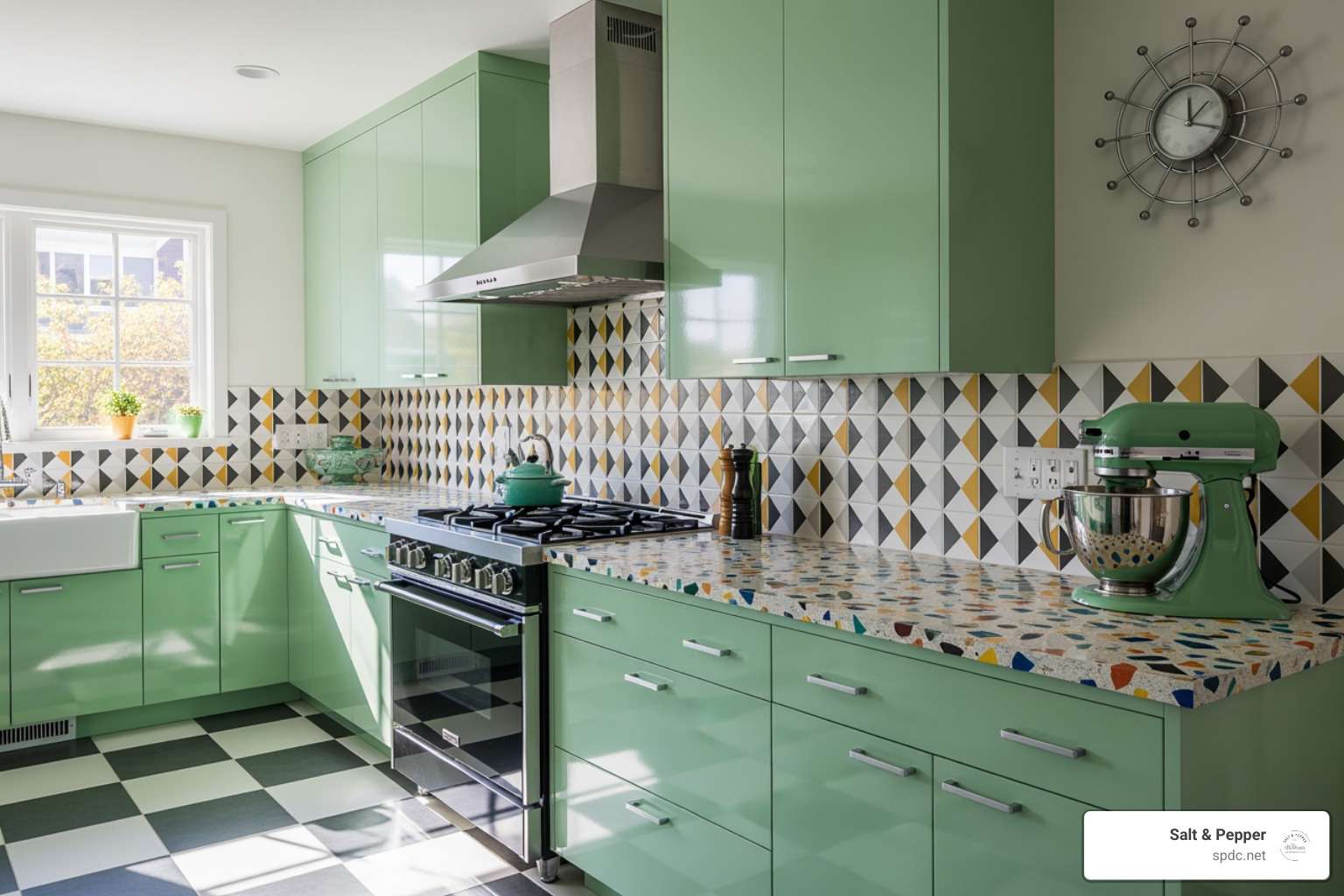
- Flat-front slab cabinets in natural wood or bold colors like pistachio green
- Laminate or terrazzo countertops in solid, vibrant hues
- Geometric tile backsplashes with funky patterns or checkerboard designs
- Statement lighting like globe pendants or Sputnik chandeliers
- Open layouts with eat-in areas or breakfast bars
- Chrome accents and vintage-inspired accessories
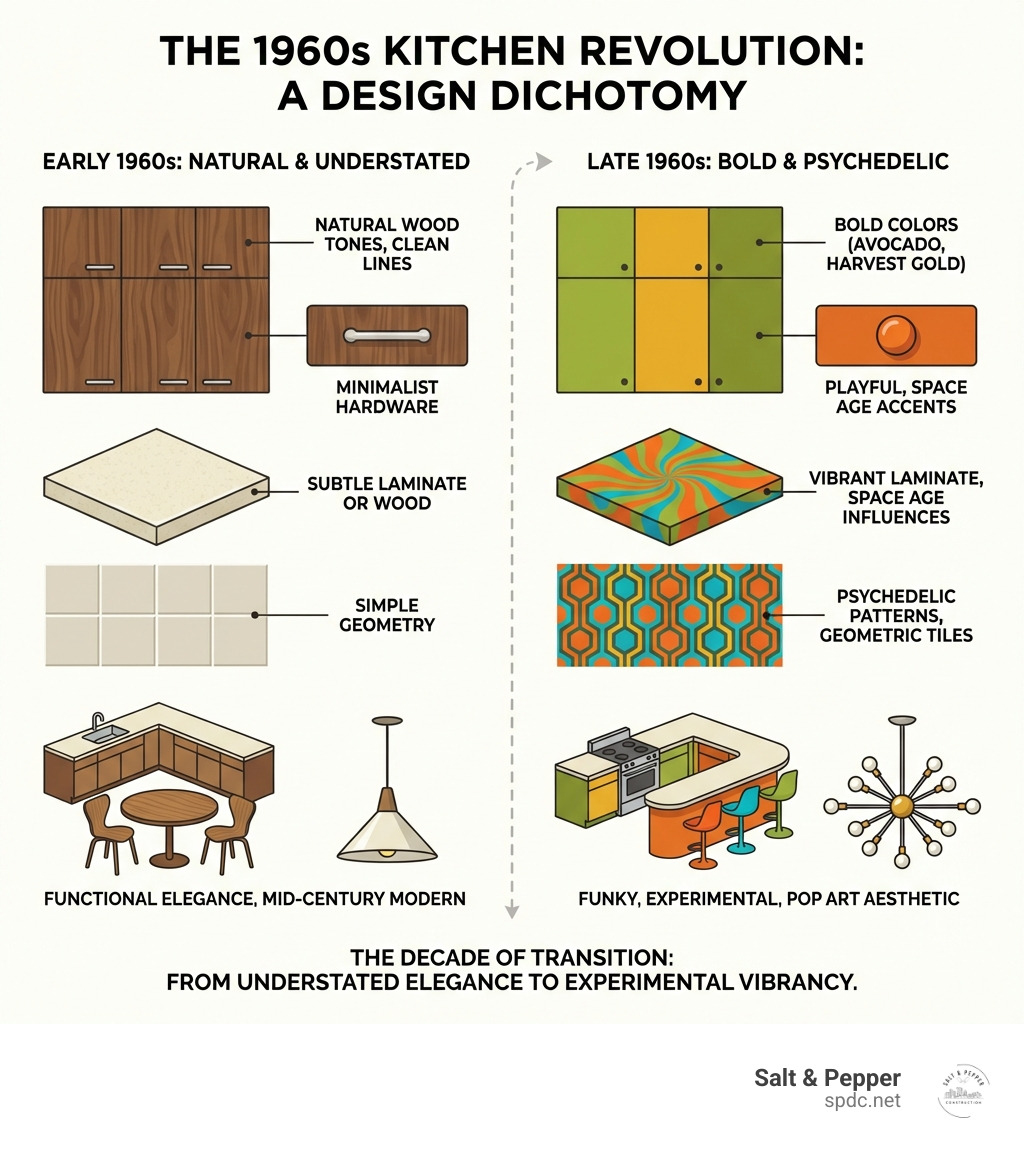
The 1960s marked a pivotal shift in kitchen design. The decade started with clean, formal spaces featuring natural wood and understated elegance. By the late 60s, kitchens had transformed into vibrant, experimental hubs influenced by Pop Art and Space Age aesthetics—think bold colors, synthetic materials, and a “funky” sensibility.
Today’s homeowners are refinding these iconic elements, not as museum pieces, but as practical design choices that add character and warmth. Whether you’re drawn to the earthy tones and walnut cabinetry of the early 60s or the playful burnt orange and turquoise of the later years, these ideas can be adapted to suit modern living.
Remodeling a 1960s-era kitchen—or creating a 60s-inspired space—comes with unique challenges. Original layouts were often small and compartmentalized, materials like laminate and vinyl may need updates, and integrating modern appliances while preserving retro charm requires careful planning. Yet with the right approach, you can achieve a kitchen that’s both nostalgic and functional.
I’m John Doron, owner of Salt & Pepper Construction in Tampa, and I’ve spent years helping homeowners transform their kitchens into beautiful, functional spaces. My team and I specialize in blending classic 60’s kitchen remodel ideas with modern convenience, ensuring your renovation honors the past while meeting today’s standards. Let’s explore what made 1960s kitchens special—and how you can bring that timeless style into your home.
The Anatomy of a 1960s Kitchen
The 1960s was a decade of immense change, and nowhere was this more evident than in the American kitchen. It was a time when kitchens transitioned from purely utilitarian spaces to the busy heart of the home, embracing new technologies and bolder aesthetics. Understanding this evolution is key to successfully incorporating 60’s kitchen remodel ideas into your modern home.
Early in the decade, kitchens often retained a more formal, mid-century modern sensibility. Think clean lines, natural wood tones like walnut and teak, and a focus on functionality. There was an emphasis on creating efficient workspaces, with appliances neatly integrated and cabinetry designed for practical storage.
As the decade progressed, cultural shifts like Pop Art and the Space Age began to influence home design. Kitchens became more experimental, vibrant, and, dare we say, “funky.” This late-60s aesthetic saw an explosion of color, synthetic materials, and playful patterns that brought a new energy to the culinary space. This period marked a move towards more social, open kitchen layouts, reflecting a desire for gathering and entertaining. The concept of the kitchen as a central hub where families and friends could congregate really took hold.
Signature Color Palettes
Color played a pivotal role in defining the 1960s kitchen aesthetic, evolving significantly throughout the decade. Initially, softer pastels and natural wood tones dominated, reflecting a more subdued mid-century influence. However, as the decade marched on, things got a lot more vibrant!
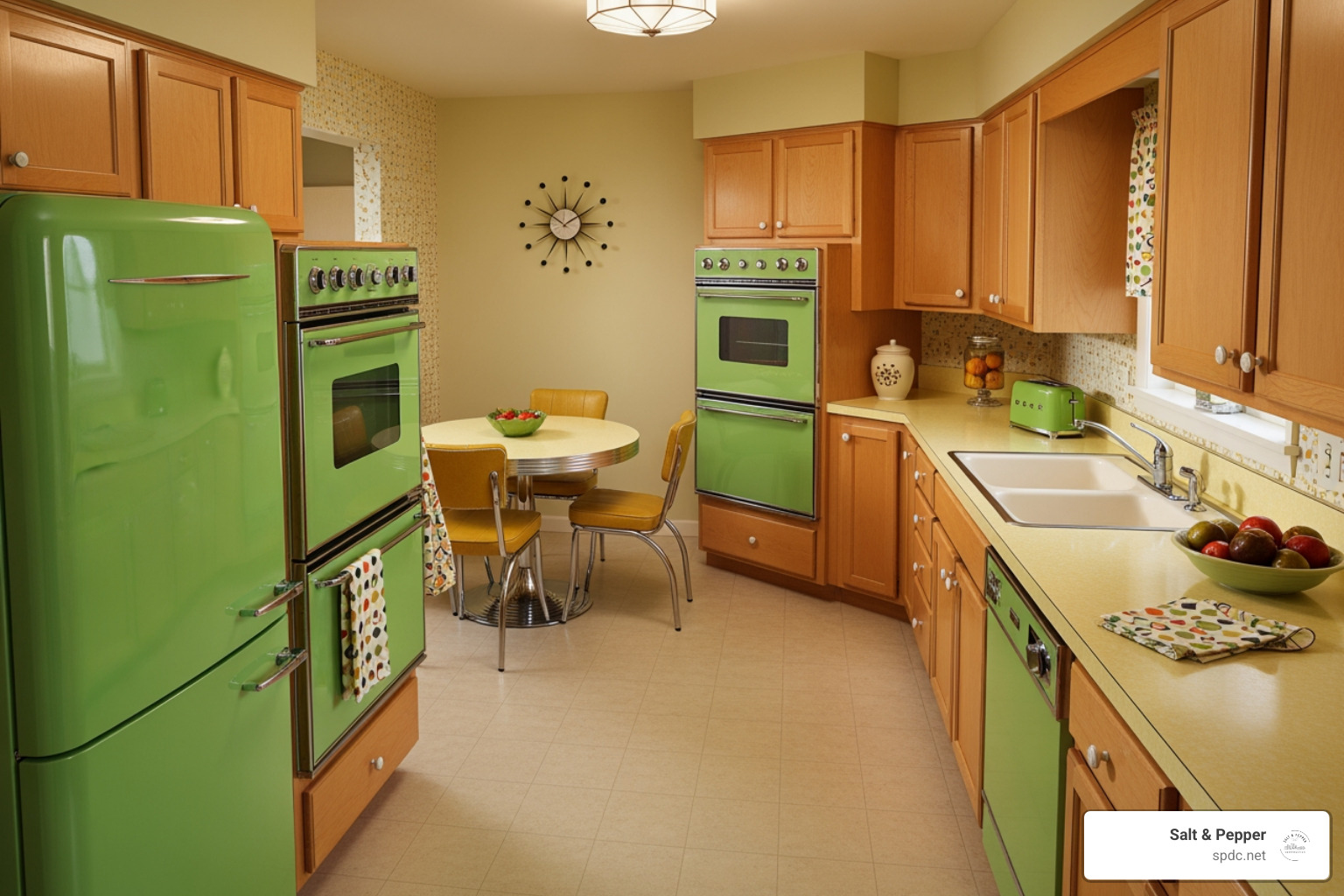
The late 60s brought forth an iconic palette that we still recognize today:
- Avocado green and harvest gold became ubiquitous, not just in paint colors but famously in appliances.
- Burnt orange added a warm, earthy yet bold touch.
- Turquoise offered a cool, refreshing contrast.
- Pastel pinks, while popular in the 50s, still found their way into some early 60s designs.
- Natural wood tones, especially walnut and teak, provided a grounding element, often contrasted with brighter hues.
- Black and white accents were used for crispness, particularly in flooring or geometric patterns.
These bold colors were often used strategically, whether on solid laminate countertops, in vibrant wallpaper patterns, or on appliances, enlivening the kitchen and bringing energy to the workspace.
Groundbreaking Materials and Technology
The 1960s were a time of innovation, and new materials and technologies revolutionized kitchen design. This era saw the introduction of synthetic wonders that promised durability and ease of maintenance, shaping the look and feel of kitchens for decades to come.
One of the most significant advancements was the surge in popularity of laminate countertops. Brands like Wilsonart and Formica became household names, offering durable, easy-to-clean surfaces in a kaleidoscope of bold, solid colors. These countertops were a practical and stylish choice, perfectly capturing the vibrant spirit of the late 60s. The decade also saw the invention of Corian solid surface, a new synthetic material that would begin to influence kitchen design in the years to follow, offering seamless surfaces and new possibilities.
For flooring, resilient flooring, particularly sheet vinyl, became incredibly popular. Valued for its durability, water resistance, and ease of cleaning, it was a practical choice for busy kitchens. These vinyl floors often featured bold patterns, mimicking everything from brick and marble to wood, providing both style and function.
Beyond materials, the 1960s were characterized by a significant shift in appliances. The ‘Gold Medallion All-Electric’ home concept was heavily promoted, encouraging homeowners to accept electric appliances over traditional gas options. This push led to a rise in electric ranges, ovens, and dishwashers, impacting kitchen layouts and electrical infrastructure. Wall ovens, in particular, became a popular feature, often integrated into custom cabinetry or brick surrounds. This move towards electric appliances underscored a desire for modern convenience and efficiency in the home.
Evolving Layouts and Cabinetry
The 1960s witnessed a change in kitchen layouts, driven by a desire for more open, social spaces and innovative storage solutions. This was a departure from earlier, more compartmentalized kitchen designs, reflecting a changing lifestyle where the kitchen was no longer just for cooking.
The concept of open-plan living began to gain traction, influencing kitchen layouts significantly. Kitchens started to open up to adjacent dining and living areas, fostering a more connected home environment. This led to the emergence of eat-in kitchens and breakfast bars, where family and friends could gather, blurring the lines between food preparation and social interaction. Sometimes, wall cabinets were even hung from the ceiling or placed in the center of open-plan areas to visually separate spaces without completely enclosing them.
In terms of cabinetry, slab cabinet doors and drawer fronts were a common trend. These flat-front designs, often with understated or no visible hardware, contributed to a sleek, minimalist look that remains relevant today. This style emphasized clean lines and a streamlined appearance, whether the cabinets were natural wood or painted in one of the decade’s popular colors.
Groovy 60’s Kitchen Remodel Ideas for Today’s Home
Bringing the groovy vibe of the 60s into your modern kitchen is all about selecting key elements that pay homage to the era without making your space feel like a time capsule. We believe the best 60’s kitchen remodel ideas blend nostalgia with contemporary functionality.
Here are our top 5 must-have 60s kitchen elements to consider for your Tampa home:
- Flat-Front Slab Cabinetry: Clean, minimalist, and timeless.
- Bold Color Pops: Think avocado green, burnt orange, or a vibrant turquoise.
- Geometric or Patterned Backsplashes: Checkerboard, mosaic, or funky tiles add visual interest.
- Laminate or Terrazzo Countertops: Durable and authentic.
- Statement Lighting: Globe pendants or a Sputnik chandelier as a focal point.
Cabinets: Sleek, Simple, and Colorful
The cabinets are the backbone of any kitchen design, and in the 1960s, they truly made a statement. For your 60’s kitchen remodel ideas, we suggest embracing the era’s signature styles:
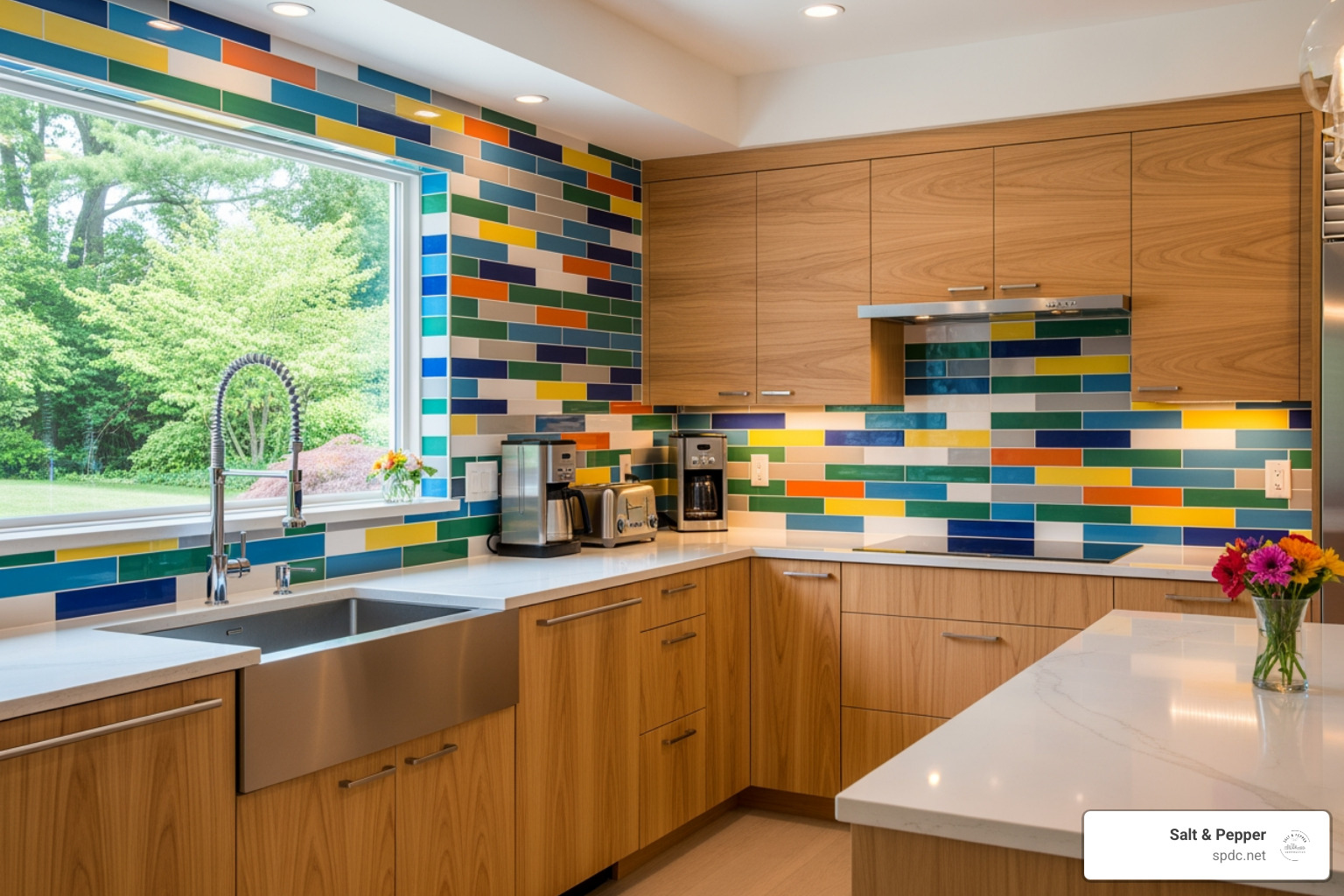
- Flat-front slab doors: These were incredibly popular, offering a clean, uncluttered look. They can be custom-built lacquered veneer or solid wood.
- Natural wood cabinets: Walnut and teak were prime choices, offering warmth and a sophisticated, organic feel. A kitchen from 1960 with natural wood cabinetry could easily pass for contemporary, showcasing the timeless appeal of these materials.
- Painted cabinets: Don’t shy away from color! Pistachio green cabinets, paired with brass or gold accents, are a fantastic retro touch. You could also opt for a bold yellow to capture the sunny disposition of the era.
- Minimal or integrated hardware: Many 60s cabinets featured understated pulls or even grooves on the bottom edges of doors for a seamless, smooth look. This minimalist approach improves the clean lines of the slab doors.
Countertops and Backsplashes: Patterns and Pops of Color
Countertops and backsplashes are prime real estate for injecting that unmistakable 60s flair into your kitchen. The era celebrated durable materials and bold visual statements.
- Laminate countertops: Solid color laminate, particularly from brands like Wilsonart and Formica, was a staple. Imagine a vibrant yellow or burnt orange laminate counter, a true nod to the era’s Pop Art influences.
- Solid-surface counters: The emergence of materials like Corian also began to offer new possibilities for seamless, colorful surfaces.
- Terrazzo: This composite material, made of stone chips set in cement, was celebrated during the midcentury-modern years for both floors and countertops. Opting for terrazzo with flecks of emerald and orange marble can be a beautiful way to honor this trend.
- Geometric tile backsplashes: The 60s were all about taking risks with patterns. A funky tiled backsplash with smaller, eye-catching tiles or a hand-glazed mosaic can be a great way to revamp your kitchen. For inspiration on integrating these elements, check out these 14 1960s Kitchen Ideas We Still Love Today.
- Checkerboard tile: While timeless, the checkerboard pattern remained popular through the 60s, offering a crisp, monochrome or bold two-tone option for floors or backsplashes.
Flooring and Lighting: Setting the Scene
The right flooring and lighting can truly anchor your 60’s kitchen remodel ideas, changing the space from ordinary to extraordinary.
- Sheet vinyl and linoleum: These resilient flooring options soared in popularity due to their durability, water resistance, and ease of cleaning. They came in a vast array of colors and patterns, including convincing mimics of brick, marble, or wood. A classic checkerboard floor in black and white or a bold color combination remains an iconic 60s choice that is both practical and stylish for homes in Tampa, Clearwater, or Brandon.
- Globe pendant lights: These spherical fixtures were a common sight, offering soft, diffused light and a clean, modern aesthetic.
- Sputnik chandeliers: Named after the 1950s satellite, these iconic, multi-armed fixtures with numerous bulbs or globes became a symbol of Space Age design, adding a dramatic and artistic focal point to any kitchen.
- Statement light fixtures: Beyond Sputniks, the 60s acceptd unique and sculptural lighting that served as both illumination and art.
Authentic 60’s kitchen remodel ideas for accessories
Details make the design, and for a truly authentic 60s feel, the right accessories are essential.
- Retro appliances: While modern appliances offer superior efficiency, many brands now offer retro-styled refrigerators, ranges, and small appliances in classic 60s colors like mint green, pastel pink, or vibrant red.
- Chrome accents: From bar stools to decorative starburst clocks, chrome added a sleek, futuristic touch that still feels fresh today.
- Rattan elements: Rattan saw a rise in popularity in the 60s and 70s, bringing a laid-back, natural texture into the kitchen. Consider rattan mirrors, wall art, or even bar stools.
- Vintage canisters: Sunny yellow or avocado green canisters for flour, sugar, coffee, and tea are a simple yet effective way to add a pop of period color.
- Funky clocks: Star-shaped kitchen clocks or other playful, geometric designs were common.
- Displaying kitchenware on open shelves: The 60s often used open shelving to display colorful mixing bowls, serving pieces, and unique glassware, adding personality and accessibility.
Modernizing Your Retro Dream: Challenges and Solutions
Embracing 60’s kitchen remodel ideas means balancing that irresistible retro charm with the demands of modern living. We understand that homeowners in Tampa and surrounding areas want kitchens that are not only beautiful but also highly functional and convenient. This balance is where our expertise at Salt & Pepper Construction truly shines.
One of the biggest considerations when remodeling an older home, especially one built in the 60s, is navigating potential challenges while preserving the authentic style you love.
Challenge: Small or Closed-Off Layouts
Many 1960s kitchens, particularly in smaller homes or apartments, were designed with a more closed-off, compartmentalized layout. This often resulted in small, galley-style kitchens with limited counter space and poor workflow. Modern living, however, craves open, flowing spaces perfect for entertaining and family life.
- Removing non-load-bearing walls: A common solution is to remove non-load-bearing walls to create an open concept. This can dramatically transform a cramped kitchen into a bright, airy space connected to the dining or living area. We always recommend consulting with professionals like our team to ensure any wall removal is structurally sound.
- Creating an open concept: By making smart functional and space-saving choices, you can open up a small kitchen without necessarily increasing its square footage. This might involve relocating existing corner cabinetry to a back wall, freeing up space for an eat-in nook or a small kitchen island.
- Improving workflow: Older kitchens often had inefficient layouts. A remodel is an opportunity to optimize your kitchen’s “work triangle” (sink, stove, refrigerator) for better flow and ease of use.
- Adding a kitchen island: If space allows, an island can become a central hub for prep, dining, and socializing, aligning with the 60s trend of kitchens as gathering spaces.
Challenge: Blending Vintage Style with Modern Appliances
The 1960s saw the rise of electric appliances, but today’s refrigerators, dishwashers, and ranges are far more advanced. Integrating these modern conveniences while maintaining a retro aesthetic can be a fun challenge.
- Integrating stainless steel: While stainless steel wasn’t dominant in the 60s, its sleekness can complement the clean lines of mid-century modern design. We can integrate stainless steel appliances strategically, perhaps balancing them with colorful cabinetry or a bold backsplash.
- Retro-style appliance brands: As mentioned, many manufacturers now offer appliances with vintage aesthetics but modern functionality. These can be a perfect fit for a fully immersive 60s look.
- Hiding appliances with custom panels: For a truly authentic look, we can design custom cabinet panels to seamlessly hide dishwashers or refrigerators, maintaining the sleek, uncluttered lines of 60s cabinetry.
- Upgrading electrical for modern needs: Older homes in places like Seminole Heights or Oldsmar may have outdated electrical systems not equipped for today’s high-power appliances. A crucial part of any remodel is upgrading wiring and outlets to safely support your new kitchen.
Sourcing and Budgeting for your 60’s kitchen remodel ideas
Remodeling a kitchen from any era involves careful planning, especially when aiming for a specific vintage style.
- Finding authentic vs. reproduction pieces: You might scour vintage shops in Tampa for original hardware or lighting, but high-quality reproductions can often achieve the look with modern durability. We can help you source the best options.
- Repurposing materials: Don’t throw everything out! Old cabinets, if in good condition, can sometimes be repurposed for storage in a garage or utility room. Sometimes, even existing flooring, like a checkered black-and-white pattern, can serve as the basis for your new color palette, influencing subsequent design choices.
- Budgeting for unexpected issues: When dealing with older homes, it’s wise to budget for potential surprises. This could include finding outdated plumbing, electrical issues, or even hazardous materials like asbestos or lead paint. Our comprehensive project management ensures we anticipate and address these challenges effectively, keeping your project on track.
- Renovation delays: Be prepared for potential delays, especially if your home is part of a co-op or HOA. Approval processes can sometimes prolong a renovation, so patience is key.
Frequently Asked Questions about 60s Kitchens
How can I make a 60s-inspired kitchen feel modern, not dated?
The key to a successful 60s-inspired kitchen that feels fresh, not dated, lies in thoughtful curation. Focus on clean lines and high-quality materials, which were hallmarks of mid-century modern design that influenced the 60s. Instead of replicating a museum piece, select a few iconic 60s elements—perhaps a geometric backsplash, flat-front slab cabinets in a natural wood or a bold color, or a statement light fixture—and blend them with contemporary countertops, state-of-the-art appliances, and modern conveniences. A balanced color palette that incorporates both nostalgic hues and fresh neutrals will also help achieve a timeless look. The goal is to pay homage to the era’s aesthetic principles, ensuring your kitchen functions beautifully for today’s lifestyle.
What were the most popular kitchen colors in the 1960s?
The 1960s saw a significant evolution in kitchen color palettes. Early in the decade, natural wood tones like walnut and teak, along with softer pastels, were common. As the decade progressed, a bolder, more “funky” aesthetic took hold. The most popular colors that defined the late 60s include:
- Avocado green
- Harvest gold
- Burnt orange
- Turquoise
These vibrant, earthy tones were often seen in appliances, laminate countertops, and cabinetry, reflecting the Pop Art and Space Age influences of the time. Black and white also remained popular, especially for flooring and geometric patterns, offering a crisp contrast to the bolder hues.
Are wood cabinets a good choice for a 60s-style kitchen?
Absolutely! Wood cabinets are an excellent choice for a 60s-style kitchen, particularly if you’re aiming for that classic mid-century modern aesthetic. Natural wood, especially walnut and teak, with flat-front slab doors, was a defining characteristic of 1960s kitchen design. These woods provide a warm, organic base that pairs beautifully with both subtle and bold color accents. The clean lines of slab wood cabinets offer a timeless appeal that integrates seamlessly into modern homes, adding a touch of natural elegance. Whether stained to highlight their natural grain or even painted in a period-appropriate color like pistachio green, wood cabinets can anchor your 60s-inspired design with authenticity and warmth.
Conclusion: Bring Your 60s Vision to Life
The 1960s kitchen was a space of innovation, color, and evolving social dynamics, making its design elements wonderfully adaptable for today’s homes. From the sleek lines of slab cabinetry and the bold statements of laminate countertops to the vibrant hues and open-plan concepts, 60’s kitchen remodel ideas offer a treasure trove of inspiration for those seeking to blend nostalgic charm with modern functionality.
We’ve explored how the decade transitioned from formal elegance to funky experimentation, introduced groundbreaking materials like laminate and sheet vinyl, and acceptd electric appliances and more open layouts. Today, these trends are more relevant than ever, allowing us to create kitchens that are both visually captivating and incredibly practical.
At Salt & Pepper Construction, we specialize in bringing these visions to life. Our team understands the unique challenges and incredible potential of remodels in Tampa, Clearwater, and throughout the region. We combine innovative designs with quality craftsmanship to ensure your kitchen renovation honors the past while exceeding your expectations for modern convenience and style. Whether you’re dreaming of a vibrant Pop Art kitchen in Westchase or a serene mid-century modern space in Hyde Park, we’re here to help you achieve a kitchen that’s truly timeless.
Ready to start your Tampa kitchen remodel? Get inspired by our projects and let’s discuss how we can make your 60s-inspired kitchen dream a reality! Ready to start your Tampa kitchen remodel? Get inspired by our projects!


